

OP ED EDITORIAL-OPINION | Trump Chickened Out
April 28, 2025

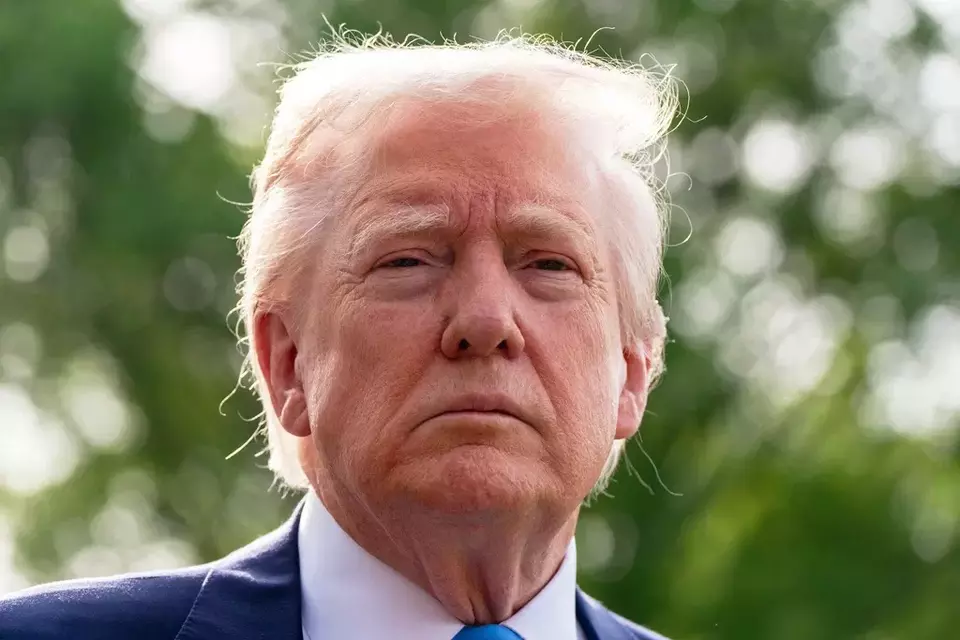
Trump’s reckless tariff war — what he calls “The Art of Deal,” and what the world now calls “The Art of Delusion” or simply a strategy of self-humiliation — has inflicted severe damage on American businesses and households, marking one of the greatest economic self-inflicted losses of the century. The sharp U-turn in rhetoric and action, culminating in Trump’s soft overtures to Beijing, comes as the United States faces mounting economic and political costs.
Meanwhile, Chinese leadership, stoic and unyielding, has neither responded to Washington’s desperation nor taken a step back. Instead, China’s diplomacy and global economic engagement have only accelerated.
It is no surprise, then, that the phrase #TrumpChickenedOut has exploded across social media with more than 170 million views in just a few minutes.
|
|
 Ads by:
.
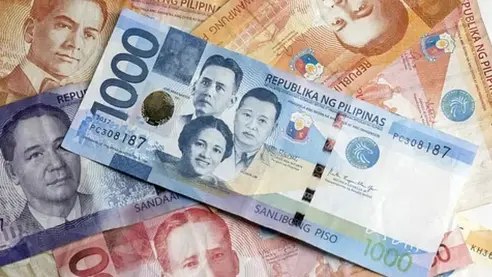
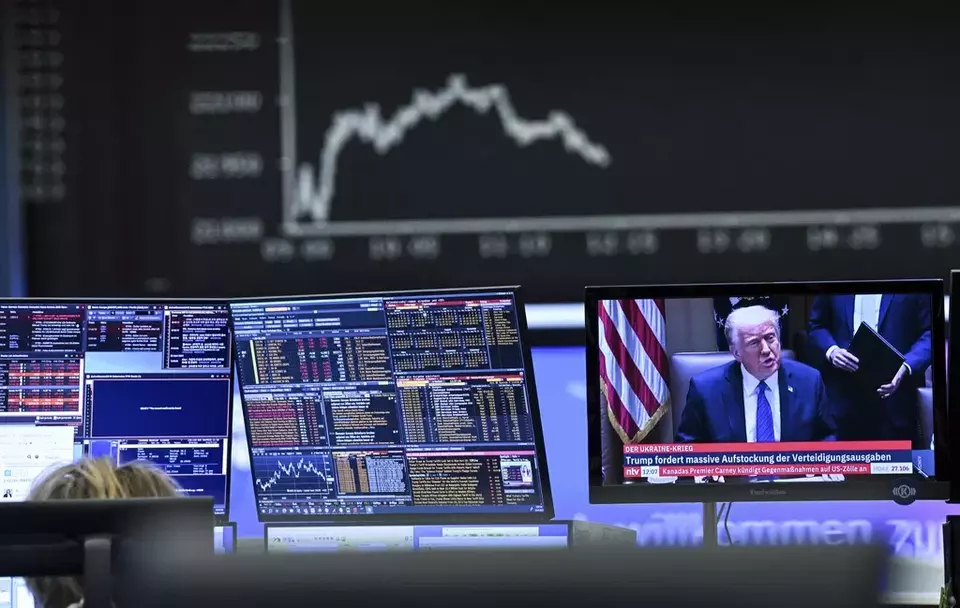
In US markets, nerves have rattled, and sentiment has battled. Only between early February and late April 2025, the US economy has shown clear signs of vulnerability. After reaching short-lived highs in January, US stock markets have slumped. The S&P 500 dropped over 14 percent from February to April 2025, while the tech-heavy NASDAQ shed 23 percent in the same period. Investor confidence has been rattled by both domestic policy uncertainty and deteriorating trade dynamics. The US dollar has also weakened significantly — down 4.3 percent against a basket of major currencies since February– signaling waning global trust in America’s economic stability.
.
Tesla, Trump’s crown jewel, reported a 71 percent profit decline for its first-quarter 2025, falling far short of market expectations. In the aerospace sector, Boeing faced a devastating setback with China halting the deliveries and the cancellation of a long-awaited $18 billion contract with a consortium of Southeast Asian carriers, citing geopolitical instability and concerns over long-term US trade reliability.
|
|
These are not isolated issues — they reflect broader unease among global partners about engaging with an unpredictable and increasingly confrontational U.S. administration.
Other sectors are also feeling the pinch. US universities reported a sharp decline in international student enrollment — down 12 percent for Fall 2025, equivalent to approximately 130,000 fewer students and a potential $4 billion revenue loss. Many prospective students now cite political uncertainty and safety concerns as key reasons for choosing alternative destinations such as Canada, Australia, and the EU.
Likewise, the US tourism sector has recorded a 12 percent drop in international visitors since February, representing a potential $90 billion loss.
|
|
.
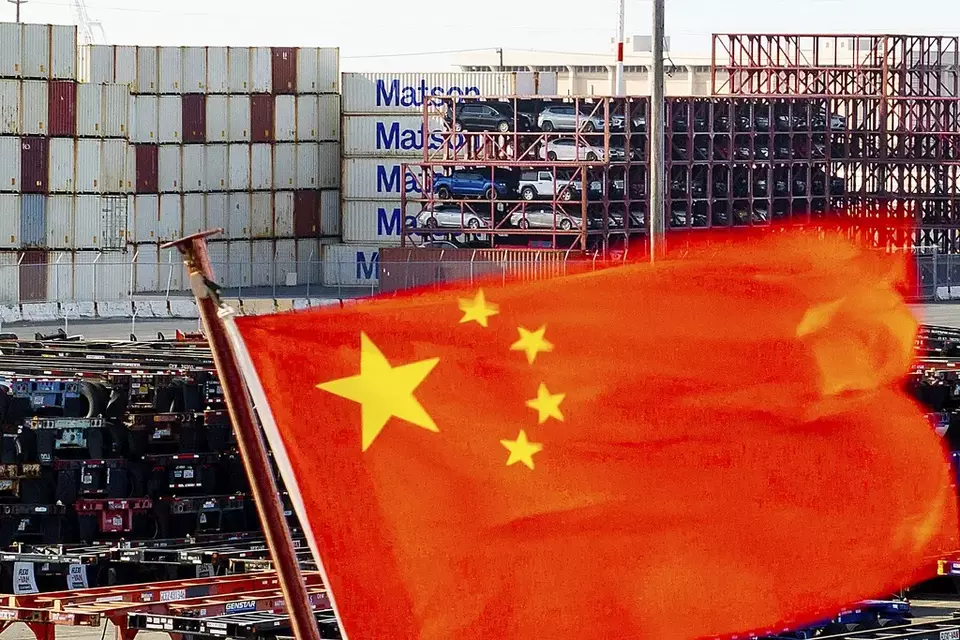
Across sectors, negative sentiment is on the rise. CEOs, trade groups, and policy experts are expressing discontent with the administration’s approach. The American Chamber of Commerce in Singapore reports that 69 percent of businesses expect Trump’s tariffs to negatively impact their operations. The US Chamber of Commerce has warned that Trump’s tariffs, which now affect over $3 trillion in imports, are having a “real and devastating impact” on thousands of small businesses and millions of jobs across the country. As the Chamber highlights, “uncertainty, rising costs, and cancellations are hitting home”. Many small American businesses are grappling with the consequences, with growing concerns over escalating costs and potential disruptions that threaten their very survival.
|
|
Trump’s approach toward Chinese President Xi Jinping moved from menace to meekness in a matter of days. Back in February 2025, President Trump had adopted his signature aggressive posture toward China. During a speech in Ohio on February 13, throughout his media appearances and tweets, he declared, “There will be no exemptions, no exceptions. China will pay the price.” His administration threatened expanded tariffs, targeted tech bans, and military posturing in the South China Sea. The tone was confrontational, contentious, and unilateral. But as US markets and economic indicators faltered, that confidence quickly unraveled.
On April 24, Trump made a series of statements that marked a dramatic reversal. “We’re negotiating,” he said, “and I want to be very nice to China. We want both nations to work together for peace and prosperity.” Over the next 48 hours, the administration repeatedly signaled its willingness to “prepare the stage” for dialogue, even announcing plans to “gradually reduce tariffs” to “de-escalate tensions.”
|
|
.
Beijing, however, firmly contradicted these claims. On April 24, 2025, Chinese Foreign Ministry spokesperson Guo Jiakun categorically denied any ongoing trade negotiations between China and the US. In response to media inquiries, Guo stated, “As far as I know, China and the US are not engaged in any consultation or negotiation on tariffs, let alone reaching a deal.” He dismissed reports suggesting progress in trade talks as “false news” and emphasized that any future discussions must be based on mutual respect and equality.
The Trump administration’s desperation was palpable. For weeks, US officials had issued signals — directly and through intermediaries — seeking re-engagement. Despite this, China offered no response. The reality was simple: China had no reason to move. Without lifting a finger, Beijing had watched Washington retreat.
|
|
.
China’s economic power reassured allies. While President Trump flailed and fumbled, President Xi Jinping pursued a strategy of steady engagement. Since February, Xi has embarked on a highly visible campaign of international diplomacy — securing trade, investment, and infrastructure deals across Southeast Asia, expanding commercial ties with South America, and launching a new wave of digital cooperation with Africa. China has also laid out strategies to deepen economic relations with the European Union, Japan, and South Korea — long-standing US allies.
Xi’s move has been calm but firm. In a rare direct comment on US policy, China’s Minister of Foreign Affairs stated on April 23, “China does not want to fight, but we are not afraid to fight. We will fight till the end.” This declaration, delivered with strategic precision, underscored the contrast between a focused Chinese leadership and a reactive US administration.
Beijing’s message to the world was clear: it will not be intimidated. And unlike Trump, Xi is not interested in “making noise for show.” He is building coalitions, signing deals, and reinforcing China’s economic and geopolitical credibility — without resorting to Twitter diplomacy or erratic policy shifts.
|
|
.
Diplomacy 101
A successful diplomatic approach begins with positive engagement. A confident, coherent strategy would have involved allies, established a clear vision, created space for recalibration, and prioritized mutually beneficial solutions. At the same time, one must never capitulate to an intimidator. In contrast, Trump’s erratic flip-flops — characterized by inconsistencies, desperation, and incoherence — have eroded US credibility on the global stage.
Trump has cornered himself with no room for retreat. As the hashtag #TrumpChickenedOut went viral in the final week of April, the broader narrative of American retreat gained momentum. Even Trump’s staunchest supporters — Fox News, the Wall Street Journal, MAGA influencers, and a couple of conservative think tanks — struggled to spin the reversal. The profit losses for his allies have reached unbearable levels, and the damage to the American public is becoming intolerable. Just weeks ago, Trump arrogantly threatened the world with his “economic obliteration”; now, he pleads for cooperation.
Worse still, it has given China the upper hand without requiring them to make a single concession. In geopolitical terms, this is a remarkable case of self-inflicted damage.
The cost of Trump’s ignorance has ultimately been borne by the American people. Trump’s approach to international trade and diplomacy has long been shaped by bravado, bluster, and blunders. Now, reality is catching up. Markets do not respond well to incoherence. Allies grow weary of unpredictability. There are no easy wins in global politics. But there are avoidable losses.
|
|
.
Trump’s inability to grasp this has resulted in one of the most striking diplomatic reversals in recent memory. While Xi builds global partnerships in trade, technology, and infrastructure, Trump shields and stumbles in Washington — desperate for a phone call from Xi that will never come. The world is watching — and drawing its conclusions.
And so, whether he admits it or not, Trump has backed down. Not because he wants to — but because he has to.
|
|

 Memento Maxima Digital Marketing