

OPINION-COLUMN | Trump’s Tariff Offensive and the Erosion of Global Trade Governance
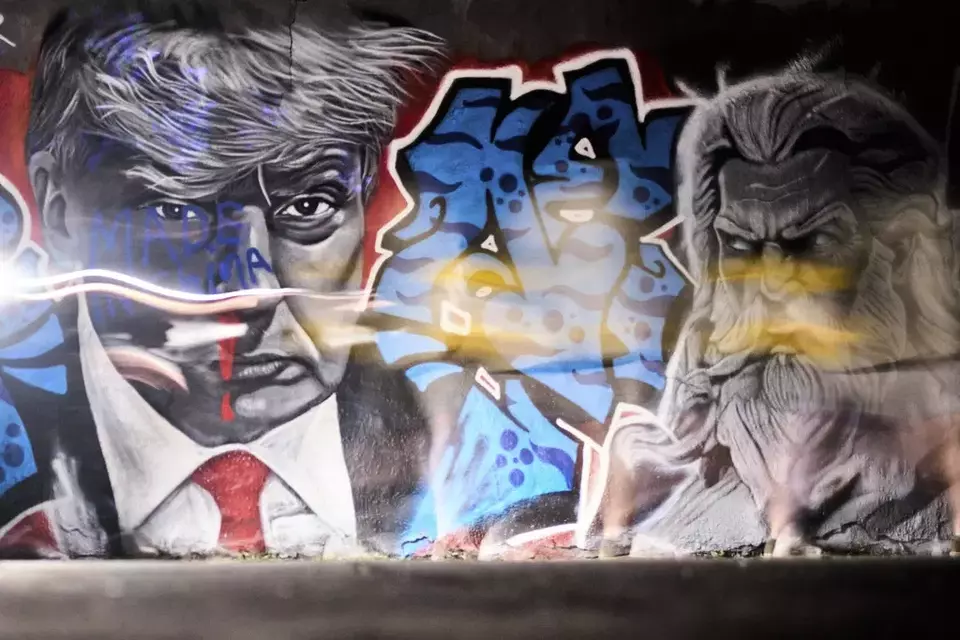
People with flashlights pass a mural of US President Donald Trump, created by graffiti artist EME Freethinker, with the words
.
Iman Pambagyo

Debates over US President Donald Trump’s aggressive tariff policies continue to engage scholars, businesses, and governments around the world, all asking the same question: how long can such a strategy last, and will it actually achieve its intended goals?
One month after Trump declared his sweeping “Liberation Day” tariffs, many observers are warning that the policy marks the early stages of economic decline for a nation that has held superpower status for nearly eight decades.
The warning signs are already emerging. The US economy contracted by 0.3 percent in the first quarter of 2025 — before Trump’s April 2 announcement to raise tariffs against nearly all of America’s trading partners.
It doesn’t take a rocket scientist to anticipate that such a sweeping tariff regime is likely to cause more harm than good. Most economic analyses argue about the negative effects of protectionism, particularly on the working class, and suggest that any potential benefits are highly contingent on factors such as global retaliation and broader economic conditions.

@[email protected]
Trump’s tariff policy has also sparked renewed debate about the United States’ commitment to its international obligations — specifically those enshrined under the rules of the World Trade Organization (WTO). The legality of these measures, especially those that exceed WTO-bound commitments, has come under growing scrutiny.
This brief analysis will first assess Trump’s tariff hikes from a legal perspective, with a focus on their compliance — or lack thereof — with WTO rules. It will then explore the broader political and economic implications. By examining key trade measures, including the US Sections 201, 232, and 301 tariffs, and evaluating their impact on global trade governance and industrial policy, this piece seeks to determine whether Washington’s approach constitutes a defensible strategy — or a deliberate deviation from established international norms.
@[email protected]
Trump Tariff: Rationale and Implementation
Under President Trump’s administration, a series of aggressive tariff measures were implemented with the stated aim of correcting perceived imbalances in trade and protecting national security. These actions were introduced through a mix of legal provisions, including US Section 201, Section 232, and Section 301 of the Trade Act, each justifying the imposition of tariffs on different grounds.
- Section 201 Tariffs: These were primarily used on products such as washing machines and solar panels. The rationale behind these tariffs was linked to findings of serious injury to domestic industries, suggesting that an import surge was detrimental to US manufacturers. This measure was based on the argument that such injury warranted temporary protection, even if it involved exceeding WTO-bound commitments.
- Section 232 Tariffs: These tariffs, imposed on steel and aluminum, were defended on the basis of national security concerns. The justification invoked GATT Article XXI, the national security exception, which has rarely been used and remains highly controversial. The invocation of national security provided a legal shield for imposing tariffs that might otherwise be considered inconsistent with existing WTO rules.
- Section 301 Tariffs: Targeted predominantly at China, these tariffs were implemented to address long-standing allegations regarding intellectual property theft and unfair trade practices. Under Section 301, the US claimed that China’s policies — including forced technology transfers and cyber espionage — were undermining US economic interests. Historically, such measures were accompanied by seeking WTO approval. However, under the Trump Administration, these tariffs were applied unilaterally, thus sidestepping the established dispute settlement processes.
The implementation of these tariffs was not solely driven by legal arguments but also by economic theories — most notably, the concept of the “optimum tariff.” Traditional literature suggests specific rates for optimal protection; however, adjustments highlighting issues such as outward foreign direct investment (FDI) have led to recalculations that propose considerably lower optimal tariffs than those imposed by the US. The excessive level of protection, as argued by some scholars, may have widened the trade deficit in unintended ways and led to significant economic disruptions.
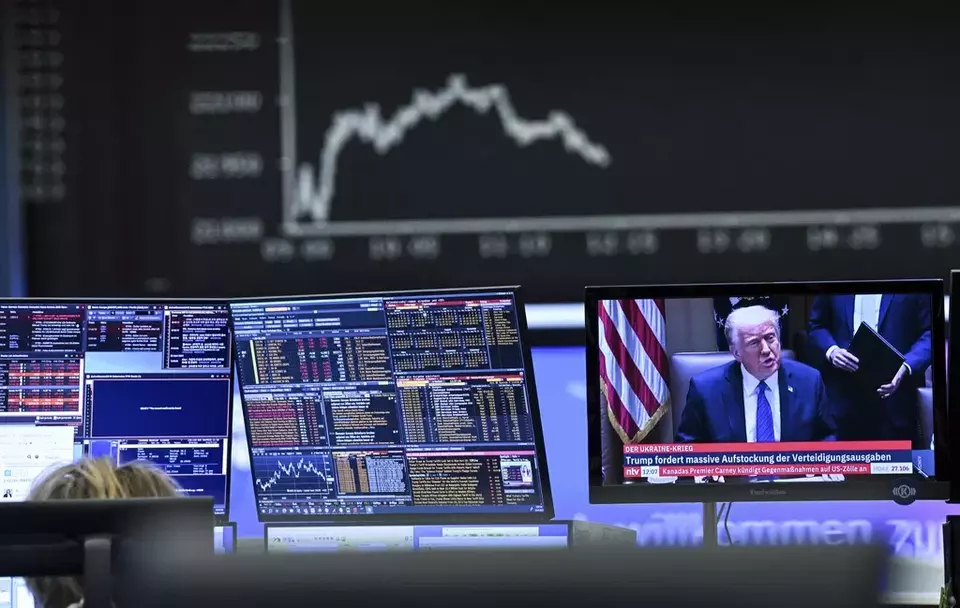
Behind a television monitor showing US President Donald Trump, the display board with the Dax curve shows falling share prices, in Frankfurt, Germany, Thursday, April 3, 2025, after the tariff package announced by US President Trump has pushed share prices sharply into negative territory. (Arne Dedert/dpa via AP)
.
A key issue raised by critics is the lack of a robust analytical basis for the tariff rates chosen, with some arguing that the measures reflect political considerations rather than rigorous economic assessments. As a result, many experts claim that these actions were not aligned with the theoretically optimal outcomes and ultimately deviated from the commitments implied by traditional economic models.
@[email protected]
WTO Legal Framework
The WTO provides a framework within which member states are expected to abide by mutually agreed-upon rules and commitments. The US, as a founding member, has binding responsibilities that include adhering to jointly accepted tariff schedules and abiding by the dispute settlement procedures.
WTO-bound commitments require that any tariff measures must be consistent with the schedules submitted by member states and that any deviation must be justified by exceptions explicitly provided in the agreements. For instance, while the national security exception exists under GATT Article XXI, its application is meant to be used sparingly and subject to rigorous scrutiny. The underlying principle of the WTO system is that unilateral measures, especially those that contradict established multilateral commitments, risk destabilizing the entire trading system.
There is a conflict between unilateral measures and multilateral rules. Under normal circumstances, tariffs or trade restrictions should be pursued through multilateral consultations and, if necessary, resolved via the dispute settlement process. The Trump Administration’s approach, notably the unilateral imposition of tariffs without waiting for a complete dispute resolution mechanism, marks a departure from standard procedure. Moreover, by blocking the appointment of judges to the WTO Appellate Body — the very mechanism designed to adjudicate such disputes — the US further undermined the effective enforcement of its international obligations.
The unilateral measures taken by the US, therefore, stand in stark contrast to the spirit and the letter of its WTO commitments. They bypass the legal procedures that the WTO expects its members to adhere to and create a precedent that other nations may view as a breach of established international norms.
@[email protected]
Tariff Measures and Legal Justifications maintained by the US
|
Tariff Type |
Legal Basis/Section |
Justification |
WTO Exception Invoked |
|
Washing Machines |
Section 201 |
Serious injury to the domestic industry |
Temporary safeguard under WTO rules |
|
Steel and Aluminum |
Section 232 |
National security concerns |
GATT Article XXI (national security) |
|
Technology Products |
Section 301 |
Combating IP theft and forced technology transfers |
Unilateral measure, bypassing the |
@[email protected]
Political and Economic Implications
Beyond the legal debate, the imposition of unilateral tariffs has far-reaching political and economic consequences that affect both domestic and international landscapes. On the domestic front, the Trump Administration’s tariff measures were popular among certain segments of the American electorate, particularly those who believed that prior trade policies had disadvantaged US industries.
The “America First” and “Make America Great Again” rhetoric and the promise to fix the trade imbalance resonated with voters, aligning domestic political objectives with a protectionist agenda. However, these measures also risked alienating key allies and undermining the US’s credibility on the world stage, particularly as they appeared to contravene established international rules.
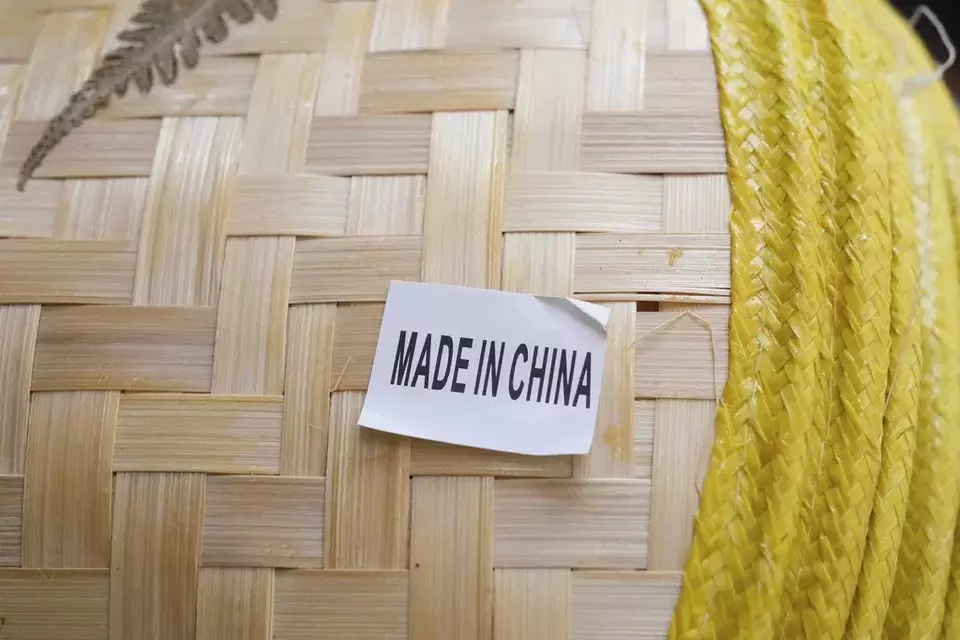
FILE – A made in China sticker is displayed on a hat at a store in Chinatown in San Francisco, April 18, 2025. (AP Photo/Jeff Chiu, File)
@[email protected]
Internationally, the unilateral imposition of tariffs without following the regulated dispute settlement process led to increased tensions with other major trading partners, including the European Union and China. Countries affected by these measures argued that the US was not only violating WTO rules but also destabilizing the multilateral trading system. This sentiment was reinforced by retaliatory measures taken by affected nations, which further fueled trade conflicts and jeopardized global economic stability.
Economically, the tariffs have had a mixed impact. While they aimed to protect domestic industries, there is evidence of significant collateral damage. For example, the tariff measures resulted in retaliations that affected industries ranging from steel, auto, to agriculture, leading to substantial losses on both sides of the trade war. In addition, the miscalculation of the optimal tariff rate, especially in the context of modern FDI dynamics, has led to unintended macroeconomic effects such as currency appreciation and reduced global trade efficiency. Moreover, the aggressive tariff policy has disrupted global supply chains, altered trade flows, and introduced a level of uncertainty into international economic relations that could have long-term negative effects on global economic growth.
@[email protected]
.
A detailed examination of specific cases further elucidates the challenges associated with Trump’s tariff policy vis-à-vis WTO-bound commitments. There are two major case studies — one focusing on trade measures used against China and the other examining the impact of tariffs on traditional industries such as steel and aluminum — and these studies provide valuable insights into the multidimensional nature of these policies.
The US-China trade war is perhaps the most illustrative example of Trump’s tariff policy in action. As documented across several studies, the tariff regime adopted under Section 301 was primarily motivated by allegations of intellectual property theft and forced technology transfers by China. However, the unilateral nature of these tariffs meant that the US bypassed the normal WTO dispute settlement channels, a move widely criticized by international observers.
@[email protected]
The trade war not only intensified economic tensions between the US and China but also had significant implications for global supply chains. Industries in both countries experienced disruptions that led to substantial financial losses, reduced trade volumes, and a reordering of global market dynamics. From an analytical perspective, this conflict underscores the problems inherent in circumventing established multilateral institutions to resolve trade disputes.
Another critical case involves the tariffs on steel and aluminum. Under Section 232, these tariffs were defended on the basis of national security — a justification that relies on invoking GATT Article XXI. Despite the legal provision, the use of national security as a rationale remains controversial. Critics argue that such an invocation should be narrowly tailored and subject to strict judicial oversight to prevent abuse.
Here, the unilateral imposition of tariffs without engaging in the WTO’s dispute settlement process created uncertainty about whether these measures were consistent with the US’s legally binding trade commitments. The controversy surrounding these tariffs is emblematic of the tension between domestic political imperatives (i.e., protecting industries perceived as essential for national security) and the obligations arising from international trade agreements.
@[email protected]
.
A comparative analysis reveals that the Trump Administration’s tariff measures differ markedly from the practices of previous administrations. While prior US administrations generally adhered to multilateral processes and sought WTO approval before imposing significant trade restrictions, the Trump Administration’s policy was characterized by rapid unilateral action. This divergence raises fundamental questions about the consistency of US trade policy with its established international commitments.
Traditional vs Trump Tariff Practices
|
Aspect |
Traditional Practice |
Trump Administration Approach |
|
Tariff Justification |
Multilateral consultations; WTO-approved safeguards |
Unilateral imposition based on domestic political and security arguments |
|
Dispute Settlement |
Reliance on WTO dispute resolution mechanisms |
Bypassing dispute settlement, blocking Appellate Body appointments |
|
Economic Rationale |
Adherence to optimal tariff calculations considering |
Excessive tariffs exceeding the optimal calculated rates based |
|
International Impact |
Enhanced predictability |
Increased trade tensions |
@[email protected]
The Paralysis of the Dispute Settlement Mechanism
The WTO dispute settlement mechanism serves as the cornerstone of the international trading system, ensuring that members abide by mutually agreed-upon rules and providing a forum for the resolution of trade disputes. However, the Trump Administration’s actions have significantly weakened this mechanism.
One of the most critical measures taken by the US was its refusal to allow the appointment of new judges to the WTO Appellate Body. This action effectively paralyzed the dispute settlement process, depriving the international community of a reliable system for adjudicating trade disputes. By obstructing the functioning of the WTO’s key enforcement agency, the US not only undermined the legitimacy of the system but also set a dangerous precedent for other nations.
A Chinese flag flies from a ship at the Port of Oakland on Tuesday, April 15, 2025, in Oakland, California. (AP Photo/Noah Berger)
@[email protected]
Instead of addressing contentious issues through multilateral consultations or by engaging in the established dispute resolution process, the unilateral imposition of tariffs bypassed these mechanisms entirely. This divergence from established procedures disrupted the balance of power within the trading system and eroded trust among WTO members. The failure to engage in dispute resolution has allowed the US to avoid potentially unfavorable rulings, thereby deepening the schism between national interests and international obligations.
@[email protected]
.
Policy Implications
The implications of Trump’s tariff policy extend far beyond immediate trade imbalances. They have profound repercussions for international trade law, economic diplomacy, and the global balance of power. The unilateral imposition of tariffs that deviate from WTO guidelines challenges the foundational principles of international trade law. By acting outside the established rules, the US has not only undermined its own credibility but also jeopardized the stability of the multilateral system. This action raises critical questions about the future of trade agreements and the ability of international institutions to enforce compliance.
From a broader political-economic perspective, these policies have contributed to a fragmentation of global economic governance. The erosion of multilateral institutions such as the WTO could lead to a more protectionist global environment, where nations resort to unilateral measures to safeguard their interests rather than cooperating through established channels. This shift may jeopardize long-term global economic stability, particularly as emerging economies and trade-intensive industries face increased uncertainty.
@[email protected]
Domestically, the tariff policies were designed to support US industries; however, the long-term effects have been mixed. On one hand, a few sectors benefited from protective measures, but on the other, the increased costs and retaliatory actions have adversely affected other industries and consumers. Internationally, these unilateral measures have sown distrust among key allies and trading partners, complicating efforts to forge new multilateral agreements or negotiate trade deals in the post-Brexit and post-COVID era.
In conclusion, an analysis of Trump’s tariff policy reveals a complex landscape where domestic political imperatives, economic rationales, and international legal obligations intersect. While the tariff measures were implemented to protect American industries and address perceived unfair trade practices, they frequently diverged from the established multilateral norm and the binding commitments of the WTO.
.
May 3, 2025 | 2:45 pm
…
@[email protected]
Related Articles
Opinion May 3, 2025 | 2:45 pm
Trump’s Tariff Offensive and the Erosion of Global Trade Governance
This analysis assesses Trump’s tariff hikes from a legal perspective, with a focus on their compliance — or lack thereof — with WTO rules.
Business May 2, 2025 | 3:56 pm
McKinsey Says US Tariff Might Not Hit Indonesia Hard, But Companies Must Act Fast
Indonesian firms need to be aggressive to become part of the global supply chain to seize the opportunities that emerge from the trade war.
Business Apr 30, 2025 | 7:10 pm
Indonesia Needs A Clear Strategy to Navigate US-China Trade War
Indonesia needs a well-calculated strategy amid the heightening trade war between US and China, an economist says.
Business Apr 30, 2025 | 4:19 pm
Mari Pangestu: ASEAN’s Swift Response Shows Regional Strength Against US Trade Shocks
To diversify trade and reduce reliance on the US, Mari advocated for the accelerated completion of the Indonesia-EU CEPA.
Business Apr 28, 2025 | 4:04 pm
China Shrugs Off Threat of US Tariffs to Economy, Says It has Tools to Protect Jobs
The trade war between the world’s two largest economies has the potential to bring on a recession in the US.
Business Apr 25, 2025 | 3:26 pm
Sri Mulyani Warns of Major Shift in Global Trade Order Amid US Tariff Hikes
Sri Mulyani noted that Indonesia’s prompt decision to engage with the US placed it in a stronger position than other countries.
Business Apr 25, 2025 | 2:35 pm
Still No Talks of Mangga Dua’s Fake Goods in US Tariff Negotiations
The US has raised concerns over the counterfeit goods trade in Jakarta’s Mangga Dua, a popular shopping district in North Jakarta.
Business Apr 25, 2025 | 3:37 am
Trade War Has US Airlines Trimming Flights and Withdrawing Financial Guidance
Delta Air Lines pulled its January prediction that the company was on track for the best financial year in its history.
Business Apr 25, 2025 | 3:23 am
China Dismisses Claims of Ongoing Tariff Talks with US as Groundless
“Any claims about the progress of China-US trade negotiations are as groundless as trying to catch the wind,” a spokesman said.
Business Apr 24, 2025 | 8:14 am
Wall Street Rises and Markets Rally Worldwide as Trump Softens Tough Talk on Tariffs
Markets also rose after Trump said that US tariffs on imports coming from China could come down “substantially” from the current 145%.
@[email protected]
The Latest
Tech 1 hours ago
Indonesia Warns Worldcoin of Permanent Closure If It Skips Summons
The government had suspended the activities of Terang Bulan Abadi, the company representing Worldcoin in Indonesia
Business 2 hours ago
Garuda Group Grounds 15 Aircraft Due to Spare Parts Supply Issues
Disruptions in the spare parts supply chain have led to extended maintenance times, as the necessary components are difficult to procure.
Business 2 hours ago
Seven EV Makers Eye Rp 15 Trillion Investment in Indonesian Plants
Indonesia’s market share of electric cars rose to 5 percent of total vehicle sales in 2024, up from just 1.7 percent in 2023.
Business 2 hours ago
Top US Officials Will Meet with Chinese Delegation in Switzerland in First Major Talks of Trade War
A government spokesperson said China would not “sacrifice its principles or global equity or justice in seeking any agreement.”
News 3 hours ago
India Fires Missiles into Pakistani Territory in Response to Kashmir Attack, Killing 8 People
The missiles struck locations in Pakistan-administered Kashmir and in the country’s eastern Punjab province.
Most Popular
@[email protected]
1
Over 24,000 Workers Laid Off in Indonesia So Far This Year
2
ASEAN+3 Agrees to Use More of RCEP Pact Amid Trump’s Trade War
3
Indonesia’s Q1 Economic Growth Slows to 4.87 Pct
4
New Law Limits KPK’s Authority to Probe Corruption in State-Owned Enterprises
5
Rescue Workers Recover Body of Malaysian Hiker Who Fell at Mount Rinjani Slope
RVED