OP ED OPINION-COLUMN | Timor-Leste out to prove cynics wrong as Asean membership nears
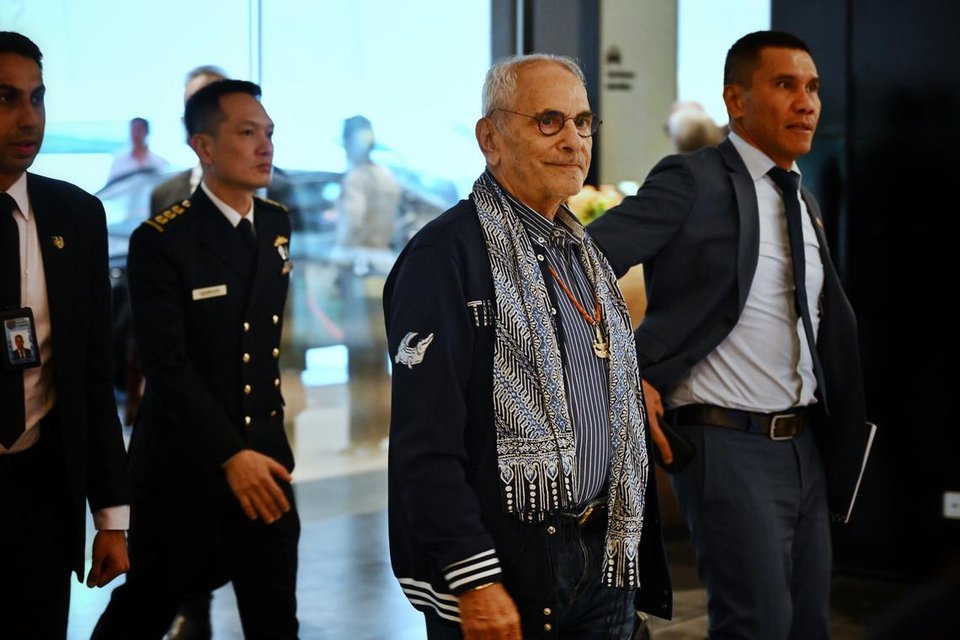
Timor-Leste’s President José Ramos-Horta arriving at the Shangri-La Singapore hotel on May 29, ahead of the Shangri-La Dialogue.ST PHOTO: KUA CHEE SIONG
 Some worry that the young nation will be a drag on the regional grouping, but its president seeks to dispel such doubts.
.
….

.
There is almost no latency in Timor-Leste’s President Jose Ramos-Horta’s response when I ask him whether he was surprised that Asean leaders agreed for his country to formally join as the grouping’s 11th member as early as its next meeting in October.
After all, it would have been perfectly understandable if the consensus had been that the country could do with a bit more time to fulfil outstanding conditions for accession, rather than fixing a provisional deadline that would inevitably come with pressure.
“No, I was not surprised,” President Ramos-Horta said matter-of-factly.
As he put it, Asean had unanimously agreed to admit the region’s youngest nation in 2022, and developed a road map for its full membership. So why should anyone be surprised about this latest decision that, for the first time, puts a provisional date on accession? The decision was made at the recently concluded Asean leaders’ summit in Kuala Lumpur.
“As you know, a road map has a beginning and an end. It doesn’t go on indefinitely, right?” Mr Ramos-Horta told me in a recent interview.
ADS by:

@[email protected]
.
.
Yet if the uber-niche
Asean-watching commentariat is to be believed – and its murmurings have been falling on my ears, including on the sidelines of the recent Shangri-La Dialogue – the date-setting wasn’t as seamless as portrayed.
Holdout voices still wonder whether Timor-Leste is ready for admission in 2025, whether it’s all too rushed. Mr Ramos-Horta betrayed none of this concern.
The President explained that the 2025 accession target was Timor-Leste’s own, set after the landmark 2022 decision. Following the back-to-back return to politics of Mr Ramos-Horta and fellow independence hero, Prime Minister Xanana Gusmao, in 2022 and 2023 respectively, both men decided that 2025 would be the right moment for accession.
“We felt we should not leave it only for Asean leaders to decide,” he explained. “They needed to see decisiveness from us.”
ADS by:
@[email protected]
.
We were speaking over the phone on June 6, a week after the intense buzz of diplomatic activity surrounding both the Asean Summit and the
Shangri-La Dialogue. Mr Ramos-Horta, sprightly at 75, participated in both – serving, as he has for decades, as Timor-Leste’s salesman-in-chief.
He agreed to this interview after I pitched the idea to him directly, noting that Timor-Leste’s likely October accession had been somewhat buried amid all the US-China rivalry headlines dominating coverage of the high-profile diplomatic events.
This oversight is unfortunate because the moment deserves bigger billing, given its significance to Timor-Leste as well as for Asean.
It’s been nearly a generation – 26 years to be specific – since Asean last admitted a member. That was Cambodia in April 1999, bringing the total to 10. That accession was tempestuous to say the least, marked by a nearly two-year delay after an initial accession plan was suspended following a bloody power struggle between former prime minister Hun Sen and the influential royal Prince Norodom Ranariddh.
Timor-Leste faces no such problems. It has been in the waiting room for a while. After gaining independence following a 1999 UN-backed referendum, after 24 years of brutal occupation by Indonesia, it formally applied to become a full Asean member in 2011, with the strong backing of that year’s chair – its former occupier. In 2019, it stepped up efforts for accession.
ADS by:
@[email protected]
.
If there is trepidation about accession, it is being aired only in private.
Much of the region has indicated public approval of the plan. Mr Ramos-Horta repeatedly named Singapore, Indonesia and Malaysia as among the countries that have provided substantial assistance as it seeks to join the grouping.
Singapore’s Prime Minister Lawrence Wong told local media after the summit: “Given the progress that has been made so far, the leaders agreed at this meeting that we will try and expedite the outstanding issues, provide full support to Timor-Leste, and we look forward to welcoming Timor-Leste as a full member of Asean by the end of this year.”
ADS by:
@[email protected]
.
HARD QUESTIONS
It’s fair, of course, for questions to be asked – and one expects there will be questions from citizens across the region as the accession nears. What are the respective benefits for Timor-Leste and for existing Asean countries? Why is this such an urgent imperative for Dili? The answers to both questions are far from clear-cut.
When I asked Mr Ramos-Horta how specifically Timor-Leste would benefit from Asean accession, he flipped the question around, giving the impression of asking: Why shouldn’t we benefit now that we are ready, rather than explaining how we will?
He rattled off statistics that form part of his international stump speech: life expectancy has jumped from less than 60 before independence to 70 currently; the country has grown from one university to 18 universities, from 19 doctors to 2,400 doctors; electricity now covers the entire nation, not just the capital Dili.
ADS by:
@[email protected]
.
The subtext, as Mr
Ramos-Horta narrated these statistics in his trademark avuncular style, is clear: we have made strides, closed gaps as far as we can, and we’re ready to join. It’s an argument that brings to mind his remarks at a public lecture in Singapore in December 2022, weeks after Asean leaders agreed in principle to Timor-Leste’s accession: “We will not in 2023, not in 2025, not in 2030, be perfect. Perfection is only in heaven. And I assume that Asean leaders do not have the ambition to turn Asean into heaven on earth.”
Yet Timor-Leste experts tell me they don’t expect any major immediate economic fillip from the accession.
ADS by:
@[email protected]
.
The US$2 billion economy – about an eighth the size of Laos, Asean’s current smallest economy – is unlikely to benefit materially from being part of the Asean free trade zone. As Dili-based independent policy analyst Guteriano Neves explained, it
The US$2 billion economy – about an eighth the size of Laos, Asean’s current smallest economy – is unlikely to benefit materially from being part of the Asean free trade zone. As Dili-based independent policy analyst Guteriano Neves explains, it doesn’t produce goods that are in demand in the region, and what it does produce, including coffee, is more expensive than in Asean.
doesn’t produce goods that are in demand in the region, and what it does produce, including coffee, is more expensive than in Asean.
The immediate economic fate of the country, heavily dependent on oil revenues, hinges on the development of an offshore gas field called Greater Sunrise, which has been stuck in a quagmire due to protracted negotiations involving Australia’s Woodside Energy and Japan’s Osaka Gas – little to do with Asean.
“While Timor-Leste may benefit economically from full Asean membership, it isn’t a game changer,” said Mr Parker Novak, a non-resident fellow with the Atlantic Council’s Indo-Pacific Security Initiative who closely tracks developments in Timor-Leste. “Greater access to the Asean free trade area will certainly help, but the country’s economic future ultimately hinges on the successful development of the Greater Sunrise gas field and genuine economic diversification, both of which remain uncertain.”
Both analysts concurred on one point: any tangible benefits would likely emerge on the geopolitical front. Having a seat at the table – especially in Asean’s dealings with major powers through forums like the East Asia Summit – offers clear advantages. Those benefits will deepen as Timor-Leste’s technocrats become more versed in Asean’s ways and learn to navigate its intricacies in pursuit of national interests.
ADS by:
@[email protected]
.
FEARS OF ANOTHER SPOILER
But even as the geopolitical upside is clear, concerns remain. Chief among them is whether admitting another fragile state might further complicate the bloc’s dynamics – particularly when Asean is already struggling to manage the ongoing crisis in Myanmar.
The 2022 decision to grant in-principle approval to Timor-Leste’s entry, as well as the grouping’s overall handling of Myanmar through the five-point consensus plan, have been among its more polarising recent moves.
Mr Bilahari Kausikan, the retired Singaporean senior diplomat, wrote in a 2023 Nikkei Asia commentary that in both, Asean displayed “soft thinking”. He argued that Timor-Leste “has dim prospects and is virtually a failing state”, citing over 40 per cent of its people living in extreme poverty, over-dependence on oil, and stability question marks owing to there being no clear political succession beyond first-generation leaders.
ADS by:
@[email protected]
.
This kind of harsh assessment reflects real vulnerabilities. The oil-backed sovereign wealth fund that enables 90 per cent of government spending faces depletion by 2035 – what the World Bank calls a “fiscal cliff ”.
Food security remains at crisis levels unseen elsewhere in South-east Asia apart from strife-torn Myanmar, with high rates of undernourishment, child stunting and maternal malnutrition. The bureaucracy, operating with less expertise than much of the region, is often seen as ineffective yet imperious.
A related risk is the fear Dili could become another spoiler within Asean’s consensus-based decision-making. The cautionary examples are Laos and Cambodia – both seen as being in Beijing’s orbit – which have previously scuttled joint statements on the South China Sea or nudged Asean to blame the US for regional tensions.
Such criticism notwithstanding, the words and deeds of Asean governments – as opposed to outside commentators – suggest they think otherwise about Timor-Leste’s prospects. Hundreds of Timor-Leste officials have undergone training conducted by Singapore, which Mr Ramos-Horta noted in the interview.
Malaysia, the grouping’s chair in 2025, has allocated to Dili some 3.7 million ringgit (S$1.1 million) as part of its technical cooperation programme and is also assisting in setting up the Timor-Leste unit within the
Asean secretariat. These are certainly not the actions of neighbours who are insincere about seeking Timor-Leste’s smooth accession into Asean.
ADS by:
@[email protected]
.
NO ONE’S PROXY
As to whether Timor-Leste will act as proxy to any superpower, Mr Ramos-Horta was at pains during the interview to emphasise that the grouping has nothing to worry about – it plans to take its foreign policy cues primarily from its closest neighbour and largest trading partner Indonesia, as well as from other close neighbours Australia,
.
Malaysia and Singapore.
“Indonesian diplomacy is one of the most sophisticated globally. They are not imprudent, everything is calibrated, everything is researched… so I always tell my people, watch what Indonesia does. When in doubt, check with the Indonesians how they are going to vote, what to do and so on,” the President told me.
He added: “We are not going to be a nuisance, an embarrassment, a pain within Asean. It would be foolish and irresponsible on our part.”
This reassurance won’t fully silence the doubters, of course. The sceptics will still have their say, and their concerns aren’t entirely without merit. But perhaps it’s worth giving the underdog some credit – just as supporters of Asean often do for the grouping itself – and expect Timor-Leste to quietly prove the critics wrong.
.
PREVENT CLIMATE CHANGE

 Memento Maxima Digital Marketing
- The Straits Times