HEALTH-HIV | Philippines battles surging HIV cases among youth
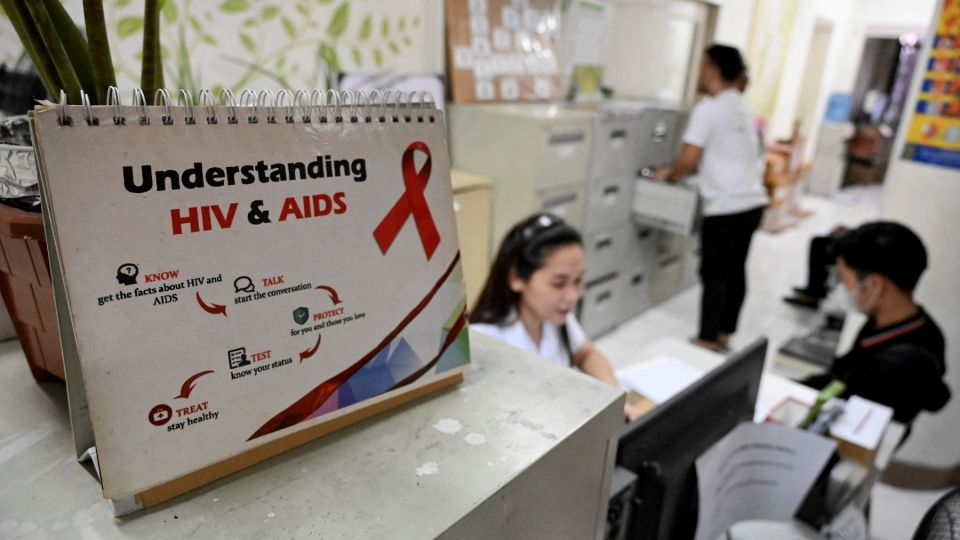
As of March 2025, over 139,610 Filipinos are living with HIV, and the government estimates this number will rise to 252,000 by the end of 2025. PHOTO: AFP
.
.

MANILA (ANN/PHILLIPINES DAILY INQUIRER) – When 26-year-old Luke Galade (not his real name) tested positive for HIV in March 2024, the result came as no surprise. The freelance writer and former teacher had already noticed the symptoms: a persistent fever, shortness of breath, rashes on his palms and sudden hair loss.
He quietly accepted his diagnosis, suspecting he had contracted the virus from a former partner. “I immediately accepted my fate,” he said. “Over time, I felt anger, then regret. I’ve always dreamed of working abroad, but many countries don’t allow entry to people with HIV.”
Galade’s experience reflects a growing crisis in the Philippines, which has recorded the fastest-growing HIV epidemic in the Asia-Pacific, according to the Joint United Nations Programme on HIV/AIDS (UNAIDS).
|
|
 Ads by:
.
While the region as a whole saw a 13 per cent decline in new infections since 2010, the Philippines recorded a staggering 543 per cent increase — higher than Bangladesh (20 per cent) and Papua New Guinea (104 per cent).
As of March 2025, over 139,610 Filipinos were living with HIV, with projections estimating the number to reach 252,000 by the end of the year. The country is now seeing 57 new cases a day, up from just six in 2010.
Health Secretary Teodoro Herbosa said nearly half of new cases are among those aged 15 to 24 — a significant shift from a decade ago, when most infections were in the 25-34 age group. “That to me is the alarming part,” he said.
The Department of Health (DOH) also recorded its youngest case this year — a 12-year-old from Palawan, suspected to be a victim of sexual abuse.
Dr Herbosa pointed to a mix of factors behind the surge: a lack of comprehensive sex education, increased use of dating apps, exposure to pornography, and stigma surrounding HIV discussions in the country’s predominantly Christian society.
|
|
“There are spas operating as brothels, anonymous sex, orgies with drug use — combined with little awareness and poor education,” he said.
In June, the DOH urged President Ferdinand Marcos Jr to declare HIV a national public health emergency to expedite funding and coordination, though no decision has been made.
Testing and treatment gaps
The Philippines passed the HIV and AIDS Policy Act in 2018, lowering the age of consent for testing to 15 and recognising access to treatment as a right. Dozens of government clinics now offer free testing, anti-retroviral therapy (ART), and counselling.
However, barriers remain. Many minors avoid treatment to hide their status from parents, as government coverage often requires a parent’s health insurance information. “They come back years later with advanced HIV or AIDS,” said Dr Herbosa.
Only 59 per cent of key populations — such as men who have sex with men — get tested, and just 44 per cent of those diagnosed receive treatment, according to DOH data. Many are diagnosed late, with already weakened immune systems.
|
|
To strengthen prevention, the DOH is promoting self-test kits and PrEP — a medication that reduces the risk of contracting HIV — while working with schools to improve sex education and peer counselling.
“Abstinence is ideal. But if not, use protection or know your partner’s status. PrEP is a powerful tool,” said Dr Herbosa.
Stigma still strong

Despite legal and medical advances, HIV stigma persists. Dr Deano Reyes, a gender and sexual health physician, said patients often ask for HIV medicines to be hidden in vitamin bottles to avoid detection by family members.
|
|
Cultural and religious beliefs continue to pose challenges.
Though the law mandates sex education in public schools since 2017, implementation has been inconsistent due to religious pressure. A bill to expand sex education to private schools was shelved earlier this year.
“Comprehensive sex education helps young people recognise abuse and avoid risky behaviours,” said Dr Reyes. “But shame and silence remain obstacles.”
Galade said his own family still takes precautions around him, using separate utensils despite reassurances. “Acceptance is step-by-step,” he said.
Still, he remains hopeful. With the support of HIV awareness advocates like Miss Universe winners Pia Wurtzbach and Catriona Gray, and drag queen Myx Chanel — who came out as HIV-positive on national television — public attitudes may gradually change.
“You should not judge people because of their status,” Galade said.
.
|
|
 Memento Maxima Digital Marketing