
ASEANEWS HEADLINE-Du30 EJK | MANILA, Philippines: Human bones found in Taal search: PNP
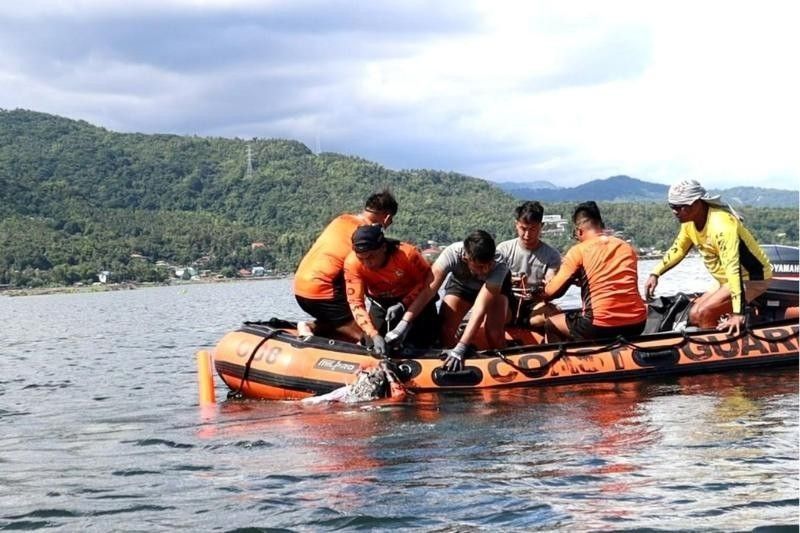
Coast Guard personnel during a retrieval operation for the remains of the missing sabungeros in Taal Lake on July 12, 2025./ Philippine Coast Guard / Released
Missing sabungeros: Torre confirms human bones recovered from Taal Lake | ANC.
Ex-NCRPO chief among 12 cops linked to case of sabungeros
.
.
MANILA, Philippines — The Philippine National Police (PNP) has confirmed that some of the bones recovered from Taal Lake are of human origin.?
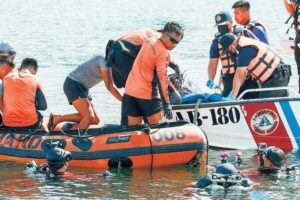
PNP chief Gen. Nicolas Torre III said the remains are undergoing forensic examination at Camp Crame after being retrieved by technical divers from the Philippine Coast Guard (PCG).
“We have confirmed that there are human remains among those recovered. We are now in the process of identifying them and cross-matching DNA samples with those collected from the families of the missing sabungeros,” Torre said at a news briefing yesterday.
He said some of the remains were transported to the Regional Crime Laboratory Office in Calabarzon to fast-track the processing.
 |
…
 The PNP had previously said that both animal and human bones were found during the search operations.
Torre said yesterday that forensic experts are working to differentiate the two and isolate those confirmed to be human for DNA comparison.?He also said the Department of Justice (DOJ) remains the lead agency handling the case, while the PNP is providing full technical and logistical support.?“The cross-matching process is technical but relatively fast once complications are ruled out. However, we cannot commit to an exact timeline,” Torre said.?At a separate press briefing, PNP spokesperson Brig. Gen. Jean Fajardo said the DNA samples from at least 12 families of missing sabungeros have already been collected. These samples will be compared with the confirmed human remains.
“If a DNA match is found, it would be a major breakthrough in the case and provide long-awaited closure to the families,” Fajardo said.
She added that while 34 cases are currently being handled by the Criminal Investigation and Detection Group, whistleblower Julie Patidongan, alias “Totoy,” has claimed that the number of victims may exceed 100.
|
|
…
Authorities also confirmed that a police officer is being linked to the fish farm where some of the bones were found. Torre said the matter remains under verification and declined further comment.
“We don’t want to jump to conclusions. Let the investigation proceed,” he said.
.
.
Cops named

Patidongan, who appeared before the National Police Commission (Napolcom) yesterday to submit his sworn affidavit, has publicly identified 12 police officers he claims are linked to the disappearance of the sabungeros.
In his affidavit, Patidongan identified Maj. Gen. Jonnel Estomo, whom he accused of advising businessman Charlie “Atong” Ang to have him killed.
|
|
…
He also named Col. Jacinto Malinao Jr., a Visayas-based officer who previously led the investigation into the disappearance of beauty pageant contestant Catherine Camilon.
Also named were Lt. Col. Ryan Jay Orapa of the Highway Patrol Group; Maj. Mark Philip Almedilla, assigned in Cavite; Executive Master Sgt. Aaron Ezrah Cabillan of the HPG; Chief Master Sgt. Arturo dela Cruz Jr. from Cavite; Senior Master Sergeants Joey Encarnacion, Mark Anthony Manrique, and Anderson Abale, all connected with the Cavite HPG; Master Sgt. Renan Fulgencio; Staff Sgt. Alfredo Andres, also from Cavite HPG and due for retirement; Cpl. Angel Joseph Martin, likewise assigned in Cavite.
At a press conference held in UP Diliman earlier that day, Patidongan became emotional as he spoke to members of the media and relatives of the missing sabungeros.
|
|
…
He thanked President Marcos, Justice Secretary Jesus Crispin Remulla and PNP chief Torre for giving him the courage to come forward, claiming that Torre was “the only man Mr. Atong Ang cannot buy.”
He also alleged that a police colonel seized 12 of his mobile phones, a tablet and his passport.
“I know I’m being followed by people working for Mr. Atong Ang… but I will fight for justice for the families of the missing, as long as I’m still alive,” Patidongan said.
Napolcom vice chairman and executive officer Rafael Vicente Calinisan said Patidongan’s testimony marked a major development in the long-stalled investigation.
However, he stressed that the affidavit alone would not determine guilt and that all named officers would be given due process.
“We thank Totoy for coming forward. His story is important, but we still need to evaluate it… just because a name appears in an affidavit does not mean we automatically believe it. Everyone will be given a chance to respond,” Calinisan said.
He said Napolcom would issue summons or orders to the implicated officers to allow them to answer the accusations.
If supported by evidence, the commission could file formal administrative charges within 60 days. The process may include hearings and deliberations before any decision is made.
While Napolcom handles only administrative cases, the findings will be shared with the DOJ, which may pursue criminal charges against the suspects.
Calinisan added that Napolcom only has jurisdiction over active-duty officers. Those who have already retired or resigned can no longer face administrative charges but may still be liable under criminal law. The urgency of the case, he said, is compounded by that limitation.
Drug war ties

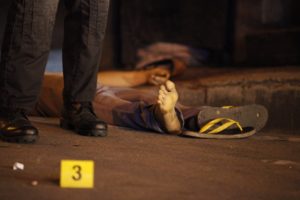
According to Justice Secretary Remulla, the suspects in the missing sabungeros case may have ties with the drug war killings of the previous administration.
Remulla said there is an “intersection” between the two cases, especially when they learned that two drug suspects arrested in Meycauayan, Bulacan have links with an illegal online sabong operation.
Remulla, however, said they encountered problems with the case due to the recantation of some of the witnesses.
|
|
…
“The people who undertake the contractual killings may intersect somehow with the drug war and with the e-sabong. There are people involved in the killings in the drug war and e-sabong,” he said at a press briefing.
They are still looking deeper into the case as they hope to establish clearer links to each other.
Forensic expert
Meanwhile, the government will tap the expertise of forensic pathologist Dr. Raquel Fortun, one of only two forensic pathologists in the Philippines, in examining the human remains that were recovered and will be recovered from Taal Lake in Batangas.
Last week, authorities retrieved a sack containing what appeared to be burnt human bones. Fortun recently reminded authorities to handle the retrieved sacks and their contents with care.
|
|
…
“She’ll be there. She has always been cooperative with the DOJ. She has always been receptive to our requests here at the DOJ,” Remulla said.
He noted, however that Fortun is currently under medical furlough.
Remulla also brushed off allegations that the sacks had been planted, saying there are troll farms who “want to spoil whatever good things we can do as a country.”
Ready to assist
The National Bureau of Investigation (NBI) reaffirmed its commitment to lend its forensic experts in the ongoing investigation in the missing sabungeros case.
In an interview with “Storycon” on One News yesterday, NBI Assistant Director for forensic and scientific research service Rommel Papa said they received a directive to be on standby in case the police requests for assistance.
|
|
…
“If they will get in touch with us formally … we are willing, the NBI is willing,” he said in English and Filipino.
Papa confirmed that a team from the NBI was deployed to observe the ongoing operations in Taal Lake.
As to the recovered bones, Papa said the PCG has yet to turn them over.
“Our job is to identify the victims. We’ll match the DNA against samples from close relatives, ideally a parent or immediate family member. We collect a blood sample and process that for analysis,” he said.
He added that even if the bones were burned, the NBI has procedures to extract DNA material.
|
|
…
Meanwhile, the entire forensic process could take one to two months, depending on the number and condition of the samples.
“The more samples we receive, the longer the processing time. But our machines operate non-stop. In previous cases, we were able to complete identifications in as fast as two weeks,” he said.
Papa also emphasized the importance of maintaining the chain of custody when handling evidence.
“It’s crucial. Since the Coast Guard retrieved the sacks, they must be the ones to formally turn these over to the NBI to preserve the integrity of the evidence,” he stressed. – Daphne Galvez, Janvic Mateo
.
PREVENT CLIMATE CHANGE
 Memento Maxima Digital Marketing
 Happy
Happy