
ASEANEWS HEADLINE-COURTS & CRIME | MANILA: Discayas face P300 billion fines for rigged bidding
Penalties vs Discayas may reach P300B for rigging 1,214 projects: Vince Dizon | ABS-CBN News
20 DPWH engineers may lose licenses

MANILA, Philippines — Construction firms owned by contractor couple Curlee and Sarah Discaya could face fines totaling as much as P300 billion due to alleged bid rigging in over 1,200 flood control projects, the Department of Public Works and Highways announced yesterday.
DPWH Secretary Vince Dizon said the department has referred cases of bid manipulation and bid rigging to the Philippine Competition Commission (PCC) for a preliminary inquiry and possible filing of charges under Republic Act 10667, the Philippine Competition Act.
The cases involve 12 flood control projects in Bulacan and Oriental Mindoro, which include five contractors. Among them is St. Timothy Construction Corp., owned by the Discaya couple, which secured two of these projects.
Other contractors implicated include Wawao Builders and Sunwest Inc., each with three projects, as well as IM Construction Corp. and SYMS Construction Trading Inc., each with two projects.
“What we are asking from the PCC is to investigate the bid manipulation with the appropriate penalty per contract violation,” Dizon said in Filipino during a press conference in Quezon City.
Dizon estimated penalties for the 12 projects at around P2.3 billion but warned the Discaya couple could face much steeper fines for the rest of the projects they obtained from the government.
From 2016 to 2025, companies owned by the Discayas reportedly won 1,214 flood control projects worth a total of P77.934 billion.
With the maximum penalty set at P250 million per contract, Dizon projected the Discayas could be fined up to P300 billion.
.
.

@[email protected]
The DPWH chief also pointed to the couple’s admission before the Senate Blue Ribbon committee, where they acknowledged their companies’ participation in bid rigging, as critical evidence.
“We have to throw everything at these people. We will file every possible case because they need to be held accountable,” Dizon stressed, underscoring the government’s determination to recover billions of pesos in public funds lost through questionable flood control projects.
In addition, the DPWH has forwarded a list of 18 properties owned by the Discaya couple to the Independent Commission for Infrastructure and the Anti-Money Laundering Council (AMLC) for possible forfeiture in favor of the government.
These properties, including the couple’s mansion in Pasig City, have an appraised value of around P1 billion and have been targeted by angry protesters.
License revocation

The DPWH is also moving to revoke the licenses of 20 engineers and other professionals implicated in anomalous flood control projects in Bulacan.
Dizon submitted yesterday to Professional Regulation Commission (PRC) Chair Charito Zamora pieces of evidence for the revocation of the licenses of engineers, accountants and architects allegedly involved in the projects.
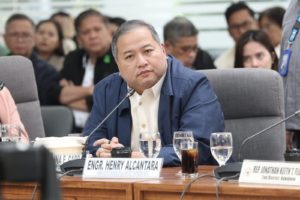
Among those tagged as “superstars” in the anomaly are former Bulacan first district engineers Henry Alcantara, Brice Ericson Hernandez, Jaypee Mendoza and Paul Jayson Duya.
Dizon said the move is in compliance with President Marcos’ directive to hold accountable not only contractors but also DPWH officials and other professionals linked to the corruption scandal.
The evidence turned over included fraud audit reports from the Commission on Audit and findings from the DPWH’s internal audit service.
To institutionalize cooperation, Dizon and Zamora signed a memorandum of agreement to strengthen coordination between the two agencies in imposing sanctions against professionals involved in government corruption.
.

“It’s not just about accountability, but it’s also about safeguarding the institutions and the projects that DPWH is doing from now moving forward,” Dizon added.
For her part, Zamora gave assurance that the PRC will act on the request with substantial evidence but emphasized that due process will be observed.
“We will give them a chance to reply and after that, the body will decide,” she said, noting that those implicated will have 15 days to respond.
Meanwhile, Interior and Local Government Secretary Jonvic Remulla said local government units have reported substandard and ghost flood control projects nationwide, with findings set to be submitted to President Marcos by month’s end.
More assets frozen
Beyond administrative sanctions, financial regulators have also intensified their crackdown.
The AMLC has secured a fourth freeze order from the Court of Appeals, bringing the total value of immobilized assets linked to alleged corruption in flood control projects to more than P4 billion.
In a resolution dated Oct. 3, the appellate court ordered the freezing of 57 bank accounts, 10 real properties and nine motor vehicles identified by the AMLC as potentially connected to irregular infrastructure spending.
@[email protected]
“This marks another firm step in the government’s broader crackdown on corruption in public infrastructure projects,” the AMLC said, noting that the action builds on earlier directives that froze billions in alleged illicit wealth.
To date, four separate freeze orders have covered 1,620 bank accounts, 54 insurance policies, 163 motor vehicles, 40 real properties and 12 e-wallet accounts.
Investigators said these include a luxury compound in a prime urban district, high-end vehicles, virtual currencies and unit investment trust funds.
“These freezes are real actions that stop corruption,” AMLC executive director Matthew David said. “Every peso frozen is a peso that cannot be used to sustain corruption.”
The cumulative value of immobilized assets has now exceeded P4 billion, with the amount expected to rise as financial trails are further uncovered.
@[email protected]
The latest freeze order is part of ongoing investigations into irregularities in flood control spending, a sector repeatedly flagged by oversight bodies for leakages, overpriced contracts and misuse of public funds.
The AMLC, created under Republic Act 9160 or the Anti-Money Laundering Act of 2001, has the authority to investigate suspicious transactions and secure judicial orders to immobilize assets suspected of being tied to unlawful activities.
“The AMLC remains committed to tracing financial links to public sector anomalies,” David stressed, underscoring the agency’s role in dismantling networks that profit from misused taxpayer money. — Keisha Ta-asan
.
 Ads by:
 Memento Maxima Digital Marketing