
ASEANEWS HEADLINE-ROAD SAFETY | PETALING JAYA: Push for shift in road safety strategy in upcoming Budget
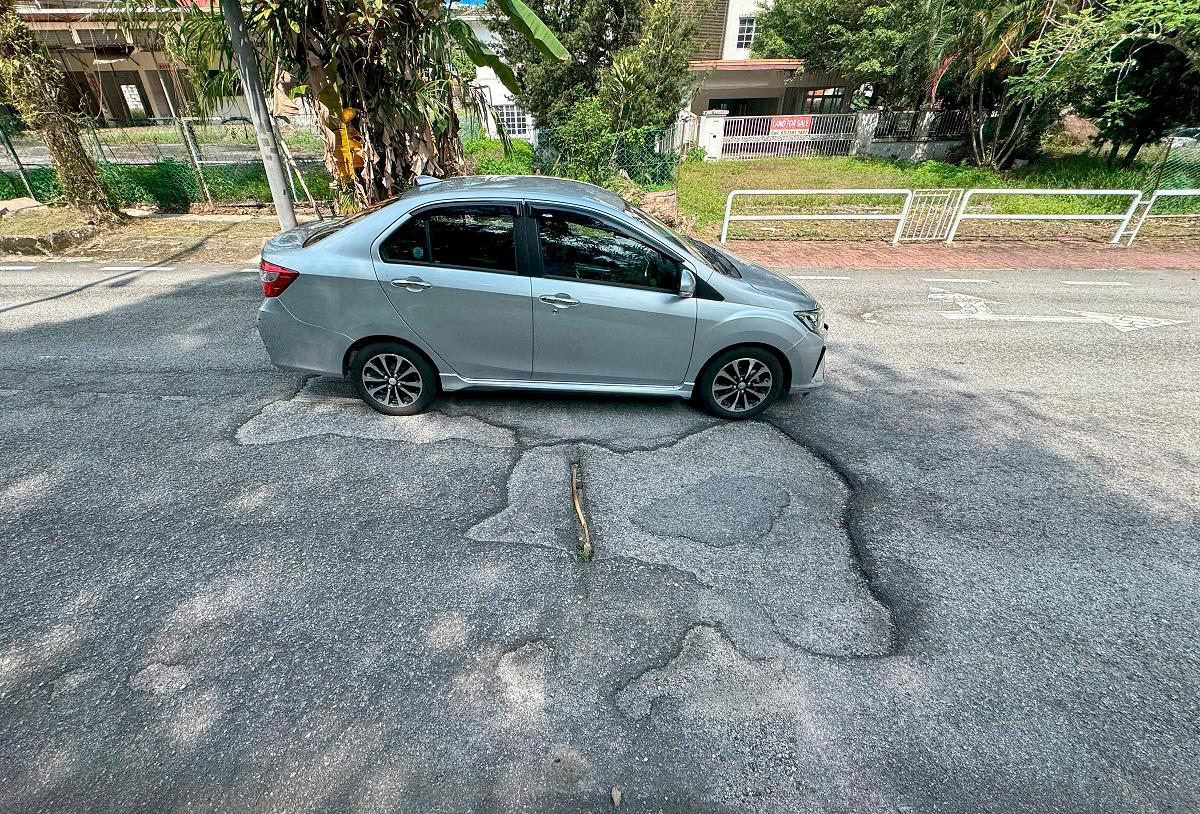
In Budget 2025, the government had allocated RM2.8 billion for refurbishing and maintaining federal roads and RM1 billion for those in other areas. – ADAM AMIR HAMZAH/THESUN
.
https://www.youtube.com/shorts/V2xnQELIWKw
WATCH VIDEO: https://www.youtube.com/shorts/V2xnQELIWKw

PETALING JAYA: It is time for Malaysia to stop patching potholes and start saving lives.
Budget 2026 must focus on building safer roads, not just fixing damaged ones, by shifting from reactive repairs to proactive safety systems, says Universiti Putra Malaysia Road Safety Research Centre head Assoc Prof Dr Law Teik Hua.
He said the government must use the next federal budget to finally tackle long-standing weaknesses in the transport system, especially the stubbornly high number of motorcyclist deaths and chronic non-compliance among heavy vehicles.
“The most troubling trends remain the inordinately high fatality rate among motorcyclists and the systemic non-compliance of commercial vehicles, as shown in the recent speed limiter devices report,” he told theSun.
Law said targeted funding should be channelled to specific, high-impact measures such as subsidising tamper-proof speed governors for commercial fleets and building segregated motorcycle lanes along high-risk federal routes.
“These measures would physically separate vulnerable road users from fast-moving traffic and prevent collisions before they happen,” he said.

He stressed that road maintenance must be seen as a core safety investment, not a beautification exercise.
“Spending more on maintenance is not just for convenience – it’s a fundamental safety requirement,” he said, noting that potholes, cracks and poor lighting directly contribute to accidents and fatalities.
Law proposed the setting upof a ring-fenced fund dedicated to systematic, preventive maintenance using durable materials.
“This would be a worthwhile investment in preventing crashes rather than the costly habit
of patching roads only after
tragedies occur.”
To curb accidents involving heavy vehicles, Law said the focus should shift towards technology-led enforcement.
He suggested creating a centralised telematics system to monitor speed, braking behaviour and driver fatigue across all commercial fleets.
“This would move enforcement from sporadic roadside checks to a continuous, data-driven model,” he said.
“Non-compliant fleets could be automatically flagged or fined, ensuring accountability and consistency.”
While stricter enforcement and public education remain relevant, Law said lasting change depends on infrastructure designed to make safer choices easier by default.
“The Budget should make a significant share of infrastructure spending conditional on safe system design principles,” he said, referring to an approach that accepts human error and focuses on roads, vehicles and speeds that prevent fatal outcomes.
He recommended the setting up of a safe system infrastructure fund to retrofit high-risk blackspots and build “forgiving roads” that reduce the severity of crashes.
He also called for mandatory, tech-based monitoring of commercial fleets to ensure full compliance with speed and safety standards.
“These measures would mark a decisive shift from reactive spending to proactive, life-saving policy.
“They would signal a strategic move towards a truly safety-centred national transport framework.”
In the previous budget, the government allocated RM2.8 billion for the refurbishment and maintenance of federal roads.
Another RM1 billion was for non-federal routes, including secondary, Felda, industrial and flood-damaged roads.

 Ads by:
 Memento Maxima Digital Marketing