LIFE+STYLE-Talk Around Town | Geared toward a more balanced diet
.
.
.
News of the severe shortage of vegetables in the Vietnamese daily diet, as reported by some major media outlets, came as a shock to us Vietnamese.
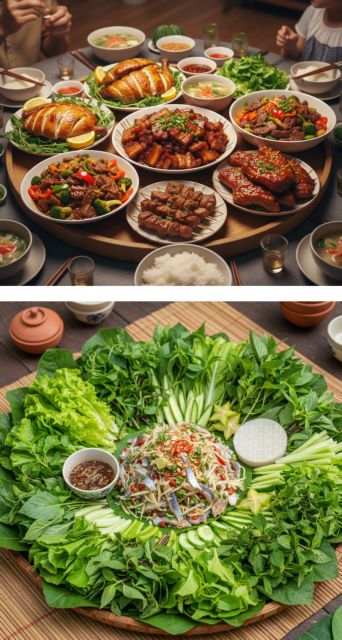
As an agricultural country, green produce has always been part of the food scene. The only diet without green vegetables one could possibly think of is made up of pressed steamed rice, peanut and sesame salt. It’s the traditional Vietnamese food to go – the kind you bring on a journey in the past, or provide as quick relief for people stranded in flooded areas at present.
Today, a daily meal heavy on meat but light on vegetables has become more popular, with international fast food just a tap away on your phone. This seems to be pushing traditional ways aside.
Ordering a seafood hotpot and some roasted goodies for the adults, but spaghetti and pizza for the children, is a common sight at many gatherings. Since when did people narrow their children’s food choices to pasta and pizza? Many adults say that the youngsters just won’t eat their food, and prefer to make life easier by giving in to what they want.
.
 |
…
I, for one, believe if you raise your kids in Việt Nam and let them grow up on pasta and pizza, it’s a shame. Don’t get me wrong, I love pasta and pizza myself. I would only object if you allow your kids to depend on ready-made pasta and pizza, without learning to appreciate the wide variety and health benefits that traditional Vietnamese way of eating can bring about.
These days, children eat less and less at home. As they grow up, they mostly eat what they are given at school or at family dining time. When they start to hang out with friends in secondary school, they develop a taste for street food, which can be both delicious and dangerously tempting.
School snacks sold outside the gates, like pork skewers, roasted sausages, or other unregulated snacks, can make your children develop a demand for fast food at that time of day, which leaves less room for real food at the family dinner table.
Our generation grew up mostly on our mother’s cooking, then we started to eat out in the late 1990s, but deep down, we still have a traditional taste for food.
But our children’s generation is growing up eating breakfast at school and having pizza, pasta or, on special occasions, grilled meat or mixed rice Korean style. In some ways it’s varied, but where are the vegetables?
It is not always this way, granted. Children’s picnic parties may have three or four dishes that are meat, with only one veggie dish and a soup containing a few vegetables. It’s mostly the case in cities and urban centres.
.
|
|
…
But that may not be enough. If their stomachs get used to this twisted eating habit with fewer vegetables, they may become unhappy, whether they realise it or not. Simply put, vegetables are healthier and deserve a regular place on the table.
“Đói ăn rau đau uống thuốc” – literally translated as “Eat vegetables when hungry and take medicine when sick” — has been in the Vietnamese mindset for generations. Now that has changed.
According to the World Health Organisation, each adult needs to consume an average 400 grams of vegetables or greens a day. Current statistics show that the average Vietnamese adult consumes only about half that amount.
But trying to estimate is problematic in a country like this. If you look at the vegetables sold in the supermarkets, they are expensive and may not reflect the true picture. At the same time, many households in the countryside grow their own vegetables, and the vast amount of produce sold in wet or green markets everyday is unlikely to show up in any statistics or surveys.
At the end of the day, we’re an agricultural country: we grow our own food, and even pick tree leaves to put on the table as well. It’s impossible to have many dishes without vegetables or the right kinds of edible forest leaves.
.
|
|
…
From Northwestern mountains to the Central Highlands, or down to the deltas of the Red River, the Perfumed River and the Mekong, Vietnamese nourishment has for a long time been a balanced concoction of protein, carbs and fibre, as these are not merely foods but also edible remedies for health.
The warning from the WHO came neither late nor early, but it is a wake-up call for those of us who need to alter our children’s diet — or even our own — to a more balanced one. VNS
.
|
|
 Ads by:
 Memento Maxima Digital Marketing
.
Nguyễn Mỹ Hà