
ASEANEWS HEADLINE-ASIA GEOPOLITICS | West Philippine Sea: Chinese forces harass PH fishing vessels; 3 injured
3 fishermen hurt due to Chinese-fired water cannon off Escoda Shoal — PCG
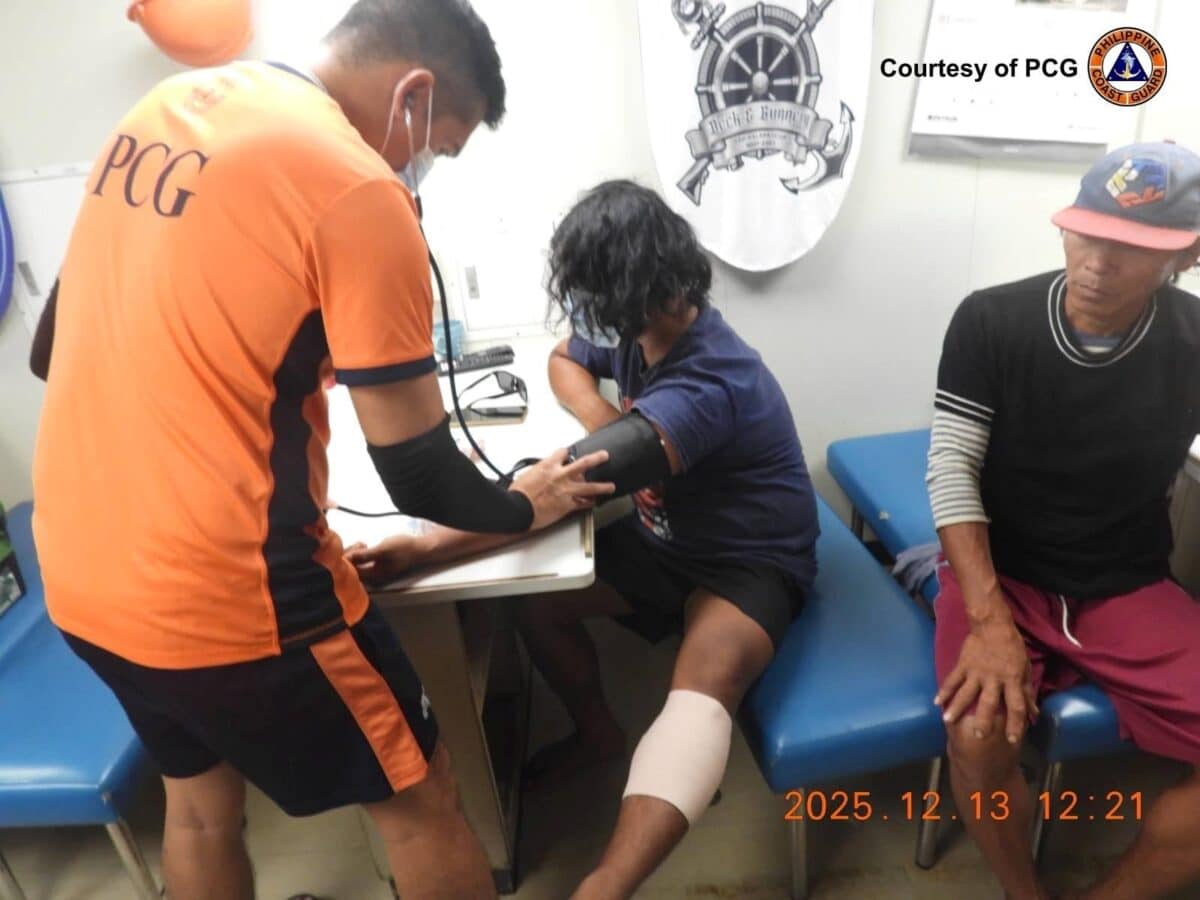 A Philippine Coast Guard (PCG) photo shows two of the three injured Filipino fishermen receiving medical attention
MANILA, Philippines — Chinese forces, firing water cannons, injured three Filipino fishermen as they harassed 20 Filipino fishing boats to drive them away from Escoda (Sabina) Shoal in the West Philippine Sea, the Philippine Coast Guard (PCG) reported on Saturday.
The harassment by the combined forces of at least five China Coast Guard (CCG) ships and several Chinese maritime militia vessels started around noon on Friday and lasted for three hours until the boats moved farther from the shoal, according to PCG spokesperson for the West Philippine Sea Commodore Jay Tarriela.
The three fishermen who were injured were on two boats that were directly hit by high-pressure water from a CCG vessel’s water cannon. They were found with open wounds and bruises when they were rescued by other fishermen, he said.
PCG medics who later examined them said their injuries were not serious.
READ: PH maritime council condemns Chinese water cannon attack on BFAR vessel
According to Tarriela, this was not the first time that Filipino fishermen were targeted by water cannons, but it was the first time the boats were directly hit.
“Before, the CCG only tried to intimidate our fishermen to discourage them from fishing,” he said.

“I would like to emphasize that this is a serious violation of the human rights of the ordinary Filipino fishermen considering that these are civilian and they have legitimate sovereign rights as Filipinos to fish within our own exclusive economic zone,” Tarriela said.
The fishermen, using cell phone cameras, recorded videos of the Chinese harassment.
One shaky video taken from one of the boats showed CCG 21559, firing its water cannon and its siren blaring, closing in on it. Another video showed a blast of the water jets hitting the boat and the crew before the video was cut.
A short video clip showed another CCG vessel firing its water cannon, while chasing another boat.
Damaged boats
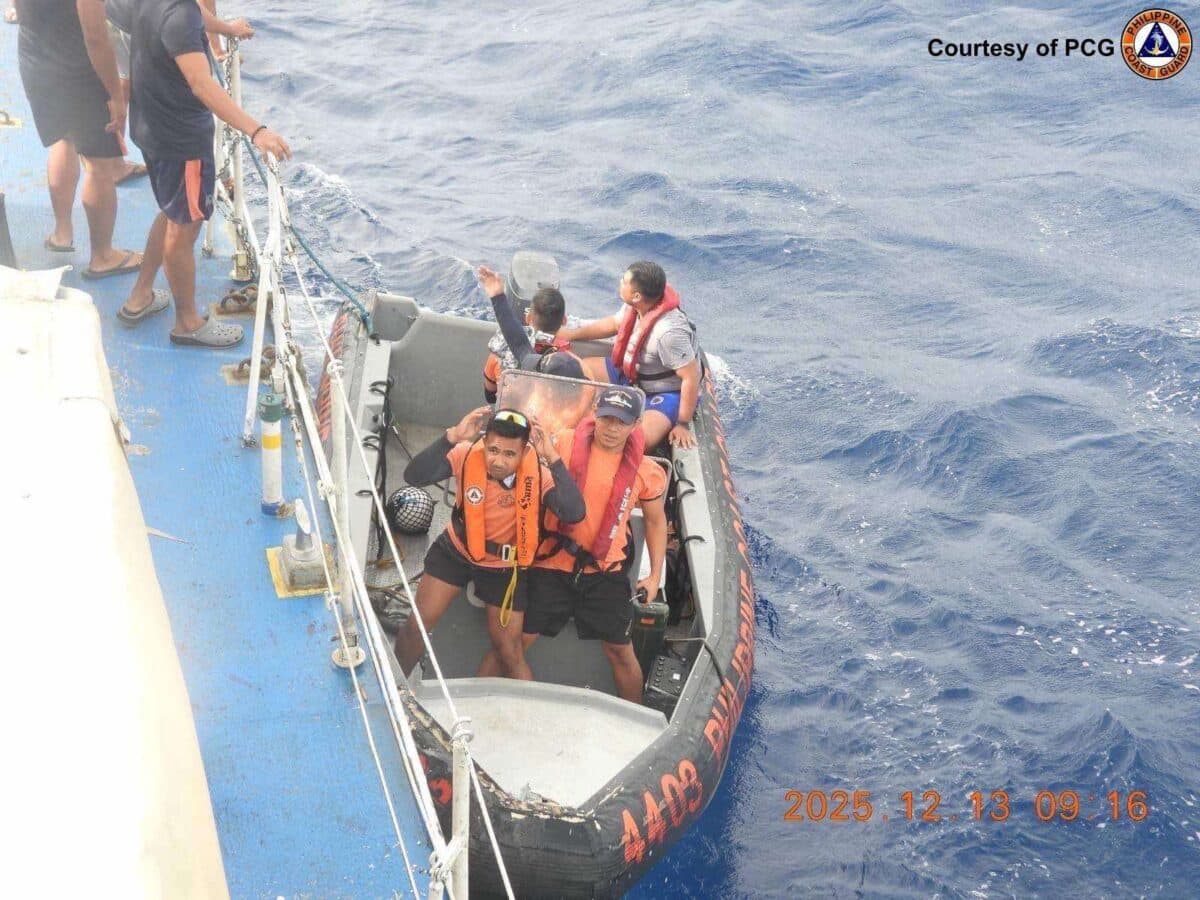 A photo from the Philippine Coast Guard (PCG) shows Filipino fishermen being rescued from their damaged vessel
.
On one of the videos, the crew could be heard debating on whether to push on or turn back as they were being blasted with a water cannon.
“One of the boats took on water but was eventually drained, though there is a possibility of engine damage,” Tarriela said.
He said other fishing boats assisted the damaged boats, rescuing their crew and transferring some of them to other boats. The damaged boats were towed away by other fishing boats in the area.
Chinese coast guard crews on rigid-hull inflatable boats approached some of the fishing boats still anchored and cut their anchor lines. This action put the boats and their crews at serious risk amid strong currents and rough seas, Tarriela said.

@[email protected]
.
He said the Chinese attacked the Filipinos who were aboard indigenous wooden boats, each carrying around 10 to 15 fishermen. There were roughly 300 fishermen on 20 boats that were driven away from one of their traditional fishing grounds.
Risky encounter
.
.
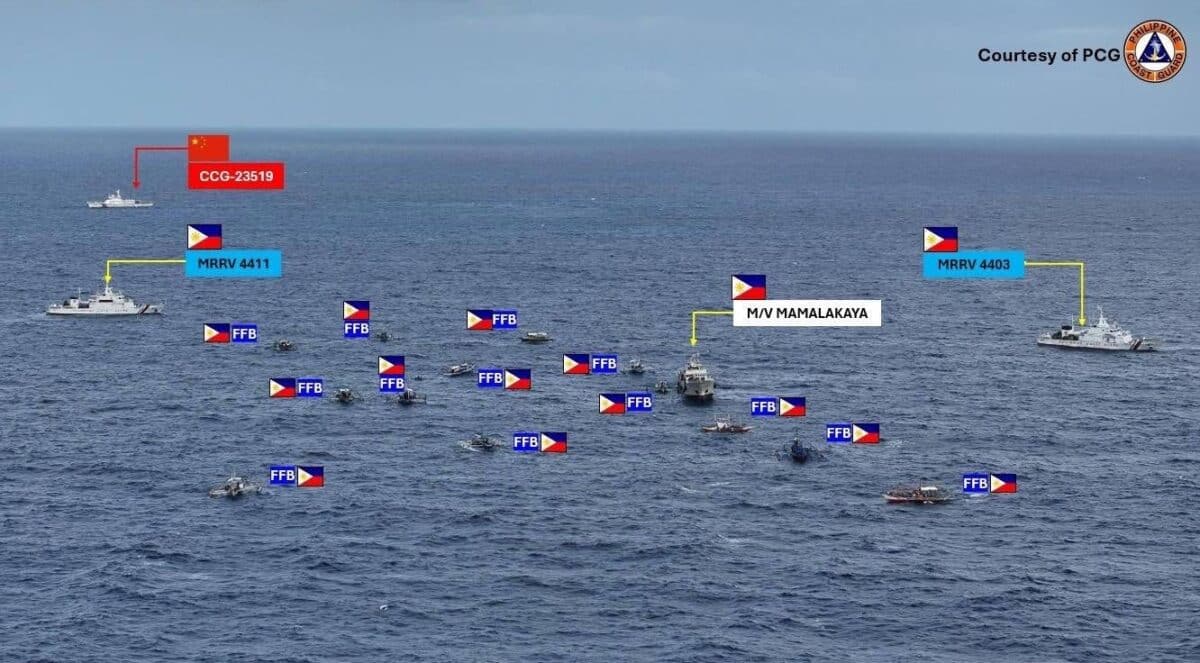
On Saturday morning, the PCG dispatched two multirole response vessels, MRRV-4403 and MRRV-4411, to assist the harassed fishermen.
While approaching the boats before daylight, the PCG ships were repeatedly blocked by CCG vessels 21559, 5204, 23519 and 21562.
One particularly risky encounter occurred when CCG 23519 came within 32 meters of a PCG vessel, Tarriela said.
He said the Chinese vessels remained nearby but did not resume aggressive actions against the fishing boats while the PCG ships were present, allowing them to reach the fishermen and provide medical aid, fuel, ice and food supplies.
@[email protected]
.
The operation was conducted in coordination with MV Mamalakaya, a fishing boat of the Bureau of Fisheries and Aquatic Resources that is part of the government’s Kadiwa para sa Bagong Bayaning Mangingisda program.
Escoda’s crucial role

Tarriela said most of the Filipino fishing boats that sail to fishing grounds close to Philippine-occupied Kalayaan Island, carry crews primarily from Palawan. Some also come from Mindoro and Zambales.
Escoda is about 140 kilometers west of Palawan in the West Philippine Sea.
China claims nearly all of the South China Sea, including the West Philippine Sea, waters in the western portion of the country’s 370-kilometer exclusive economic zone (EEZ).
Beijing continues to ignore a 2016 ruling by an international arbitral tribunal that nullified its claims and upheld Manila’s sovereign rights over these waters.
Escoda is also about 55 km east of Ayungin (Second Thomas) Shoal and roughly 90 km east of Panganiban (Mischief) Reef, one of the biggest artificial islands built by China.
The shoal plays a crucial role in maintaining Philippine presence in that part of the West Philippine Sea.
It is a rendezvous and jump-off point for resupplying the troops on the BRP Sierra Madre, a decrepit World War II-era Navy ship that has served as a Philippine military outpost in the West Philippine Sea since it was intentionally grounded on Ayungin in 1999.
Chinese harassment of Philippine government and civilian vessels near Escoda is not a new development.
According to Tarriela, the PCG has faced intensifying Chinese interference in the area since at least April 2024, when the PCG deployed vessels, including the multirole response ship BRP Teresa Magbanua, to monitor fishing and resupply operations.
@[email protected]
.
A notable escalation occurred in August 2024 when a Chinese coast guard vessel repeatedly rammed the Teresa Magbanua.
The Teresa Magbanua was deployed to Escoda in April 2024 mainly to thwart another possible land reclamation by China.
The Chinese forces repeatedly blocked supplies from reaching its crew during its extended deployment until it was forced to withdraw from the shoal in September 2024 due to the medical needs of some crew members, repairs and depleted supplies and bad weather.
Tarriela noted that the shoal’s proximity to Panganiban and Ayungin has allowed the Chinese to quickly reach Escoda. /cb
For comprehensive coverage, in-depth analysis, visit our special page for West Philippine Sea updates. Stay informed with articles, videos, and expert opinions.