
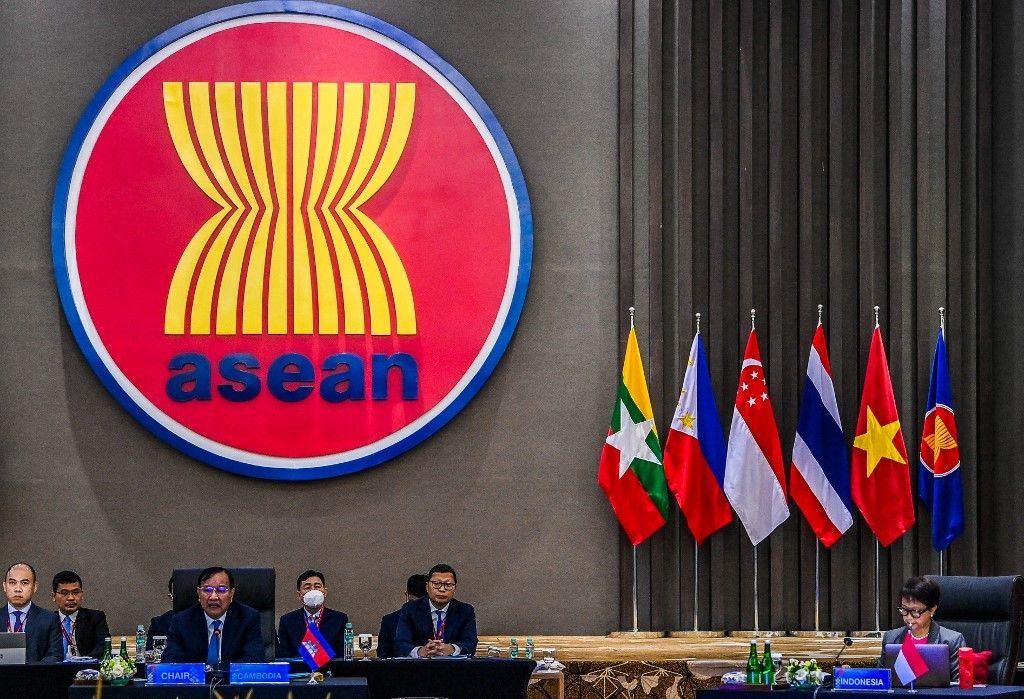
OP ED OPINION | ASEAN | Positioning the Philippines in a volatile ASEAN region

 As 2026 begins, the Philippines finds itself at a critical juncture in its engagement with Southeast Asia and the wider Indo-Pacific. ASEAN remains the country’s most immediate diplomatic, economic, and strategic community that offers both opportunity and obligation amid a rapidly changing global environment. In a region marked by geopolitical rivalry, economic uncertainty, and transnational challenges, the Philippines must approach ASEAN not merely as a forum for dialogue, but as a platform for purposeful national positioning.
.
 |

ASEAN’s strength has long rested on its ability to maintain relative stability through consensus, cooperation, and non-interference. Yet the pressures confronting the region today are far more complex than in previous decades. Strategic competition among major powers, tensions in the South China Sea, supply chain disruptions, climate vulnerabilities, and digital transformation are testing ASEAN’s cohesion and relevance. For member states like the Philippines, these realities demand a clearer articulation of national interests within the ASEAN framework.
.
|
|

Economically, ASEAN continues to be a vital growth engine. As one of the world’s fastest-growing regions, it offers vast potential for trade, investment, tourism, and labor mobility. For the Philippines, deeper economic integration must translate into tangible benefits for Filipino workers, farmers, and enterprises. Strengthening participation in regional supply chains, supporting MSMEs in cross-border trade, and enhancing digital connectivity within ASEAN are crucial steps toward ensuring that regional growth is inclusive and resilient.
.
|
|

At the same time, economic openness must be matched with competitiveness. The Philippines cannot rely solely on demographic advantages or consumption-driven growth. Investments in infrastructure, education, innovation, and digital capacity are essential if the country is to fully leverage ASEAN markets. Regional integration rewards preparedness; it exposes weaknesses as much as it amplifies strengths.
.
|
|

Security remains a defining concern. The South China Sea continues to be a flashpoint that directly affects Philippine sovereignty, livelihoods, and regional peace. While ASEAN’s consensus-based approach can be slow, it remains an important venue for advancing dialogue, confidence-building measures, and adherence to international law. The Philippines must continue to advocate for a rules-based order, peaceful dispute resolution, and the primacy of the United Nations Convention on the Law of the Sea—principles that safeguard not only national interests but regional stability.
.
|
|

ASEAN’s relevance also depends on its ability to respond collectively to non-traditional security threats. Climate change, pandemics, cyber risks, and natural disasters do not respect borders. The Philippines, one of the most climate-vulnerable countries in the region, has a strong stake in pushing for stronger regional cooperation on disaster preparedness, climate finance, food security, and health resilience. These are areas where ASEAN solidarity can directly save lives and protect livelihoods.
.
|
|

Beyond policy, people-to-people ties must not be overlooked. ASEAN integration is often discussed in terms of summits and statements, yet its long-term success depends on how well citizens understand and benefit from regional cooperation. Expanding educational exchanges, cultural programs, and youth engagement can help foster a shared ASEAN identity while reinforcing national pride and purpose.
.


As the Philippines navigates 2026 and beyond, its ASEAN strategy must be clear-cut and comprehensive. Clarity in terms of defining national interests, consistency in upholding principles, as well as in engaging both partners and competitors
.
|
|
|
|


.
Published Jan 5, 2026
Updated Jan 4, 2026
Updated Jan 4, 2026
.
.
It's only fair to share...