ASEANEWS HEADLINE-COURTS & CRIME | MANILA: House panel junks 2 impeach raps vs Marcos Jr.
WATCH VIDEO: https://www.youtube.com/watch?v=lWt4zLLKr8g
House Justice Committee dismisses impeachment complaints vs Marcos as insufficient in substance |ANC
.
.

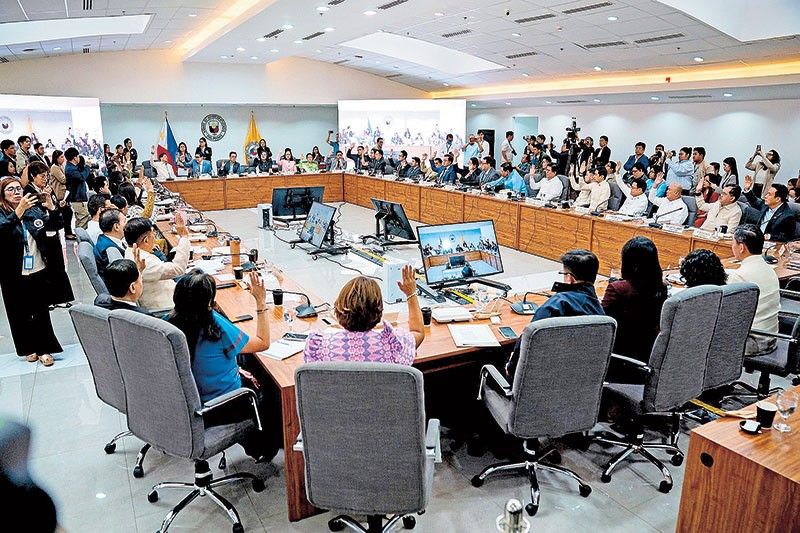
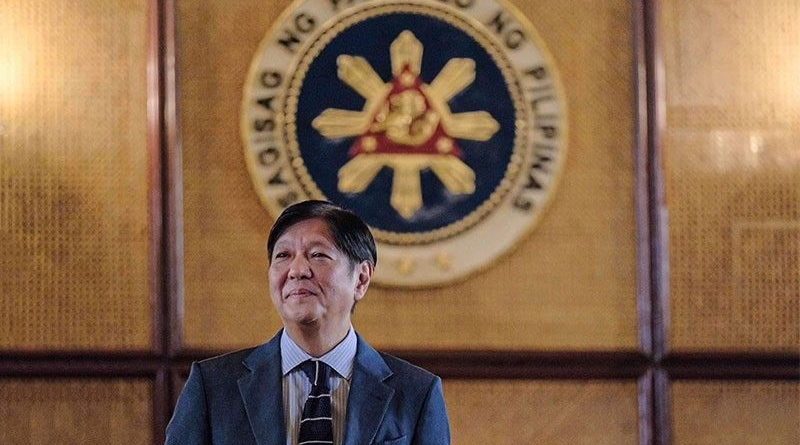
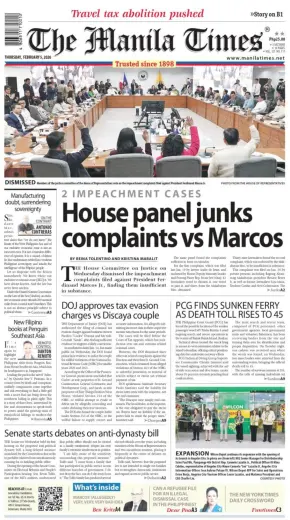
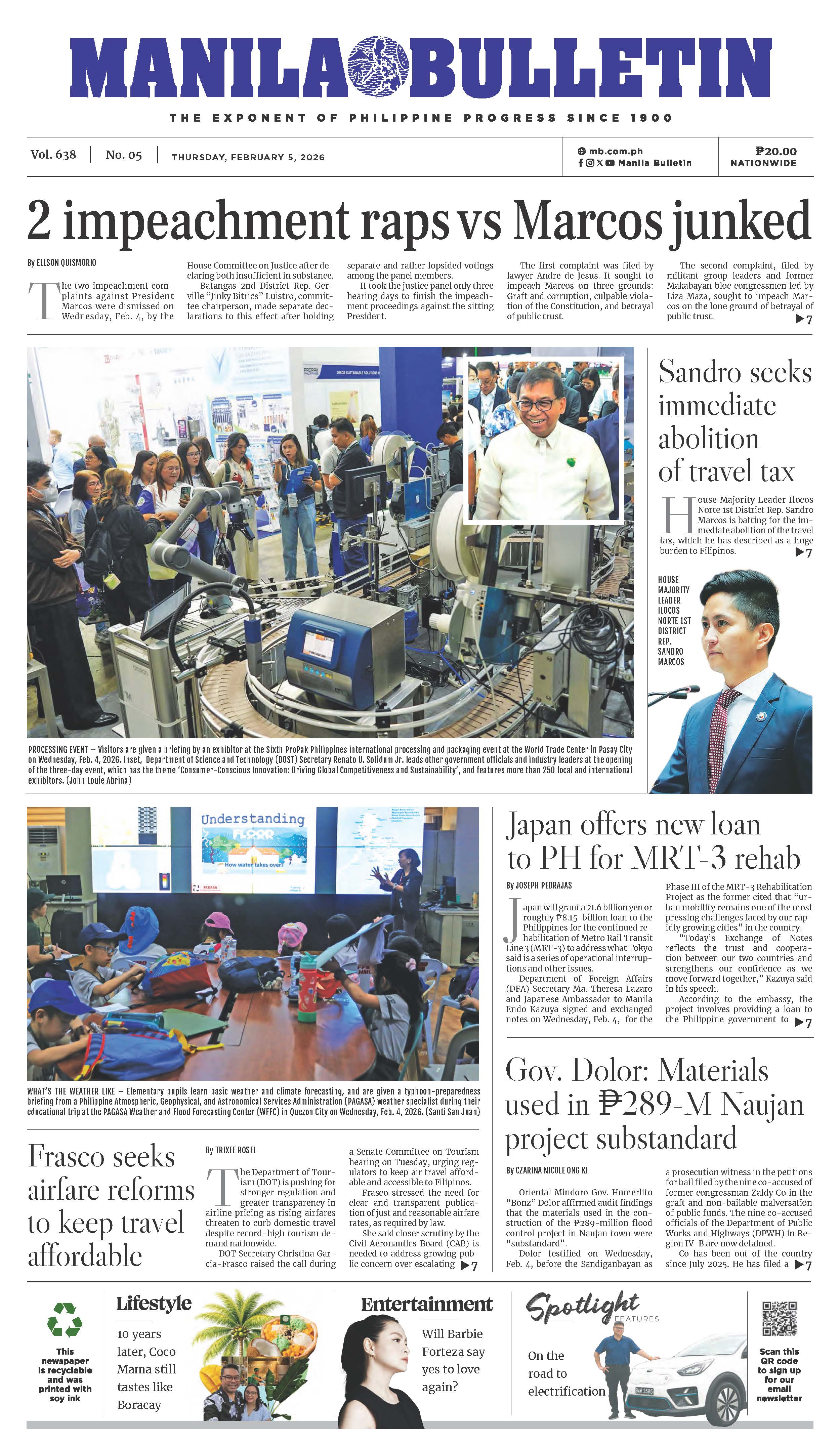
MANILA, Philippines — Through votes from overwhelmingly administration allies, the impeachment complaints against President Marcos have been scrapped for “insufficiency in substance” by the House of Representatives’ committee on justice.
The development has effectively thwarted further attempts to have the President impeached within a year.
Forty-two administration lawmakers voted yesterday to throw out the first complaint filed by lawyer Andre de Jesus, with only its endorser Rep. Jernie Jett Nisay dissenting, and three others – all members of the Makabayan bloc – abstaining.
In the second petition filed by former Gabriela congresswoman Liza Maza, 39 members of the justice committee voted against a motion to declare it sufficient in substance, outnumbering Reps. Antonio Tinio, Renee Co, Sarah Jane Elago, Chel Diokno, Leila de Lima, Edgar Erice and Nisay. There was no abstention.
 |
.
On Monday, the committee voted to declare the complaints sufficient in form.
Committee chairperson Rep. Gerville Luisto (Batangas second district), who presided over the hearing, said the voting “concludes” and “suspends” further impeachment proceedings in the panel, and set for Feb. 9 at 10 a.m. its next meeting, mainly to deliberate on their committee report.
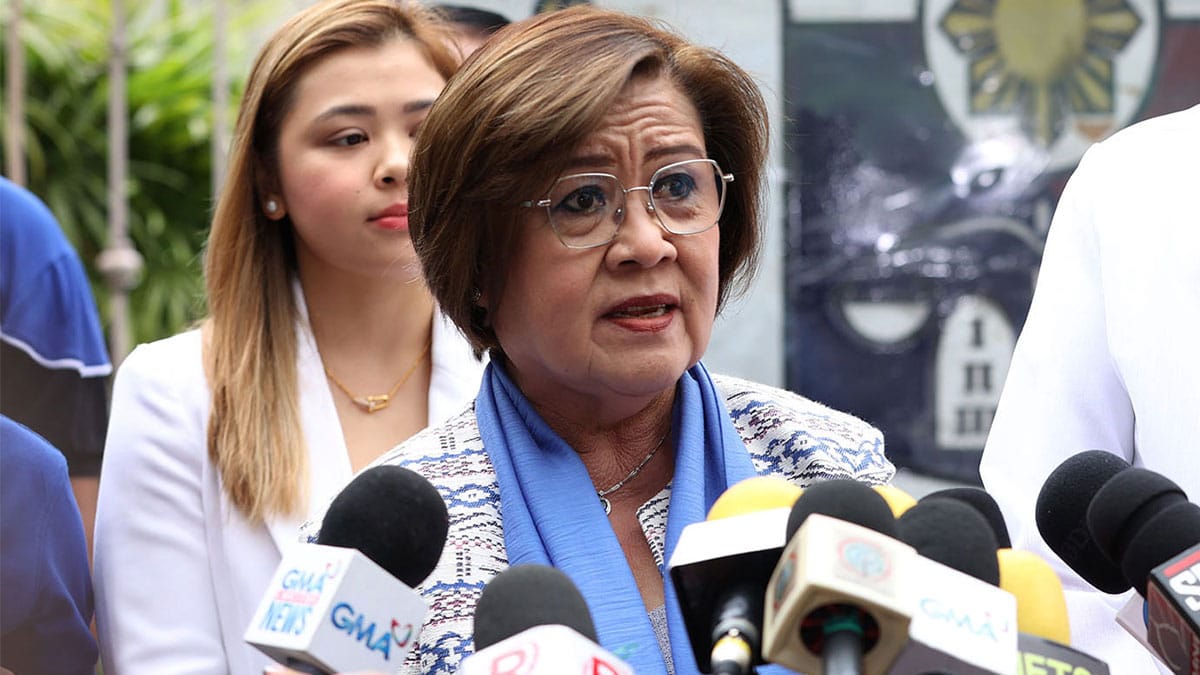
Several members of the House committee on justice on Tuesday cited what they considered to be defects in the first impeachment complaint against President Ferdinand Marcos Jr., which seeks his removal from office over allegations of drug use and corruption
…
.
The committee report will then be submitted to the House plenary where the 318 lawmakers will decide whether to uphold the junking of the impeachment move or reverse it by way of one-third votes or a total of 107 House members.
If the committee report gets junked after a voting, the impeachment case would be sent to the Senate for trial, with the senators to be designated as judges.
|
|
.
At yesterday’s hearing, committee members took turns citing what they considered flaws in the complaints.
Rep. Rufus Rodriguez, of Cagayan de Oro City’s second district, noted there was no recital of facts in both impeachment suits. “It’s already very clear that it’s not a recital of facts because you stated a conclusion, corruption was systematic, not incidental.”
“These are now conclusions of law which we will disregard. So therefore here, it concludes conclusion of law without any basis. It says respondent’s institutionalization of the BBM parametric formula constitute betrayal of public trust,” he said.
“But there is no link. The conclusion jumps from the charge – without any link of the President. And that is why clearly, the first ground of betrayal of public trust is not sufficient in substance. And this particular allegation should fall,” Rodriguez emphasized.
‘Policy critique’
Rep. Alfredo Garbin Jr., of Ako Bicol party-list, observed that the second impeachment suit was essentially a policy critique that does not meet the constitutional standards required to proceed as an impeachment case.
“My take on this is that this is a pleading of a policy critique. It does not plead an impeachable offense nor a willful constitutional breach,” Garbin, a committee vice-chairman, remarked.
He refuted the allegation that Marcos institutionalized irregularities in the Department of Public Works and Highways with the so-called “BBM parametric formula.”
“Let me state that this is not sufficient in substance. A planning allocation formula is not illegal on its face. Government budgeting necessarily involves policy priorities,” Garbin said, adding that references in the complaint to the “priorities of leaders” do not establish corruption.
“The phrase ‘priorities of leaders,’ even if quoted, is not proof of graft,” he argued, noting that such considerations are “consistent with political accountability in appropriations, especially where Congress itself sets national priorities.”
San Juan lone district Rep. Ysabel Maria Zamora, committee vice chairman, also found the complaints lacking in substance. “For an impeachment complaint to be declared sufficient in substance, the recital of facts should constitute the impeachable offense charged,” she said.
|
|
.
“We need to show the ultimate facts or the overt acts of the President in relation to the various schemes he allegedly perpetrated,” she added.
“To say that the Office of the President has become the command center of a criminal enterprise is not only unfounded but is also mere dramatic rhetoric,” she pointed out.
Zamora noted that the second complaint cites “three different schemes,” which she summarized as “institutionalizing systemic corruption through the BBM parametric formula, abuse of discretionary power as regards unprogrammed appropriations and direct personal involvement in kickbacks,” adding that “these three, in fact, are interconnected” and “it is all about the flood control scheme.”
“I don’t want to belabor the point, Madam Chair. It is clear from the complaint that the President did not do any overt act that will show that he directed these three schemes,” Zamora said.
“In the first place, it was not the President who created the BBM parametric formula of the DPWH,” she said, adding that “having an imperfect policy direction is not an impeachable offense.”
Speculative
She also rejected attempts to link President Marcos to alleged corruption in the transfer of Philippine Health Insurance Corp. (PhilHealth) funds, which had been ordered returned from the National Treasury by the Supreme Court.
“That the Supreme Court struck down the provision relating to PhilHealth funds does not make the President primarily liable for such. The connection to corruption is highly speculative,” she said.
“We should not tolerate the use of hearsay allegations, videos that are not attested to, or fake news,” she further said.
Zamora said much of the allegations against the President rests on conjecture rather than on proof. “A lot of what is written are mere speculations or conjectures arising from hearsay and worse, even double hearsay testimonies, just to connect the President to the charges,” Zamora said.
But for Senior Deputy Minority Leader and Caloocan Rep. Edgar Erice, the committee decision may be challenged before the Supreme Court.
|
|
.
“I think the committee made a mistake in its determination of substance because the rules on determining substance are actually definite,” Erice told “Storycon” on One News.
While admitting that the complaints may not have enough support to reach the Senate, Erice said they should have been declared sufficient in substance anyway to give Marcos the chance to respond to allegations against him.
“They no longer gave the complainants the opportunity to submit sworn statements and present their evidence,” he added.
‘Prematurely murdered’
Maza said she felt their complaint was “prematurely murdered” because committee members did not want the allegations against the President exposed at full-blown hearing.
“The people will be forced to come out from this process to get justice that they want to get,” Maza said as she hinted at turning to the Supreme Court for help.
Act Teachers party-list Rep. Antonio Tinio, one of the endorsers of the Makabayan complaint, said the justice committee should have let Marcos answer the allegations against him in Congress.
“They should have continued the chapter. The President has to answer. Congress should have tackled whether the evidence against the President is enough for his impeachment. The committee appeared to be determined to kill the impeachment from here,” Tinio told reporters after the hearing.
In her opening statement, Luistro reminded her colleagues in the committee that an impeachment complaint must meet a strict constitutional threshold and cannot rely on loose associations or unproven claims.
|
|
.
“Significantly, for a complaint to be sufficient in substance, let us all be reminded, it must do more than suggest wrongdoing by association or inference,” she said.
“It must plead facts with particularity, showing that the official personally participated in knowingly authorized or culpably ignored acts that strike at the integrity of the office itself,” she added.- Janvic Mateo
February 5, 2026