OPINION COLUMN-LIFE+STYLE | Public Lives | On turning 80 By: Randy David –
Public Lives
 Exactly a month ago today, I turned 80. It was an event I didn’t expect to feel any different from my previous birthdays. But thanks to my fellow Inquirer columnist Ambeth Ocampo, who devoted an entire column to the lunch my sisters prepared at our childhood home in Betis, I received a lot more greetings and attention than usual.
Far from the “Kapampangan feast” by which Ambeth titled his piece (1/14/26), lunch that day consisted of the simple dishes my late mother used to cook when we were growing up—easy to prepare, nutritious, tasty, and inexpensive viands. Perhaps the only thing “special” was the callos my daughter Kara contributed. But given how we have come to associate fiestas with elaborate dishes rich in spices and ingredients, I can understand how the faintly familiar but long-forgotten meals of our childhood can strike one as special. Marcel Proust was right: a large part of our memory resides in our taste buds.

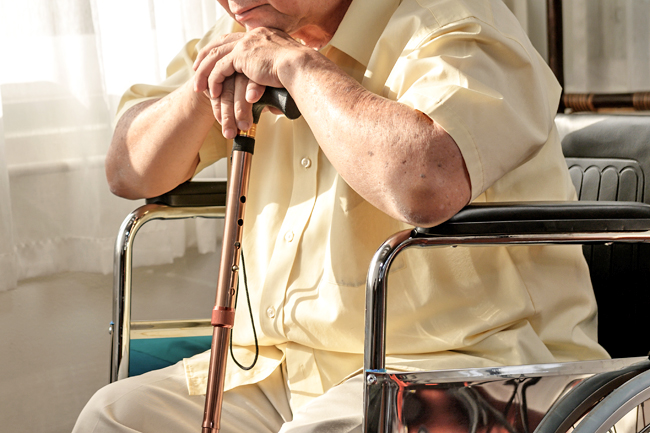
But that is the public side of marking a birthday. At my age—or rather, in one’s elderly years—the private side is more deeply felt. The question I ask myself is no longer how many years I have left, but how much longer I can walk for an hour without pain, and think clearly enough to compose a column every week without being tempted to ask ChatGPT for a draft. I realize—and for this I am eternally grateful—that I am still healthy enough to regard these as indicators of successful aging.
 |
I am, however, profoundly conscious of death and the loss it brings, particularly after my wife Karina’s passing nearly seven years ago. Her death left me empty and disoriented. She always seemed hopeful throughout her illness, and I wanted her to live longer. Yet seeing her struggle to breathe through many sleepless nights gave me pause. I began to ponder the difference between the aging process and the dying process. We seek to add more years to our life, but we also wish our death to be quick and free of suffering.
|
|
Unfortunately, that is not how it works in real life. An article in the October 2014 issue of The Atlantic, curiously titled “Why I hope to die at 75,” by Ezequiel J. Emanuel, put it starkly: “Health care has not slowed down the aging process—so much as it has slowed down the dying process.” I had to do a double take on that sentence. What he was saying is that modern medicine has indeed added years to our lives, but it has also prolonged the dying process.
|
|
The two processes are tightly intertwined. Dr. Emanuel (only at the end of the article do we learn that he is a physician and cancer specialist) writes that the idea of a “compression of morbidity,” the hope of living longer with hardly any aches until one abruptly dies, is a fantasy. It is fueled by investments in regenerative medicine and organ replacement.
|
|
The reality is that increases in longevity tend to be accompanied by increases in disability. More people today survive strokes, but many must then contend with paralysis or the loss of speech. They spend their remaining years in rehabilitation and therapy, dependent on caregivers. Even more insidious is the barely detected “silent stroke,” which can leave subtle brain damage and impair cognitive function.
|
|
The fair question, therefore, is not how many years we can add to our lives, but how many years we can reasonably expect to remain healthy—free from persistent pain, physical disability, and major cognitive decline. For Dr. Emanuel, that personal threshold is 75. He was 58 when he wrote the article, having just climbed Mt. Kilimanjaro. In short, he was in top form.
|
|
He was giving himself 18 more years of what he considered a healthy life: no major mental or physical limitations, no chronic or terminal illness, and none of “the most dreadful of all possibilities—living with dementia.” He was not contemplating suicide or euthanasia. Rather, he resolved that once he reached that age, he would no longer seek or agree to medical interventions aimed at prolonging his life—beyond standard advance directives such as DNR or DNI—including surgery and curative treatments, except those meant to relieve pain or discomfort.
I have kept a digital copy of Dr. Emanuel’s essay and reread it on my 80th birthday. I have now surpassed his notion of healthy life expectancy by five years. I believe I have lived a complete life. I do not wish for more years, as much as I hope and pray that when my time comes, leaving will be quick.
|
|
—————-
.
February 08, 2026

.