ASEANEWS HEADLINE-DAY 3: DU30 ICC EJK PRE-TRIAL | THE HAGUE, Europe: Duterte argument: Killings done in self-defense
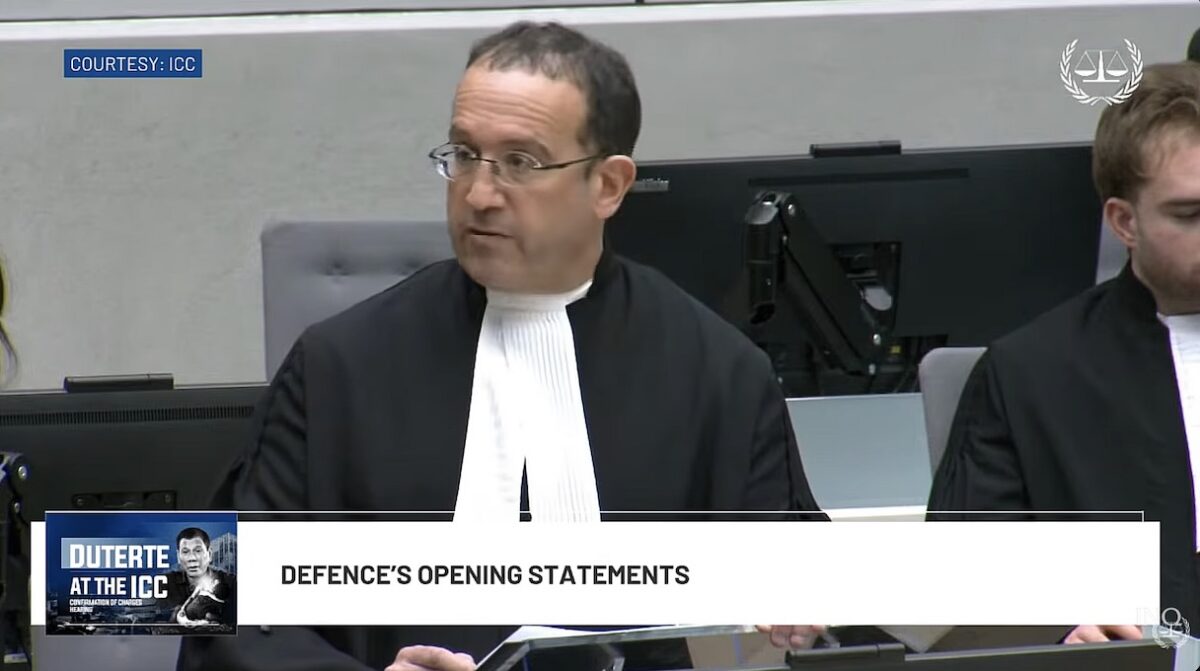
Nicholas Kaufman makes opening statement at the confirmation charges hearing on the ICC case of former President Rodrigo Duterte
.
WATCH VIDEO: https://www.youtube.com/watch?v=wuUNkVdAeZU
LIVE: Duterte at the ICC: Confirmation of charges hearing (Day 3) | Feb 26
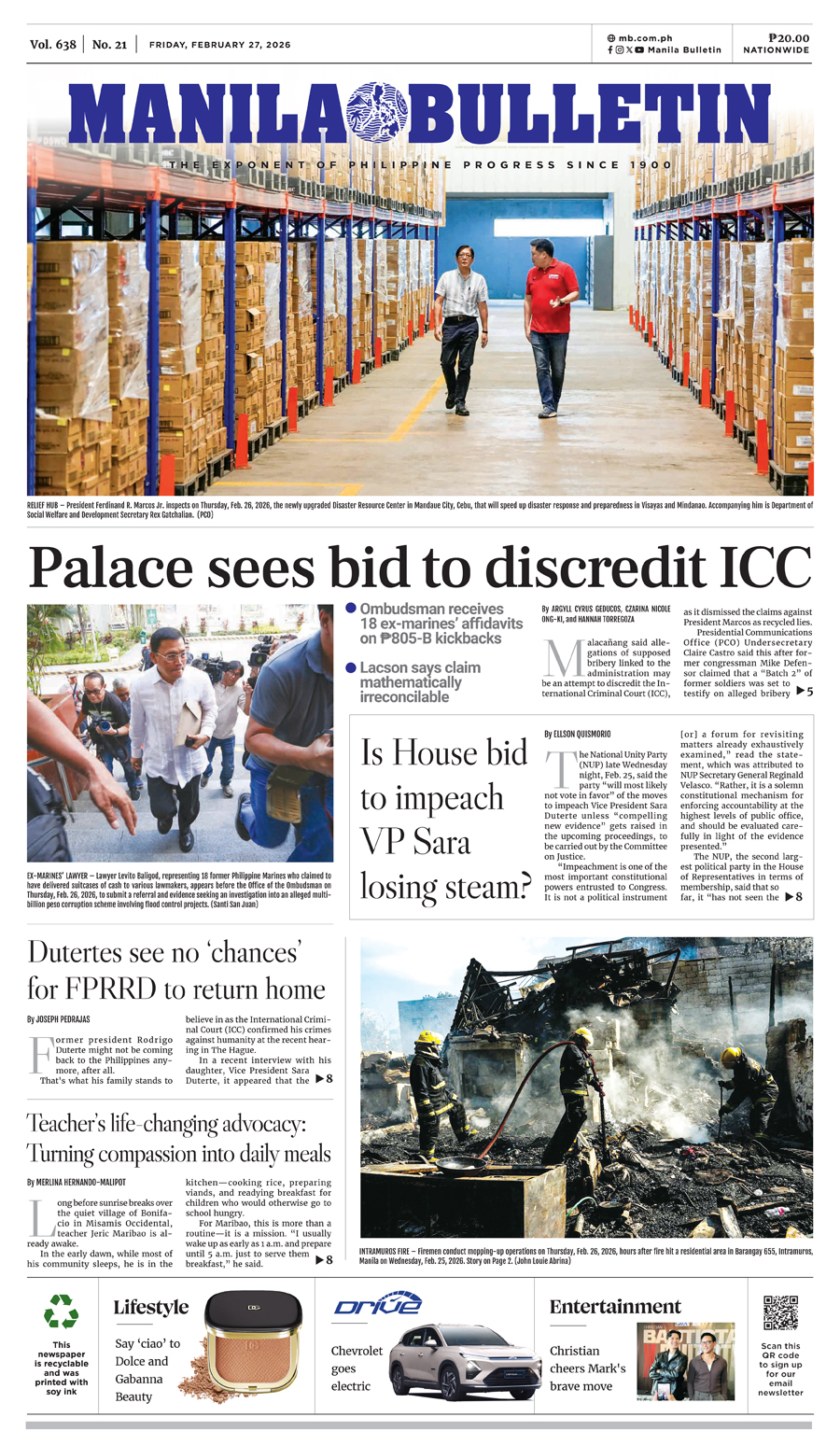
The third day of the confirmation of charges hearing for former President Rodrigo Duterte is set to take place today, February 26.
The Defense team of Rodrigo Duterte will present their merits on the case before the Pre Trial Chamber I judges.
.
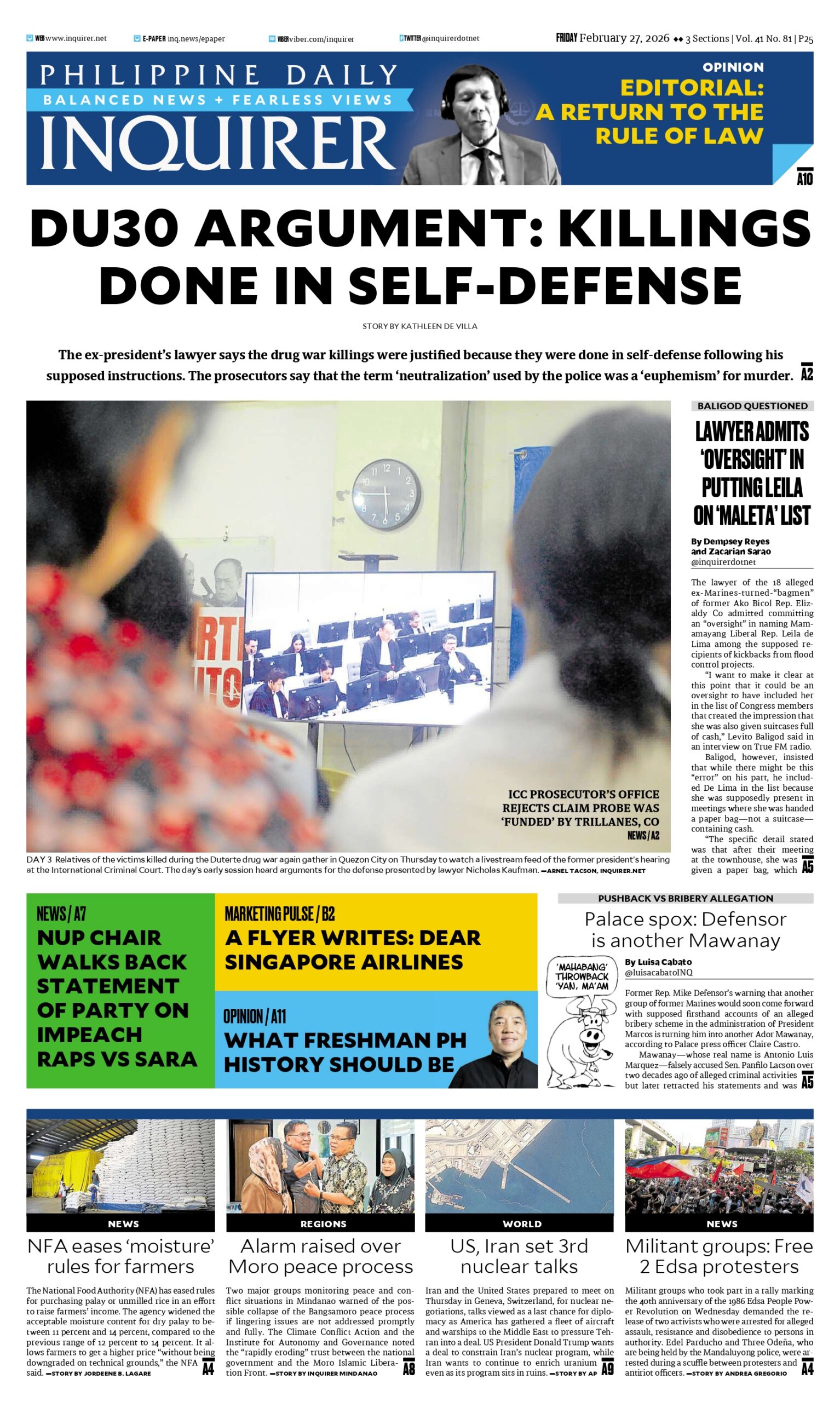
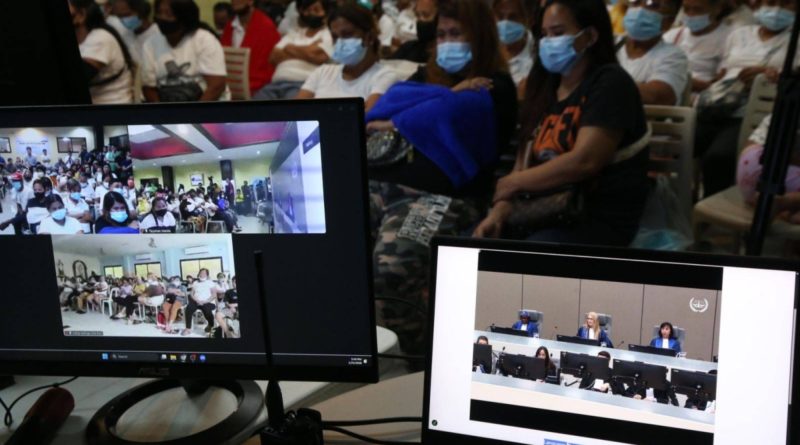
THE HAGUE, HE Netherlands—The defense team of former President Rodrigo Duterte on Thursday told the Pre-Trial Chamber I of the International Criminal Court (ICC) that the killings in police antidrug operations were justified as they were done in self-defense.
On the third day of the confirmation of charges hearing to determine whether there is sufficient evidence for the ICC to proceed with Duterte’s trial on charges of crimes against humanity, the ex-president’s lead counsel Nicholas Kaufman downplayed the killings as “minimal” and claimed that they were not “widespread” as alleged by the prosecution.
.
.
READ: LIVE UPDATES: Duterte ICC Hearing – Confirmation of Charges (Feb 26)

@[email protected]
The Duterte administration reported that by the time the ex-president stepped down, more than 6,000 mostly poor Filipinos had been killed, excluding many more when he was mayor of Davao City where the alleged model of the Davao Death Squad anticrime operation originated.
Not after ‘civilian population’
The defense argument was a response to the allegations by the ICC prosecutors that the case against Duterte had substantial grounds because of the “widespread and systematic” attacks on the civilian population.
But to Kaufman, the drug war killings could not be considered a targeted attack on the “civilian population” as they involved drug suspects who allegedly had guns in their hands.
He raised as potentially exonerating evidence parts of Duterte’s public statements—which he claimed the prosecution omitted—reminding police officers to only kill if their lives were in danger.
“Just do it right. We have training and you have the duty of a law enforcer,” Kaufman said, quoting Duterte’s remarks during a speech.
@[email protected]
Kaufman criticized Robynne Croft, one of the prosecution’s trial lawyers, for arguing that the term “neutralization” was a “euphemism for murder” in the Command Memorandum Circular (CMC) 16-2016, which guided the implementation of “Project: Double Barrel.”
‘No smoking gun’

He insisted that the prosecution failed to establish causal links between Duterte and the deaths, pointing out that no witness in the murder and attempted murder charges against Duterte could say that they got a kill order from the former president.
“There is no smoking gun in this case,” Kaufman said. “Not one witness relevant to any of the 49 incidents with which Rodrigo Duterte is charged will testify that he received a direct order from the former president to go out and kill someone.”
For Duterte to be held criminally responsible, the prosecution must establish a “causal nexus” to show that Duterte’s statements or commands directly resulted in deaths.
“That would have been the classical way to prove a causal link between stuff that came out of Rodrigo Duterte’s mouth and the deaths pertinent to the case … but the prosecution cannot show such a causal link. They’ve never been able to do that,” Kaufman said.
He noted that the speeches cited by the prosecution—which included threats to kill—it did not present any instance of “an act of murder committed as a result of a direct order given” by Duterte.
‘Neutralization’
The supposed lack of evidence directly implicating Duterte meant that the prosecution “resorted to papering over the cracks with human rights reports, press statements, hearsay and of course Mr. Duterte’s bluster and political hyperbole,” he said.
Kaufman refuted the prosecution’s interpretation of neutralization to mean “kill” by pointing to public remarks of Sen. Ronald “Bato” dela Rosa when he was the national police chief. In the media interview, Kaufman took Dela Rosa’s statement to mean that the antidrug policy was “instilling fear in the hearts of drug users.”
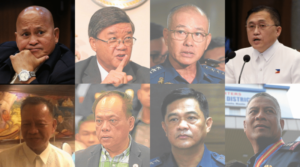
Dela Rosa is one of eight co-perpetrators identified by the prosecution in the crimes against humanity case against Duterte.
“We will see to it that the police operational procedures are being followed in every legitimate police operation. When they see that the police are really determined to go for them legally, and many of them go down, maybe they’ll get scared,” Dela Rosa was quoted as saying as part of the prosecution’s evidence used by Kaufman in his presentation.

.
Referring to the CMC, Kaufman also said the policy is “totally supportive of the main tenet of the defense, namely, that the only use of force would be that envisaged by way of self-defense.”
To point out that Duterte’s crackdown on narcotics was “not a refined policy,” Kaufman referred to prosecution witnesses codenamed “P1” and “P3,” whom he described as confessed murderers.
@[email protected]
.
“When asked about the common criminal plan of his associates … this is what he had to say: ‘Every time somebody was at fault against the government of Rodrigo Duterte, we didn’t bother to send them to prison. We would just kill them,’” Kaufman said.
‘P3’

He said “P3,” on the other hand, was provided a barangay “drug list” by a kagawad (barangay councilor) to go after drug suspects. But this witness mainly used the list to hunt random drug suspects and just used the names on the list to meet a “quota.”
Kaufman said “P3” was so “petrified of not meeting his quota of slaughter that he was randomly grabbing and killing just so that there would be something to report on TV.”
Kaufman, however, did not mention who “P3” was reporting to for his quota assignments.
He also dragged President Marcos to the case, stressing that extrajudicial killings in the Philippines continued on the watch of the current administration.
Citing data from the “Dahas Project” by the Third World Studies Center of University of the Philippines, Kaufman turned to the prosecutors and the victims’ lawyers on the other side of the courtroom and asked why they were “not clamoring for accountability for these deaths.”
“Or is it of no consequence that Mr. Duterte is sitting in the ICC detention center?” he added.
Wrapping up on Friday
The ongoing ICC proceedings are a “confirmation of charges” hearing to enable the pretrial judges to weigh whether to move forward to a trial.
Duterte, 80, has waived his right to appear in court, disappointing both his supporters, who wanted to see him to stand up to the charges, and critics who wanted him to face the consequences of his actions.
His defense team has been claiming that he is weak and in cognitive decline. The prosecution and victims counter that he is healthy but avoids facing the loved ones of victims of his drug war.
@[email protected]
.
The court passed him fit to attend but granted his right to skip the hearing, which is allowed under the Rome Statute, the treaty that established the ICC.
Once the hearings wrap up on Friday, the court will have 60 days to decide whether to proceed to trial.
 Ads by:
 Memento Maxima Digital Marketing