
OPINION | ACADEMIA: Time for emergency ASEAN Plus Three summit
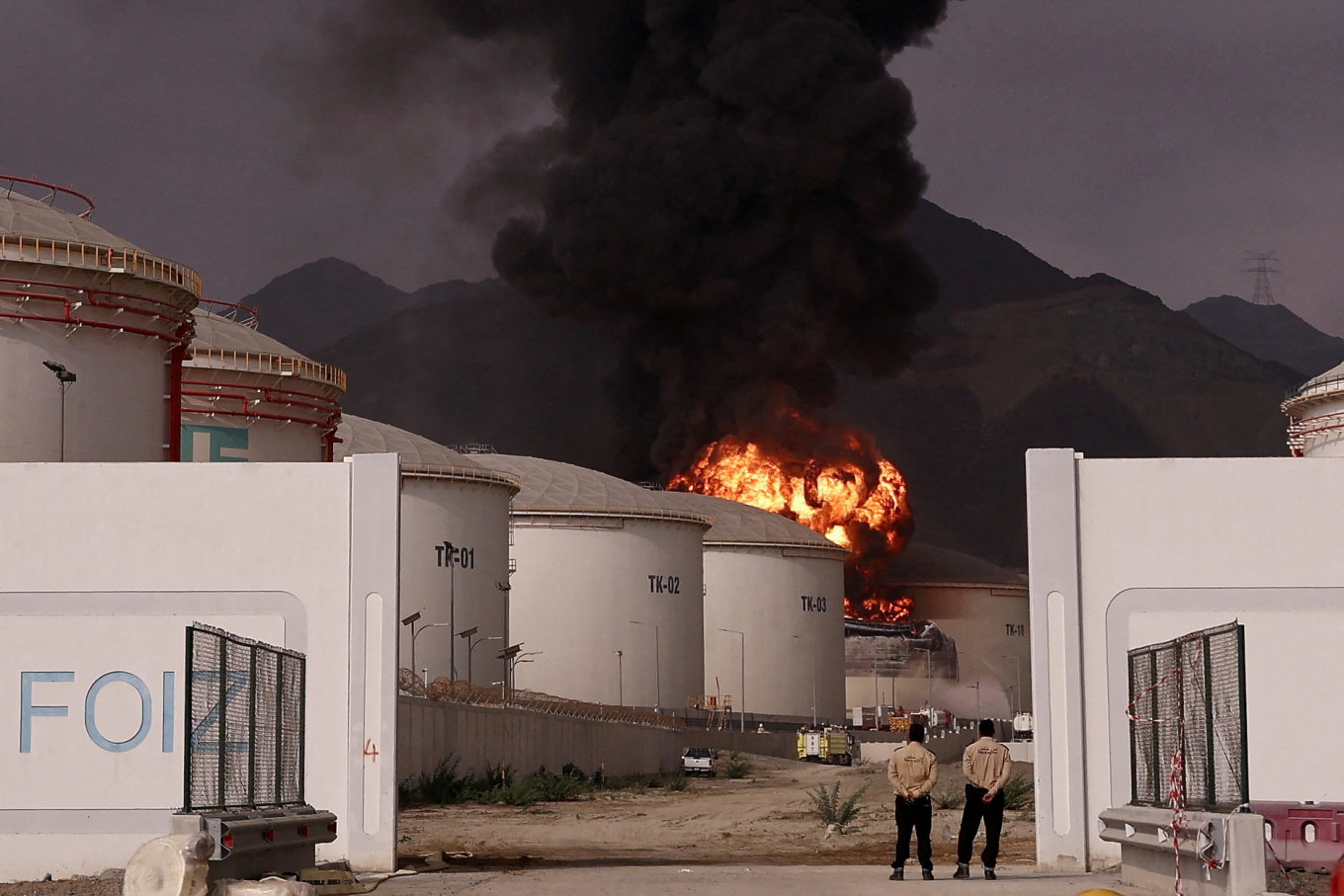
Flames and smoke rise from the Fujairah oil industry zone on Wednesday in the United Arab Emirates. (Reuters/Amr Alfiky )
.
.
An emergency summit could identify credible mediating actors and outline a division of labor among regional stakeholders to pursue arrangements that allow neutral inspection and joint coordination mechanisms to guarantee safe passage for energy shipments.
.
OPINION | ACADEMIA:

T he war waged by the United States and Israel against Iran has brought about strategic risks that countries in East Asia cannot ignore.
.
The immediate concern is no longer limited to the evacuation of their citizens in the Middle East. The more consequential question lies in whether maritime commerce can continue safely through one of the world’s most critical chokepoints, the Strait of Hormuz.
.
Shipping is being disrupted, and this will soon have significant consequences for East Asia’s energy supply chains.
.
For ASEAN countries, the exposure is significant. Oil shipments passing through the Strait of Hormuz account for between 16 and 95 percent of their crude imports.
.
The vulnerability, however, goes deeper than direct imports. Some ASEAN economies rely less on Middle Eastern crude but depend heavily on refined products from regional refining hubs such as Singapore, Japan, South Korea and China.
.
These refineries still source much of their crude from producers surrounding the Gulf. As a result, disruptions there would reverberate across the entire East Asian energy system.
.
To date, despite the turmoil in many parts of the world, East Asia remains a relatively peaceful region. While the region is not immune to some tensions, the problems are particularly regional and bilateral in nature.
.
Yet that stability should not be taken for granted. If proactive efforts to preserve stability and insulate the region from external spillovers are not undertaken, our own neighborhood could face a serious risk of sliding into uncertainty and instability.
.
A wider conflict could disrupt global supply chains for manufactured products, and East Asia accounts for more than a quarter of global output.
.
Such a situation would be ironic as the region approaches the fiftieth anniversary of the Treaty of Amity and Cooperation (TAC) this year and will celebrate ASEAN’s 60th Anniversary next year.
.
Indonesia is in a position to address this problem. Seen from economic interests, the Centre for Strategic and International Studies (CSIS) Strategic Dependencies Report in 2025 showed how layered dependencies link Indonesia’s economic resilience to development beyond its immediate neighborhood.
.
Rizal Sukma and Muhammad Habib
The Jakarta Post- PREMIUM
Jakarta
Mon, March 9, 2026
.
Click to read: https://www.thejakartapost.com/opinion/2026/03/09/time-for-emergency-asean-plus-three-summit.html?utm_source=(direct)&utm_medium=home_latest.