OPINION COLUMN | Impacts of Iran war on Southeast Asia
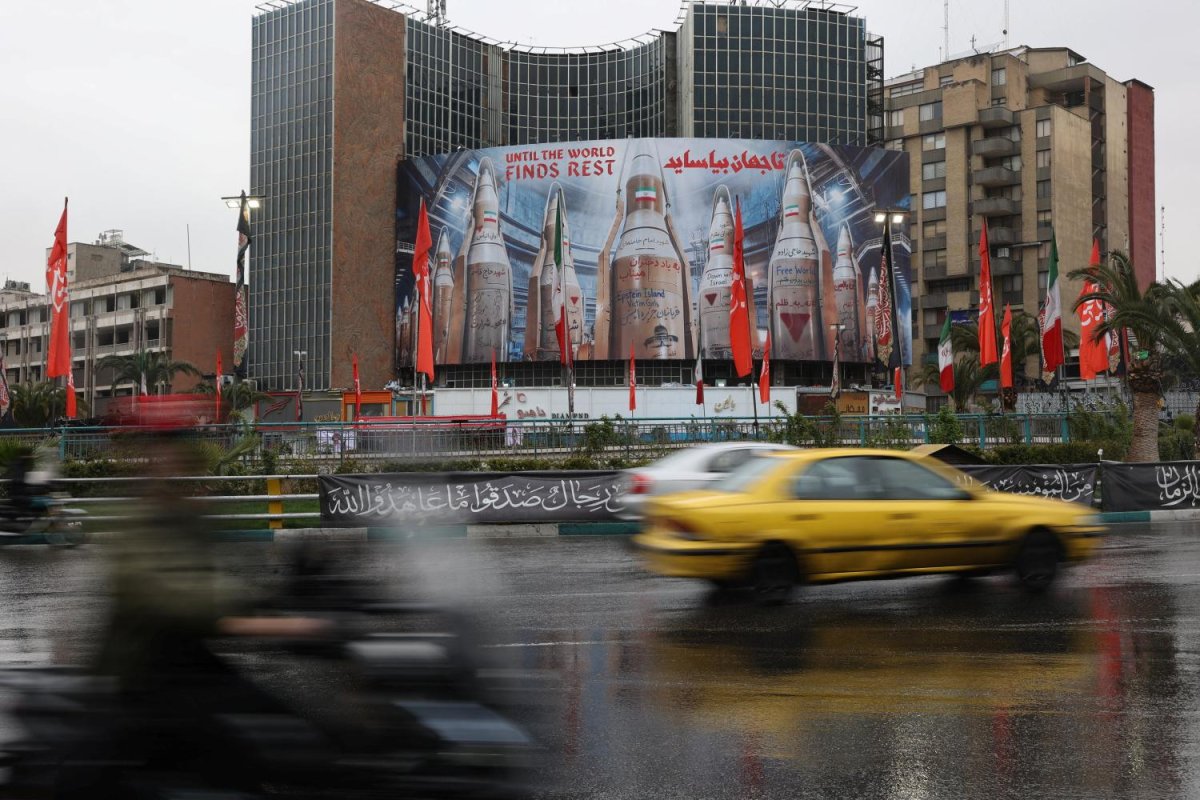
Vehicles pass near a billboard with an image of Iranian missiles in Tehran on Monday, amid the US-Israeli conflict with Iran. (Photo: Majid Asgaripour/WANA (West Asia News Agency) via Reuters)
…
.
For the most part, Southeast Asia as a region has taken a neutral stance toward the joint attack between the United States and Israel against the Islamic Republic of Iran. Even the Philippines and Thailand, two formal US treaty allies, have distanced themselves, calling for restraint and de-escalation.
…
As Southeast Asia is trade- and export-dependent, the war will have severe repercussions for the region as oil prices rise and international commerce is disrupted. The longer the war goes on, the more regional economies will suffer. The ongoing Middle East conflict will also make it trickier for major Southeast Asian economies that enjoy large trade surpluses with the US — Vietnam, Thailand, Malaysia, Indonesia, and the Philippines — to negotiate final tariff deals with the second administration of President Donald Trump.

@[email protected]
.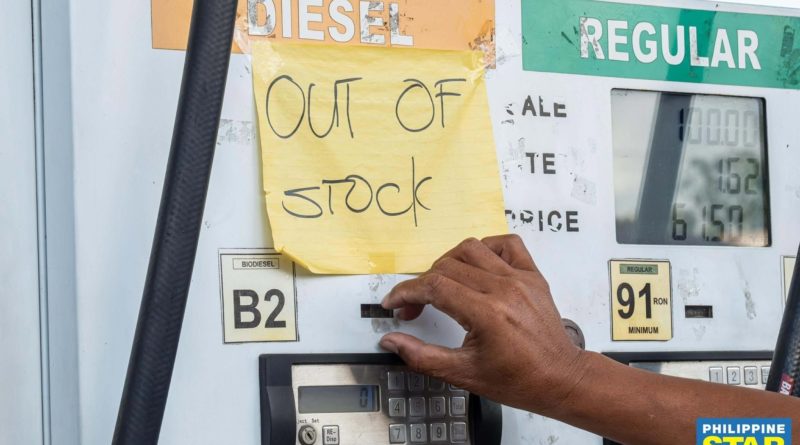
Motorists line up at a gasoline station along Norzagaray Road in San Jose del Monte, Bulacan on Sunday, March 8, 2026, as some stations display “out of stock” signs for diesel./ The STAR / Ryan Baldemor
.
.
As the home to the world’s largest Muslim country in Indonesia and majority Muslim states in Malaysia and Brunei, with significant minorities in Myanmar, the Philippines and Thailand, Southeast Asia will be tracking any religious fallout from the war closely. With its advocacy of the minority Shia sect of Islam and its Islamic revolutionary zeal, as well as state-sponsored terrorist proxies among Hezbollah in Lebanon, Hamas in Gaza, and the Houthis in Yemen, the Islamic Republic does not have many supporters among Southeast Asian Muslims.
However, as an underdog under attack, Iran is likely to gain sympathy from Muslims and non-Muslims alike, especially those in the Global South. One major risk from Iran’s retaliatory measures is the activation of Iran-inspired and perpetrated terrorism around Southeast Asia.
For example, Hezbollah militants were active in Thailand in the 1990s. If Iran is cornered with no other choice, it could call on its followers to wreak havoc everywhere they can and carry out violent attacks.
@[email protected]
.
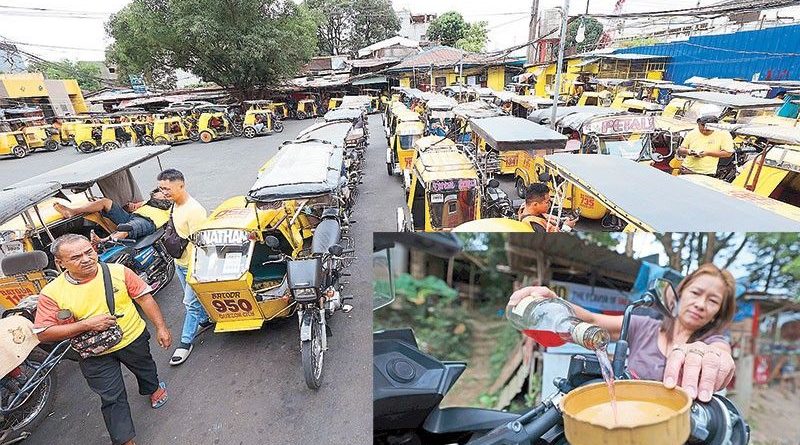
Tricycle drivers wait for passengers at their terminal in Batasan, Quezon City yesterday. Inset shows a woman along the Marilaque Highway in Tanay, Rizal filling a motorcycle tank using fuel from a recycled liquor bottle./Miguel De Guzman / Russell Palma
At issue for Southeast Asia is outbound labour and migrant workers, as well as inbound tourists. There are many hundreds of thousands of Southeast Asian workers in the Middle East who will be adversely impacted by the war. For example, Thailand has 110,000 workers in the broader Middle East, whereas the corresponding figure for the Philippines is much higher. These workers send billions of dollars in remittances back to the region. Apart from the economic costs of lost income, Southeast Asian economies will see lower growth due to higher oil prices and dwindling tourist numbers due to travel risks. Tourism is a major foreign exchange earner for most Southeast Asian economies, particularly Thailand.
Moreover, the Gaza Board of Peace and the US’s Reciprocal Trade Agreements (RTA) are related to President Trump’s conduct of the war against Iran. Just prior to the US-Israeli combined bombardment of Iran, President Trump convened the Gaza Board of Peace in Washington, including leaders from Cambodia, Indonesia and Vietnam. Indonesia was the keenest to join, offering 8,000 to 20,000 peacekeeping and peacebuilding troops for the recovery and rebuilding of Gaza.
@[email protected]
As each board member had to contribute UScopy billion to the Gaza peace fund, Indonesia took a big bet to reach an RTA with the Trump II administration. But it turned out to be a bad deal for Indonesia because the US Supreme Court struck down Mr Trump’s International Emergency Economic Powers Act (IEEPA), closely followed by the US-Israeli attack against Iran. The US tariff consequently came down to 15%, lower than 19% under Indonesia’s RTA. Sending peacekeeping troops to support Gaza will now be more difficult for Indonesian President Prabowo Subianto, who has offered to mediate the conflict. Cambodia faces a similar situation of inking a final RTA before the US Supreme Court’s landmark decision. Vietnam, however, has been in the final phase of the RTA. President To Lam will now likely put it off until the war settles and the Trump team comes up with final negotiating terms.
Among other Southeast Asian countries, Malaysia has been the most vocal and principled by condemning the US-Israeli attack and Iran’s retaliatory measures, calling for the abidance of international law and territorial integrity. Prime Minister Anwar Ibrahim has spoken out against US interventions in Venezuela and Iran because of international law and the rules-based international system. For Malaysia — and Indonesia — the most important outcome in the Middle East is the two-state solution for Palestine. Both Muslim countries are concerned that the Palestinian plight will be marginalised as Israel gains the upper hand in the Middle East.
@[email protected]
.
Myanmar’s military government gains from the war because the US cannot promote and assist the country’s pro-democracy resistance while Washington violates international law and the United Nations Charter with its attack on Iran. Myanmar’s junta reportedly purchases Iranian oil, but any shortfall can be partially offset by local production and diversion to natural gas. The war is a distraction to Washington to the benefit of Myanmar, whose military has been counting on China — and Russia to a lesser extent — as its reliable backer.
Also taking a neutral stance, the Philippines will be most concerned with the war’s duration due to rising inflation pressures and, more importantly, the risk to Overseas Filipino workers (OFWs) in the Middle East. In turn, the considerable money these workers send home is a crucial revenue stream for the Philippine economy. Singapore has also taken a principled approach towards the war by calling for a peaceful resolution in accordance with international law, consistent with the island state’s emphasis on diplomacy and the rules-based international system. As a small state with a high-value economy, the more the international system is imperilled and jeopardised, the worse it is for Singapore. What is happening in the Middle East and global insecurity more broadly put small states in the region — not just Singapore but also Brunei, Cambodia, Laos, and Timor Leste — at grave risk.
@[email protected]
.
The newly elected government of Thailand under Prime Minister Anutin Charnvirakul was quick to form a “war room” to handle and respond to the war. Now that a commercial ship under the Thai flag has been attacked by Iran, the Anutin government is under domestic pressure to protect Thai economic interests and citizens. Mr Anutin will also have a tougher time trying to boost Thai economic growth for 2026 above 2% from the projected 1.6%. The optimism that the new government with a clear mandate could revive the Thai economy has been dampened.
Like its neighbours, Vietnam also neutrally called for restraint and respect for international law. With significant oil imports from Kuwait, Vietnam may face challenges to its 10% growth target this year. But the Vietnamese economy has enough momentum and diversification to weather the current Middle East storm, as do most other countries.
Thitinan Pongsudhirak, PhD, is Professor at Chulalongkorn University’s Faculty of Political Science and a Senior Fellow at its Institute of Security and International Studies in Bangkok.
PUBLISHED : 20 Mar 2026 at 01:01
NEWSPAPER SECTION: News

Senior fellow of the Institute of Security and International Studies at Chulalongkorn University
A professor and senior fellow of the Institute of Security and International Studies at Chulalongkorn University’s Faculty of Political Science, he earned a PhD from the London School of Economics with a top dissertation prize in 2002. Recognised for excellence in opinion writing from Society of Publishers in Asia, his views and articles have been published widely by local and international media.
 Ads by: