ASEANEWS HEADLINE-WORLD OIL CRISIS | MANILA: Government buys 300,000 barrels of diesel
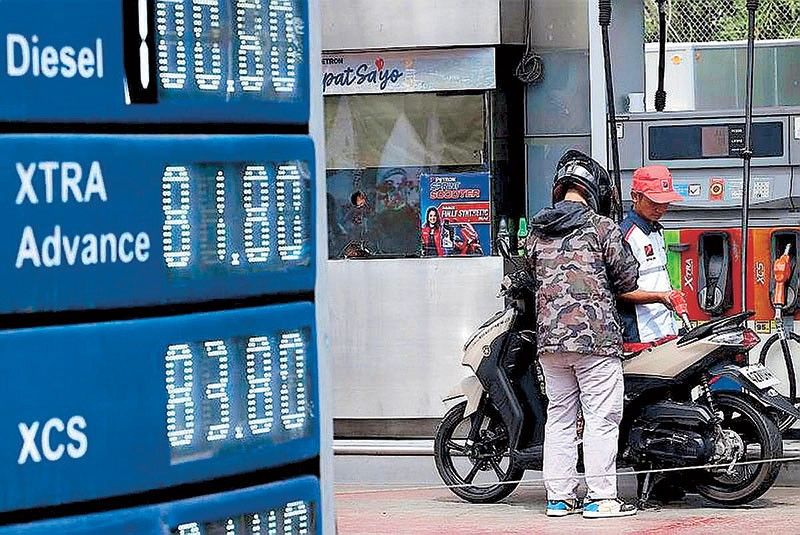
A motorcycle rider refuels at a gasoline station in Quezon City yesterday as higher fuel prices are expected next week./ Miguel De Guzman
.
.
WATCH VIDEO: https://www.youtube.com/watch?v=xvhK50Dwi_8
DOE Chief: PH has ordered around 300,000 barrels of diesel to be delivered next week | ANC
Here are the stories on ANC’s The World Tonight (March 19, 2026).
- Global oil shocks from the Middle East conflict push the Philippine peso past a historic low of sixty to the dollar.
- The Philippine government secures a fresh supply of diesel as Iran continues to choke oil supplies from the Middle East.
- The impeachment spokesperson of Philippine Vice President Sara Duterte believes she has nothing to gain from attending the House Justice panel’s hearings on her impeachment cases.
- U.S. President Trump threatens to blow up a major Iranian gas field if Tehran continues to strike at America’s Middle East allies.
.
.
MANILA, Philippines — A shipment of 300,000 barrels of diesel is set to arrive next week, the Department of Energy (DOE) said, as it works to secure supplies amid the global oil crisis.
The Philippine National Oil Co. bought the diesel from a Southeast Asian nation, which Energy Secretary Sharon Garin did not identify.
The PNOC has been searching for oil reserves to help companies replenish stocks, which are expected to last until the end of April.
PNOC will sell the arriving supplies to oil players at the same price it paid for the diesel.
“Whoever has space for storage, (PNOC) will accommodate,” Garin told ANC on Thursday. “It’s a good arrangement because they also have the logistics.”
“We’ll just finance the oil and if they need it, they can buy it from PNOC, and then it works easier for us to handle,” Garin added.
The DOE devised the arrangement because the government has had no fuel storage facilities since the oil deregulation law took effect nearly three decades ago.
But 300,000 barrels are inadequate to meet the country’s demand. In Garin’s estimation, the Philippines is exhausting one million barrels of fuel every five days.
With May approaching, she said discussions are ongoing to procure energy supplies from countries like China and Russia.
On Tuesday, Garin met with Chinese Ambassador Jing Quan to discuss “bilateral cooperation in the energy sector.”
The energy chief stressed that the DOE’s focus is on shoring up supply rather than controlling prices, as costs are dictated by international markets.
“It’s harder if we don’t have diesel than if we have, but it’s expensive,” Garin stressed.
“If we don’t have any diesel or any oil, for example, our public transportation won’t go. Our sea and air transport will be affected. How will goods be delivered from the provinces to Manila if there’s no fuel?” she said.

@[email protected]
.
.
The crisis, Garin added, serves as a lesson for the country to reduce its dependence on oil and shift toward electric mobility.
“We have to change our lifestyle. I’ve also switched to using an EV now,” she said.
Since the start of the US-Israel war with Iran, domestic pump prices have jumped by about P50 per liter, pushing diesel beyond the P100 mark.
Regional benchmark Dubai crude traded above $130 per barrel as of March 18, while Iran has warned that prices could hit $200 if tensions persist.
“It’s time for us to think about electrifying everything and being less dependent on fuel. If it goes up to $200 per barrel, then it’s another jab for the pump prices,” Garin said.
The EV shift, however, could prove challenging for ordinary motorists trying to make ends meet.
Latest available market data show that even the cheapest EV still costs more than half a million pesos.
P130/liter
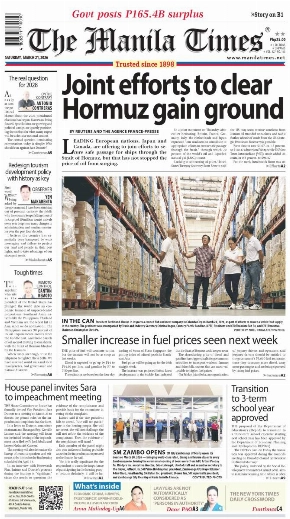
Diesel prices are expected to reach P130 per liter next week, with another double-digit spike looming at the pump amid the escalating Middle East war.
Garin warned that the country’s fuel stockpiles could run dry as early as mid-April if hoarding continues.
After four days of trading on the Mean of Platts Singapore, an industry source indicated a potential price hike of P14 to P14.50 per liter for diesel and P7 to P7.50 for gasoline next week.
The estimates could still rise or fall with one trading day remaining. Final price adjustments will be announced on Monday and will take effect the following day.
The source said fears of a severe supply tightening are mounting due to “damage to energy infrastructure in the Middle East as the US-Israel war with Iran continues to escalate.”
Earlier this week, Iranian missiles caused severe damage to Ras Laffan Industrial City, one of the world’s largest liquefied natural gas hubs.
Despite maintaining that fuel reserves remain adequate until the end of April, Garin said this timeline could be shortened by as much as two weeks due to strong demand and hoarding.
@[email protected]
.
.
“It’s a possibility because our projection for the end of April is based on historical consumption,” Garin told ANC, citing the significant increase in demand when the first major price hike was announced on March 9.
“That’s why we ask for no hoarding and no profiteering. Let’s conserve fuel so that we can be sure we have enough for our basic necessities,” she said.
An industry source told The STAR that the country’s available fuel stocks in storage tanks could just be for around 30 days.
‘Rationalize spending’
Beyond the move to suspend excises taxes on fuel, the government should rationalize spending to absorb rising fuel costs due to the ongoing conflict in the Middle East, according to the Philippine Chamber of Commerce and Industry (PCCI).
In an interview with “Storycon” on One News yesterday, PCCI president Perry Ferrer said removing excises taxes on fuel will not be felt, as it is only a fraction of the total increase in prices in recent weeks.
“We should rationalize the spending and rechannel, reallocate those funds to hopefully absorb all these fuel increases,” Ferrer said. “What are the programs that can be deferred in the budget? … What to prioritize?”
He urged government to “act like a business,” citing current efforts to review their expenses and defer capital utilization.
“Do we need to spend this now? … Let’s channel it to absorbing the shocks,” Ferrer added.
@[email protected]
.
.
He said there are ongoing discussions as to how operations can be localized, such as increasing the local supply chain to reduce imports.
Ferrer said manufacturers may be able to “hold the line” for a few weeks, but he noted that many enterprises are already bearing the brunt of the fuel price increases.
“One of our biggest concerns are the MSMEs (micro, small and medium enterprises), which constitute 99.5 percent of the 1.2 million or so businesses in the Philippines. A million of that is the micro. That, together with the small businesses, are the first to feel the effects of the fuel increases,” he said.
“The small and the micro businesses have very little resources or breathing room when it comes to an uptick in fuel prices,” Ferrer said.
‘Don’t panic buy’
Saying the government is doing its best to ensure stable prices and supply, Joel Buag, Surveillance and Monitoring Division assistant chief of the Department of Trade and Industry (DTI) fair trade enforcement bureau, yesterday appealed to the public not to panic buy amid the surges in oil prices that are expected to affect prices of basic commodities.
“We appeal to the public, please don’t (panic buy),” Buag said in Filipino during an interview with “Storycon” on One News.
“The government is making sure that prices and supply remain stable. Panic buying will only create an artificial shortage of essential goods,” he added.
Buag said they are continuously monitoring prices of basic goods and are validating reports they received about possible profiteering.
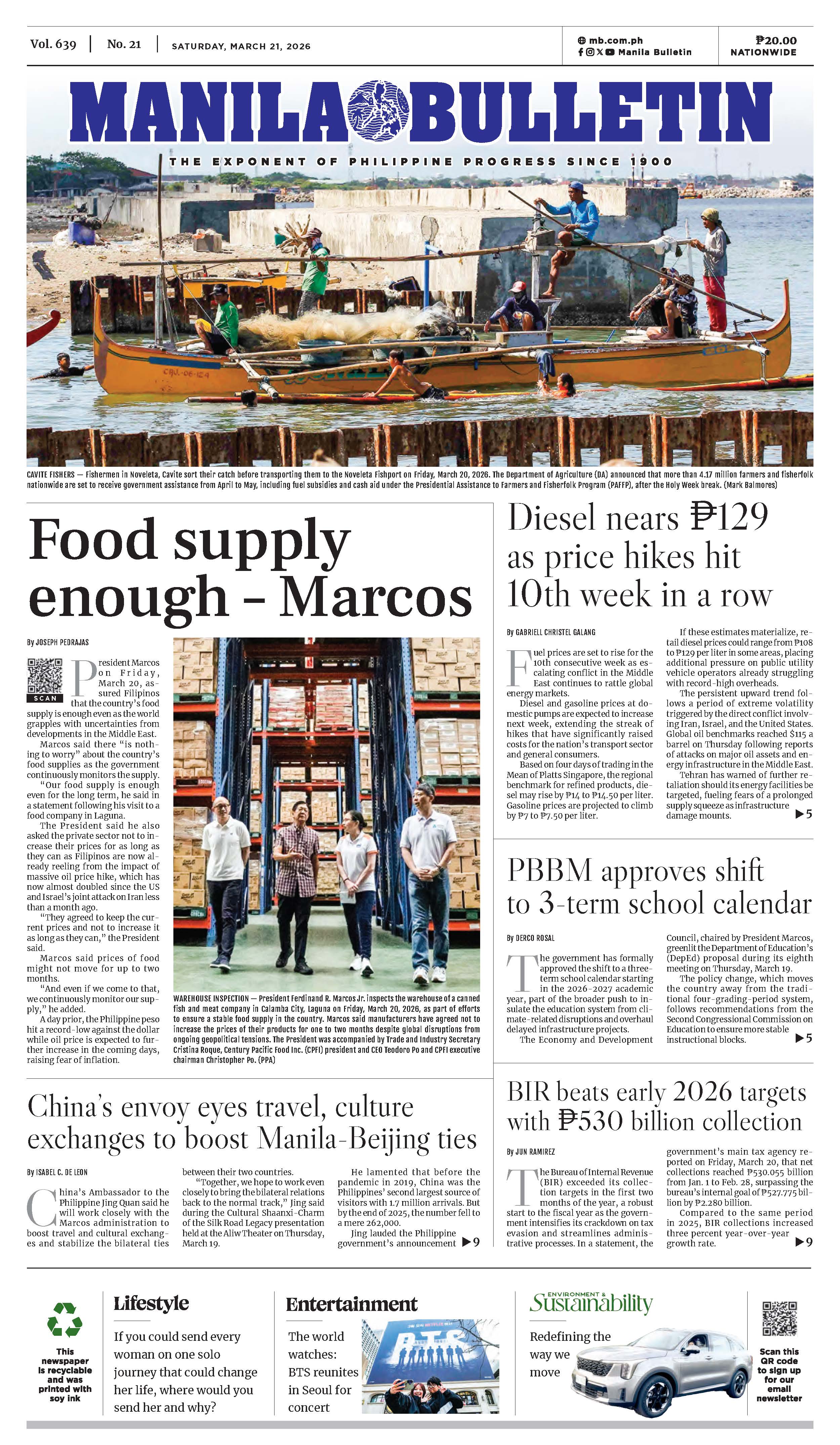
President Marcos yesterday continued to reassure the public of stable food prices, at least in the next 30 days, as supplies of basic commodities remain sufficient.
Marcos said food manufacturers have committed to keep the prices the same as long as they can.
“It (stable food prices) may be for about a month, for others maybe the price will not change for two months,” the President said in Filipino during his visit to the Century Pacific warehouse in Calamba, Laguna.
“People need not worry about supply. Our food supply is sufficient even in the long term,” he added.
@[email protected]
.
.
Marcos thanked Century Pacific Food Inc. and other food manufacturers for their commitment to keep prices stable amid skyrocketing fuel prices brought by the raging war in the Middle East.
The President added that the government would continue to monitor food supply and prices.
Century Pacific, which manufactures canned tuna and sardines, corned beef and processed milk products, said it has sufficient inventory and production capacity.
Trade Secretary Cristina Roque, who was with Marcos during the warehouse visit, said they are communicating on a weekly basis with manufacturers and stakeholders to ensure there would be no unreasonable increases in prices of basic goods.
“At least, for now, the manufacturers that have products in the basic necessities and prime commodities have assured us that there will be no price increase for basic necessities and prime commodities for the next 30 days. Other products could last for 60 days,” Roque said.
The DTI chief said the public may check its price list, which is available in supermarkets and groceries and through the agency’s website. The public may report cases of profiteering or hoarding to 1-384 or “Report to Sec” at dti.gov.ph, she said. — Brix Lelis, Helen Flores, Janvic Mateo