

ASEANEWS HEADLINE – LIFE+STYLE | People & Issues | MALAYSIA: 2026 – year to rethink road and infrastructure upkeep
Deadly crashes expose systemic road safety failures
Heavy vehicles remain major threat with collisions every 36 hours, pointing to poor coordination and weak enforcement as M’sia enters the new year: Expert
.
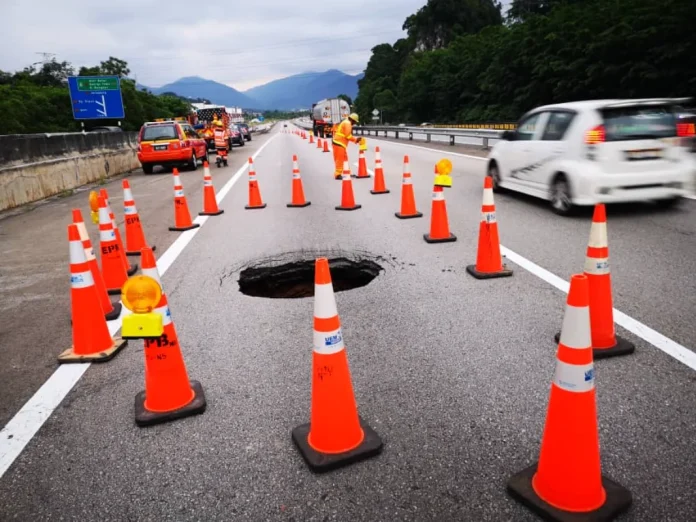
PETALING JAYA: From flash floods to crumbling roads, 2025 tested Malaysia’s infrastructure like an unplanned stress test, exposing gaps in maintenance, planning and enforcement that must be addressed in 2026, said an academic.
Universiti Putra Malaysia Civil Engineering Department head Assoc Prof Dr Fauzan Mohd Jakarni said these were not random mishaps, but symptoms of deeper weaknesses in planning and maintenance culture.
“Roads and drains are not supposed to behave like drama series with weekly episodes, but that’s what happened.
“Potholes reappear after patching, drains work only when it’s not raining and floods show up like uninvited guests who already know the shortcut. The pattern points to a culture that is still too reactive – fix after complaints, fix after viral videos, fix after failures – instead of planned preventive maintenance.”
Concrete examples last year showed how small defects can trigger major disruption.
.

@[email protected]
“A stop-work order after flash floods and a mudslide in Seberang Perai last September highlighted how weak earthwork control, poor temporary drainage and inconsistent compliance can quickly escalate into public impact.
“Planning must include long-term upkeep, maintenance must be a core KPI (key performance indicator) and enforcement must be consistent – because in infrastructure, the ‘small stuff’ usually becomes the headline.”
Fauzan said Malaysia often prioritises shiny new projects over maintaining existing infrastructure.
“New projects are easy to launch and photograph. Maintenance is the opposite – if done well, nobody notices. Yet that ‘silent success’ is exactly what keeps roads, drains, culverts and public amenities reliable.”
The Works Ministry estimated RM327.8 million would be needed to repair last year’s (2025) damage linked to the Northeast Monsoon – a stark reminder that deferred maintenance turns routine upkeep into emergency spending.
.
@[email protected]
Fauzan also warned that climate change is making infrastructure more vulnerable.
“Extreme rainfall turns small weaknesses into big disruptions. When drains, inlets and culverts are undersized, clogged or poorly maintained, they fail to manage water properly and effectively act as storage.”
Fauzan said preventing a repeat in 2026 requires systemic reforms in procurement, design standards and maintenance practices.
“Procurement must stop buying the cheapest promise and start buying performance. Design standards need a reality check for extreme weather.
“Maintenance must move from ‘only after complaints’ to ‘before it goes viral’. Routine drain cleaning, scheduled culvert inspections and condition ratings for hidden assets are essential.”
@[email protected]
Consistent enforcement on construction sites is also critical, said Fauzan, adding that delays in reform have direct consequences for safety, cost and quality of life.
“Small defects can turn into hazards. Cracks become potholes, weak shoulders become collapses, tired culverts become sinkholes. One rainy day can trigger closures and risky diversions. Let 2026 be about ensuring existing infrastructure works reliably under real weather, real traffic and with real lives depending on it.”
.
@[email protected]
Deadly crashes expose systemic road safety failures
 Image for visual purposes – theSun filepic
Heavy vehicles remain major threat with collisions every 36 hours, pointing to poor coordination and weak enforcement as M’sia enters the new year: Expert
PETALING JAYA: As Malaysia enters 2026, the deadly crashes and transport incidents of 2025 were not isolated tragedies but signs of systemic failures that remain largely unaddressed, a road safety expert said.
Analysing last year’s trends, Universiti Putra Malaysia Road Safety Research Centre head Assoc Prof Dr Law Teik Hua said the country is grappling with a “software problem” in managing road risks, pointing to weak coordination, poor communication and fragmented enforcement.
“Serious incidents in 2025 exposed communication gaps between government departments, road contractors and operators.
“These shortcomings were evident in inadequate signage at road works and the failure to properly alert road users to potential hazards,” he said.
While mortality rates for some categories of road users have stabilised, Law said heavy vehicles remain a persistent and serious threat.
“Lorry-related crashes occurring, on average, every 36 hours raise serious doubts about whether heavy vehicle safety is being adequately managed on national roads,” he said.
He added that enforcement and monitoring mechanisms for commercial transport are weak, allowing high-risk operators to continue operating with limited accountability.
“Although bodies such as the Commercial Vehicle Licensing Board, along with vehicle inspection codes and safety frameworks, exist on paper, enforcement is inconsistent. This weakens regulatory oversight and enables transport operators to flout safety standards with little fear of consequences.”
Law said Malaysia’s continued reliance on checkpoint-style enforcement reflects a reactive, rather than preventive, approach to road safety.
“The emphasis remains on intermittent vehicle stops instead of continuous, technology-driven monitoring,” he said, adding that data from 2025 underscores the scale of the problem, with only about 32% of commercial vehicle operators complying with safety procedures.
“Regulatory gaps allow drivers with repeated violations to remain on the road, while vehicles with defective brakes or tyres continue operating due to fragmented inspection regimes.
“A system without real-time tracking or an overarching compliance framework shifts the risks entirely onto other road users,” he said, adding that enforcement suffers from a “diffusion of responsibility, a lack of deterrence and weak accountability”.
Law said Malaysia has become overly reliant on reactive measures such as short-term enforcement drives and temporary safety campaigns, rather than embedding long-term preventive policies.
“This pattern persists because of politically driven crisis management, bureaucratic silos and an over-reliance on blaming ‘driver error’. A truly systemic approach – including mandatory advanced braking systems, fatigue monitoring and safer road design – requires sustained funding and long-term coordination, which often wanes once public attention fades.”
Looking ahead to 2026, Law outlined three key priorities: continuous safety compliance for commercial vehicles through telematics and regulated driving hours; intelligence-led enforcement targeting high-risk operators and corridors; and adoption of a ‘safe system’ approach that shifts accountability from drivers to companies and system designers.
“If reforms continue at the current pace, Malaysia risks serious safety and economic consequences,” he said, citing the annual cost of road crashes and the statistical value of a life at RM3.12 million.
Poor safety performance could also undermine national initiatives such as Visit Malaysia 2026, as tourists increasingly prioritise safe and reliable transport, he said, adding that without decisive structural reforms, Malaysia risks entering yet another year in which tragedy – rather than prevention – drives road safety policy.

Memento Maxima Digital Marketing
@[email protected]
SPACE RESERVE FOR ADVERTISEMENT