
ASEANEWS HEADLINE-POLITICS | INDONESIA: Protest articles in penal code stir unease among activists
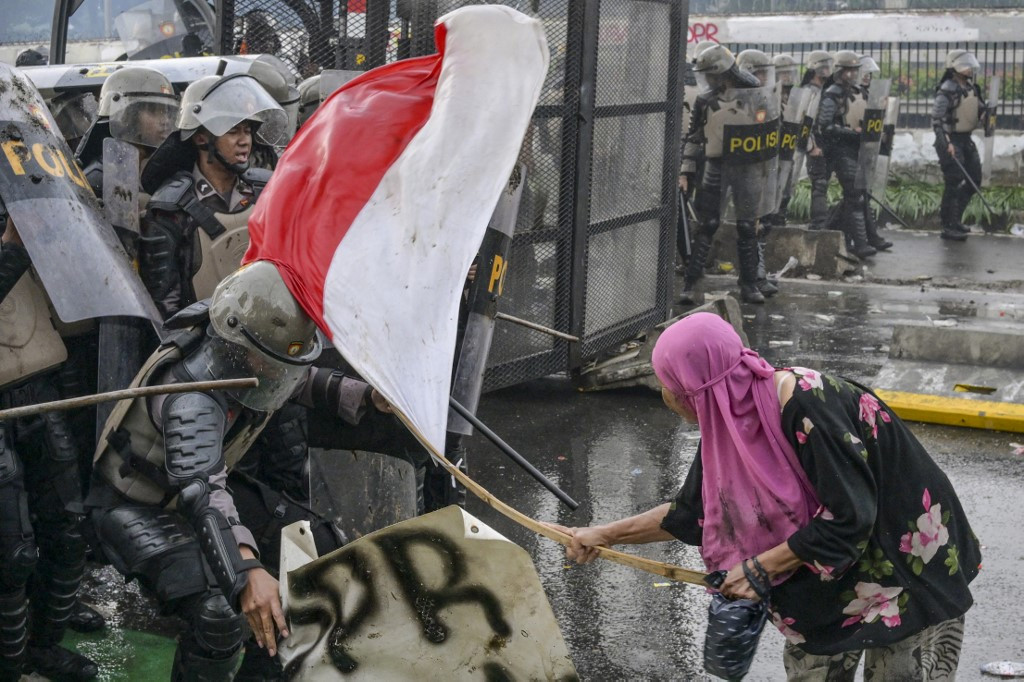
A woman in pink hijab strikes a police officer with a bamboo stick tied to an Indonesian flag as police push back during a protest on Aug. 28, 2025, outside the House of Representatives building against lawmakers’ demands for higher allowances in Jakarta. (AFP/Bay Ismoyo)
.
WATCH VIDEO: https://www.youtube.com/watch?v=1l6doI-tcVI
New penal and criminal procedure codes take effect in Indonesia
.
.
With vague rules on what counts as ‘chaos,’ Indonesia’s new penal code has the public questioning their right to protest.
.
.
L ast week, Jumisih joined a coalition of women and workers rights groups outside the United States Embassy in Jakarta, where they held banners and voiced support for Venezuelans following a US military strike in the country.
.
As usual, they sent a brief message to notify Jakarta Police of their planned demonstration.
.
But this time, the familiar ritual carried a new weight as Indonesia’s new Criminal Code (KUHP), which took effect on Jan. 2, stirred unease among protest organizers.
.
Under Article 256, anyone who holds a public rally without notifying authorities, and whose actions are perceived to “disrupts public order, creates chaos or triggers unrest” can face up to six months in prison or fines of up to Rp 10 million (US$591.44), raising fears that spontaneous expressions of dissent could be criminalized.
.
“I think this policy is designed to protect those in power and capital owners,” Jumisih said on Wednesday, arguing that labor protests often erupt unplanned when sudden shifts in company or government policy trigger strikes and demonstrations.
 |
.
.
“The government is supposed to protect freedom of expression,” added the activist from All-Indonesia United Workers Confederation (KPBI).
.
“But when it comes with threats like this, it has a strong silencing effect.”
.
Maretha Uli (The Jakarta Post) PREMIUM
Jakarta
Sat, January 17, 2026
.

 Memento Maxima Digital Marketing