ASEANEWS HEADLINE | MANILA: Senate to tackle party-list reforms, anti-dynasty bill
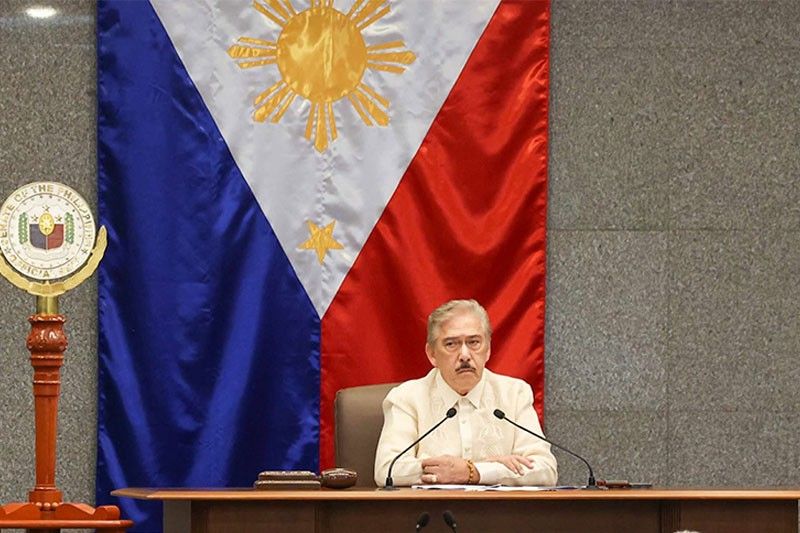
Senate President Vicente Sotto III on September 15, 2025./ STAR / Jesse Bustos
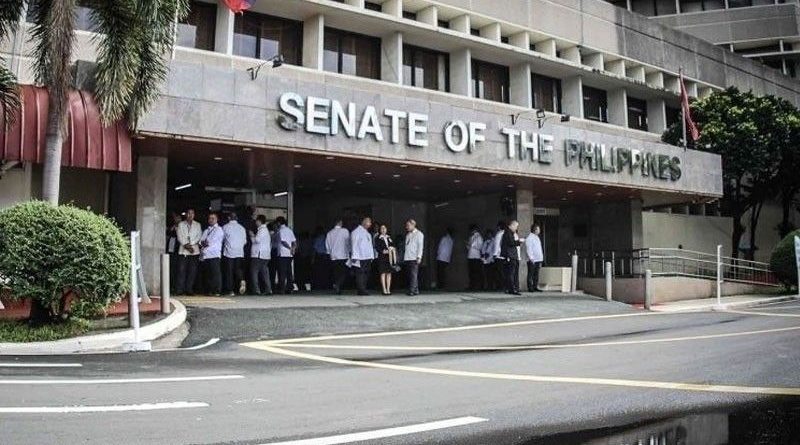
MANILA, Philippines — The Senate is set to take up proposed party-list reforms and an anti-political dynasty bill – both seen as having a strong chance of passage – when session resumes tomorrow after the chamber’s recess, Senate President Vicente Sotto III said yesterday.
Sotto said President Marcos has stressed the urgency of several priority measures, including reforms to the party-list system, which he said has drifted far from its original purpose of representing marginalized sectors.
He noted that other priority bills already in advanced stages include the Freedom of Information measure, the Classroom Acceleration Act and the Philippine Geriatric Center bill.
“The President wants almost all of these measures expedited,” Sotto said over radio dwIZ.
 |
However, Sotto underscored that correcting what he described as the abuse of the party-list system has become particularly pressing.
He said successive rulings by the Commission on Elections and the Supreme Court have distorted the system’s original framework.
“The President agrees with us that the party-list system has been abused. The eight marginalized sectors are no longer there. What happened is that it ballooned to nearly a hundred sectors – everyone is now considered marginalized,” Sotto said in Filipino.
He stressed that the 1987 Constitution and existing laws clearly identified the intended beneficiaries of the system, such as farmers, fisherfolk, the urban poor, senior citizens, youth, women, indigenous peoples and persons with disabilities.
|
|
.
“How did Bicol, Cebu or Davao become marginalized? How did contractors become marginalized?” Sotto asked.
Despite clear constitutional and legal parameters, Sotto said petitions granted by Comelec and the SC allowed the number of recognized sectors to expand from fewer than 10 to around 100.
He said legislation is now needed to repeal and replace the current enabling law governing the party-list system to restore clarity and discipline.
“This is a priority, and the President wants it implemented,” Sotto said, adding that the reforms could also lead to significant savings in government spending.
Asked about prospects in the House of Representatives, Sotto said district lawmakers are beginning to reassess the growing influence of party-list groups.
|
|
.
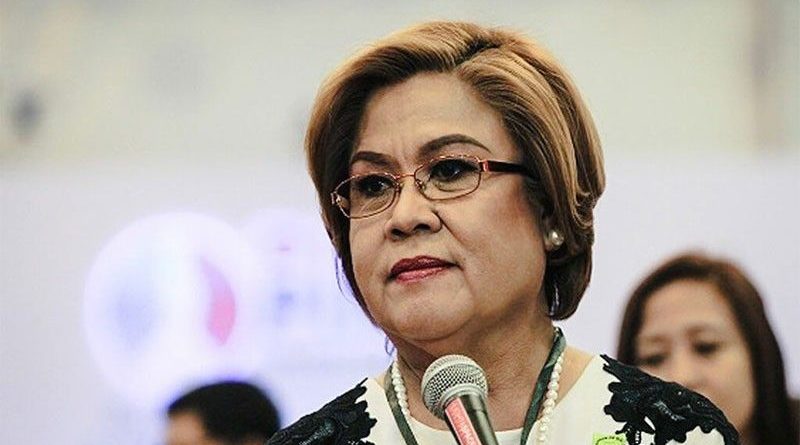
“District representatives are starting to realize why party-list groups are overshadowing them,” he said, noting that some party-list lawmakers – allegedly linked to contractors – have chaired powerful committees such as appropriations.
Sotto also said the Senate is expected to revisit the proposed anti-political dynasty bill when sessions resume, although he acknowledged the difficulty of crafting a workable version.
“There is a pending anti-dynasty bill,” he said, adding that comparative studies are ongoing, as some large democracies do not have explicit anti-dynasty laws.
Still, Sotto expressed optimism that both measures could move forward in the current Congress, provided deliberations do not drag on.
“There is a strong chance of passage as long as interpellations do not stall the process. If the discussion is clear and cooperative, the public will see who is deliberately blocking the measures,” he said.
Sen. Sherwin Gatchalian also believes there is a strong chance that Congress could pass the law for the first time since the 1987 Constitution mandated such a ban.
|
|
“I think this will be the first time in history that the anti-political dynasty provision in our Constitution is being taken seriously,” Gatchalian noted in a dwIZ interview.
“There is a big chance. The remaining question is the form it will take and the level of political dynasty to be covered,” he added.
The Senate committee on electoral reforms and people’s participation, chaired by Senate President Pro Tempore Panfilo Lacson, is set to deliberate on the anti-political dynasty and party-list reform bills, both of which are part of the Legislative Executive Development Advisory Council’s (LEDAC) common legislative agenda for the 20th Congress.
Gatchalian said discussions will focus on defining political dynasties and determining the degree of consanguinity to be barred, particularly for relatives running for the same position or holding office simultaneously.
|
|
He also welcomed President Marcos’ openness to pursuing the measure despite belonging to a prominent political family.
“In my more than 20 years in politics, this is the first time I have heard the executive – especially the President himself – actively push for this measure. I was present during the LEDAC meeting when the President personally said it should be included and discussed,” Gatchalian said.
He said the bill’s inclusion in LEDAC signals rare alignment between the executive and legislative branches on the long-delayed reform.
Several anti-political dynasty bills have been filed in the Senate by Lacson and Senators JV Ejercito, Bam Aquino, Risa Hontiveros, Kiko Pangilinan and Robin Padilla.
Ejercito, in a Zoom press briefing on Friday, said he filed the measure despite acknowledging that it could hurt his own electoral prospects.
“I filed a bill even though I am part of a political dynasty and benefited from it. But with 112 million Filipinos willing to serve yet lacking the means, name recall or political machinery, this bill can give others a chance,” Ejercito said.
The proposed measures cite studies showing that corruption and poverty tend to persist in areas dominated by political dynasties.
Article II, Section 26 of the 1987 Constitution expressly prohibits political dynasties as may be defined by law. In the absence of an enabling statute, the constitutional ban has remained unenforced for more than three decades. — Marc Jayson Cayabyab