
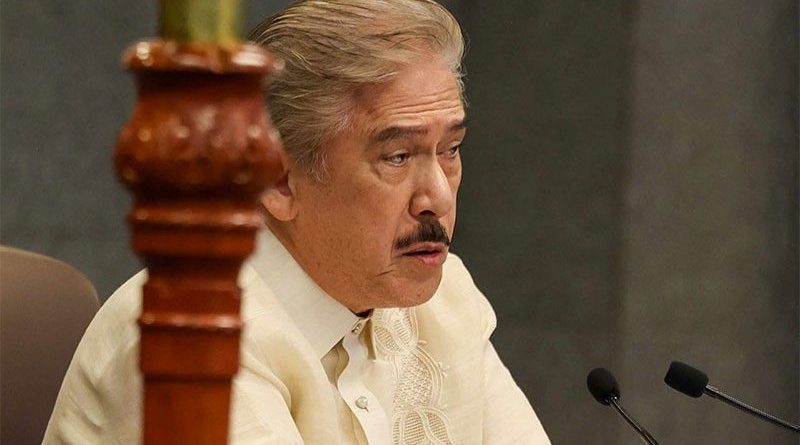
ASEANEWS HEADLINE-COURTS & CRIME| MANILA: Sotto: Cha-cha needed after SC ruling on VP raps
.
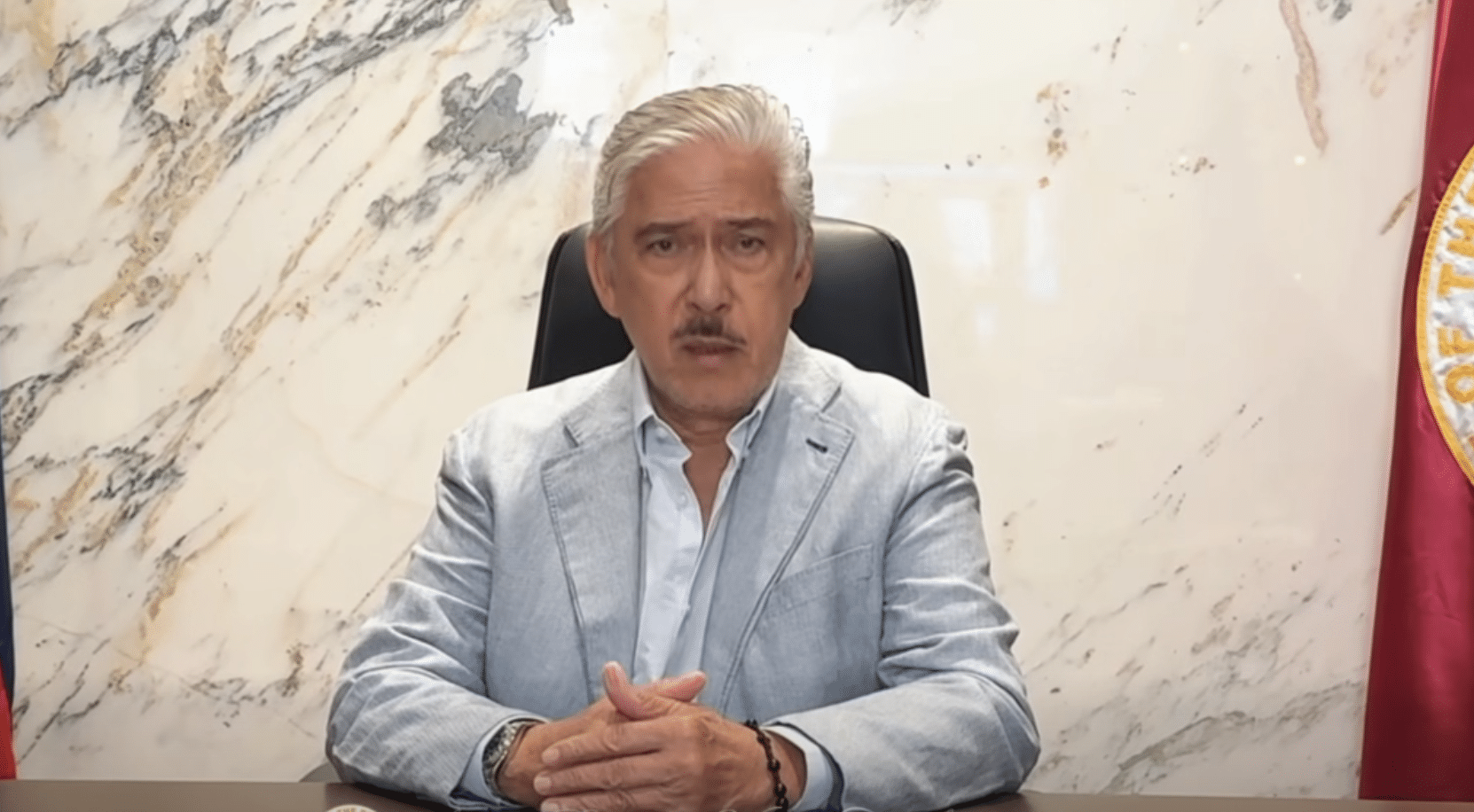
Senate President Vicente ‘Tito’ Sotto III — Photo from Vicente Tito Sotto/Facebook
.
WATCH VIDEO: https://www.youtube.com/watch?v=zdx82F_9grg
Sotto: SC ruling on Duterte impeachment case ‘very disappointing’ | ANC
Dateline Philippines: Senate President Vicente “Tito” Sotto III is not happy with the high court’s ruling on Vice President Sara Duterte’s impeachment case.
.
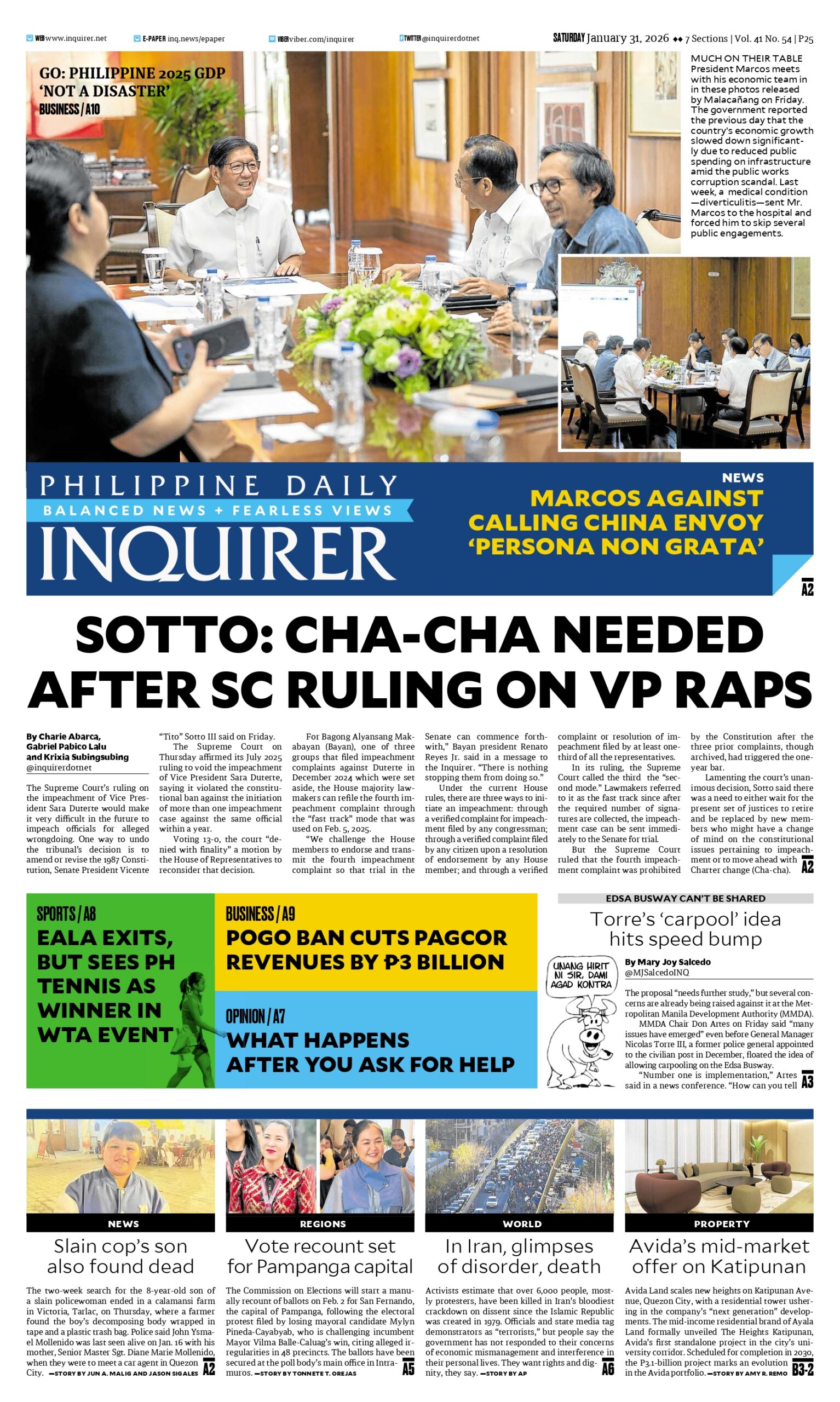
The Supreme Court’s ruling on the impeachment of Vice President Sara Duterte would make it very difficult in the future to impeach officials for alleged wrongdoing. One way to undo the tribunal’s decision is to amend or revise the 1987 Constitution, Senate President Vicente “Tito” Sotto III said on Friday.
The Supreme Court on Thursday affirmed its July 2025 ruling to void the impeachment of Vice President Sara Duterte, saying it violated the constitutional ban against the initiation of more than one impeachment case against the same official within a year.
Voting 13-0, the court “denied with finality” a motion by the House of Representatives to reconsider that decision.
For Bagong Alyansang Makabayan (Bayan), one of three groups that filed impeachment complaints against Duterte in December 2024 which were set aside, the House majority lawmakers can refile the fourth impeachment complaint through the “fast track” mode that was used on Feb. 5, 2025.
.
 |
“We challenge the House members to endorse and transmit the fourth impeachment complaint so that trial in the Senate can commence forthwith,” Bayan president Renato Reyes Jr. said in a message to the Inquirer. “There is nothing stopping them from doing so.”
Under the current House rules, there are three ways to initiate an impeachment: through a verified complaint for impeachment filed by any congressman; through a verified complaint filed by any citizen upon a resolution of endorsement by any House member; and through a verified complaint or resolution of impeachment filed by at least one-third of all the representatives.
In its ruling, the Supreme Court called the third the “second mode.” Lawmakers referred to it as the fast track since after the required number of signatures are collected, the impeachment case can be sent immediately to the Senate for trial.
|
|
.
But the Supreme Court ruled that the fourth impeachment complaint was prohibited by the Constitution after the three prior complaints, though archived, had triggered the one-year bar.
Lamenting the court’s unanimous decision, Sotto said there was a need to either wait for the present set of justices to retire and be replaced by new members who might have a change of mind on the constitutional issues pertaining to impeachment or to move ahead with Charter change (Cha-cha).
.
|
|
.
“It might really take years, or several retirements, before we can finally move forward and put that back in its proper place in the Constitution,” Sotto said.
“What I see as the immediate solution, though it can’t really be called immediate, is for us to change the Constitution. If it’s like that, then perhaps a constitutional assembly can act on it, or else we will be waiting for decades,” he told reporters in an online interview on Friday.
Meeting with Speaker

Sotto said that he intended to meet with Speaker Faustino “Bojie” Dy III in the second week of February to discuss steps that the Senate and the House could take following the Supreme Court ruling.
He said that “it used to be easy” to oust impeachable officials for alleged high crimes.
“That’s because that’s what the drafters of the Constitution really put in, especially the so-called option three—which they called option two—where just one-third of the signatures could immediately forward it (to the Senate),” Sotto said.
.
|
|
.
In the case of Duterte, 215 congressmen, or more than two-thirds of the House members, backed her impeachment.
The impeachment process shouldn’t take too long, the Senate leader said.
“So why are we making it difficult now, like what’s happening, and it’s becoming so hard?” Sotto said. “That’s why I said, forgive me, but I think impeachment now is an impossible dream.”
While the Supreme Court doubled down on it to void the impeachment of the Vice President, its decision still allowed Congress to assert its exclusive constitutional authority and emphasized that it did not absolve Duterte.
Several lawmakers and legal experts welcomed how the justices backed away from some of the most restrictive due process requirements the court imposed in their July 25, 2025, ruling.
‘Not a total loss’
For Manila Rep. Joel Chua, who was supposed to be one of the 12 House prosecutors in the aborted Senate trial, the ruling was “not a total loss … as it forced the court to clarify parts of their original ruling.”
“What we have here is a Supreme Court decision that laid out a complicated web of restrictions and convoluted chains that almost makes it impossible to use the impeachment process to exact accountability against the impeachable officers,” he said. “(But) almost is the key word. We see some silver linings streaming through the clouds the Supreme Court decision gathered.”
.
|
|
.
While the court maintained its conclusion, it modified parts of its original reasoning, including its stance on due process in House impeachment proceedings.
The Supreme Court no longer required that the respondent in an impeachment case be furnished copies of the complaint or draft articles of impeachment, or be given an opportunity to respond at the House level. This had drawn strong objections from lawmakers who said impeachment was a political process entrusted to Congress.
In so doing, Bicol Saro Rep. Terry Ridon said the high court “effectively abandoned the most restrictive due process requirements.”
These included, among others:
1. The draft Articles of Impeachment and supporting evidence be provided to House members
2. The evidence must meet the required quantum of proof to establish the charges
3. During plenary deliberations, the evidence must be made available to all House members for their information and guidance in deciding on the complaint
Other legal experts note that the ruling set a troubling precedent by redefining when impeachment proceedings are considered “initiated.”
Azcuna analysis
Former Supreme Court Associate Justice Adolfo Azcuna, one of the framers of the 1987 Constitution, noted that the court shifted its reasoning by interpreting the Charter’s reference to “session days” to mean calendar days when Congress is in session, a departure from long-standing legislative practice.
.
WATC H VIDEO: https://www.youtube.com/watch?v=GefFlMV1hGQ
Azcuna: Recent SC ruling adds two ways to initiate impeachment | Morning Matters
Former Supreme Court Associate Justice Adolfo Azcuna explained that the high court’s recent ruling on Vice President Sara Duterte’s impeachment introduced two additional ways to initiate proceedings. He emphasized that the definition established in Francisco v. House of Representatives still holds true as the first type of initiation.
..
|
|
.
“The Court ruled that the one-year ban started when the period to refer the first complaint to the committee expired without such referral being made. Such time-lapse constituted initiating an impeachment proceedings,” Azcuna said.
.
|
|
.
“As it now stands then, a complaint duly filed under the first mode either verified by a citizen and endorsed by a House member or filed under oath by a member, must be calendared in 10 calendar days in which sessions are held, and thereafter referred to the Committee (on Justice) in three calendar days in which sessions are held, otherwise it is deemed initiated and triggers the one-year ban,” he said.
Dangerous interpretation
The Makabayan bloc composed of ACT Teachers Rep. Antonio Tinio, Gabriela Rep. Sarah Elago and Kabataan Rep. Renee Co said this was a dangerous interpretation as “it appears to be changing the rules on impeachment as the process unfolds,” adding that there could be endless petitions in the Supreme Court whenever impeachment complaints are filed.
“Bottom line: the Supreme Court scuttled the impeachment trial of the vice president on a technicality,” Tinio said. “That bar is intended to protect officials from crank complaints and Congress from being tied up by multiple proceedings. None of these were ever an issue here.”
.
|
|
.
House Deputy Minority Leader Leila de Lima echoed those concerns, saying that the court “has crossed from interpretation into legislation.” The decision imposed rules and consequences “nowhere found in the text” of the Constitution, she said.
While the Supreme Court decision allowed the refiling of the same impeachment grounds against Duterte, De Lima said the ruling “appears to be a derogation of the House’s constitutional powers and prerogatives.”
Seven articles
The seven articles of impeachment transmitted to the Senate on Feb. 5, 2025, which may largely be refiled are the following:
1. Betrayal of public trust, commission of high crimes for her alleged threats to assassinate President Marcos, first lady Liza Araneta-Marcos, and then Speaker Ferdinand Martin Romualdez
2. Betrayal of public trust and graft and corruption in the alleged misuse of P612.5 million in confidential funds of the Office of the Vice President and the Department of Education (DepEd)
3. Betrayal of public trust and bribery within the DepEd
.
|
|
.
4. Violation of the 1987 Constitution and betrayal of public trust for alleged unexplained wealth and failure to disclose assets
5. Commission of high crimes for alleged involvement in extrajudicial killings in the drug war
6. Betrayal of public trust for alleged destabilization plots and high crimes of sedition and insurrection
7. Betrayal of public trust for unbecoming conduct as Vice President.
.
.

.