
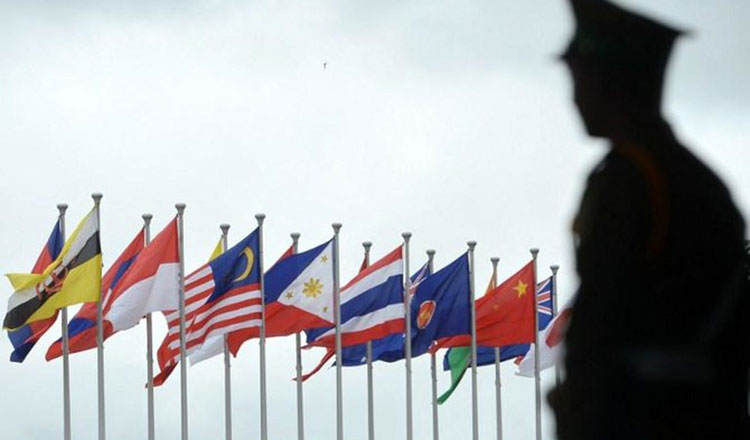
OPINION- 48TH ASEAN SUMMIT | ASEAN and crisis management

As the Middle East war begins to cause grave harm to global economies, ASEAN, a Southeast Asian bloc of 11 nations, must seize the moment to cease being 11 separate markets.
Eleven is 10 too many to manage a food and energy crisis of the scale we’re facing now. ASEAN must heed Prime Minister Datuk Seri Anwar Ibrahim’s call to make the Kuala Lumpur Declaration, adopted last year by the bloc, a foundation for ASEAN’s energy security, food resilience, and supply chain stability. And being a single market isn’t hard to do for the regional bloc.
ASEAN already cooperates on trade, diplomacy, and security. Food resilience should now become part of that same regional architecture. Anwar’s proposal for regional food stockpiling and coordinated crisis mechanisms is practical because shortages don’t respect borders.
 |
.
When one member country experiences supply disruptions, panic buying or export restrictions, others in the bloc feel the impact as well.
Besides, ASEAN has the capacity to protect itself better if it acts collectively. The bloc is home to major rice producers, fisheries, palm oil exporters, and agricultural economies.
Yet the region remains exposed to volatile global markets because coordination is weak and national responses are often fragmented. A regional reserve mechanism could reduce price shocks, stabilise supply and prevent poorer member states from being squeezed during emergencies.
The ASEAN Petroleum Security Agreement is one mechanism that can ease the economic pain caused by America and Israel’s war on Iran. Even if the war ends soon, there will still be other issues to manage, such as the decline in oil and gas production in the region.
According to GlobalData forecasts, ASEAN’s oil production is declining at a compound annual growth rate of 8.68% through 2030.
|
|
This downward trend, media reports say, is driven by ageing oil fields and rising demand, leading major producers like Indonesia, Malaysia and Vietnam to transition to net importers.
Given this bleak picture and the chaotic geopolitical situation, ASEAN should diversify its fossil fuel sources, as the prime minister told the 48th ASEAN Summit plenary session in Cebu, the Philippines.
He also encouraged deeper engagement with the Gulf Cooperation Council (GCC), including broader ASEAN-GCC-China linkages to build a more resilient regional energy architecture.
|
|
.
The ASEAN Power Grid, the bloc’s flagship initiative to achieve fully integrated electricity grid operations, needs acceleration. Only in this way can a regional ambition such as this be turned into action.
The plan is for the project to be fully operational by 2045, but the hope is that it will be completed a lot sooner.
Critics often accuse ASEAN of producing statements without concrete action. A workable energy security, food security, and supply chain stability framework involving stockpiles, logistics, coordination, emergency distribution systems, and shared agricultural planning would demonstrate that the bloc can still deliver practical benefits to its 700 million people.
.
THE EDITOR
|
|



Related Posts
-
 March 5, 2026
 -
 October 20, 2025
 -
 March 2, 2026
 -
 March 6, 2026