
OPINION-COLUMN | ACADEMIA: Why Indonesia must write ASEAN’s green rules
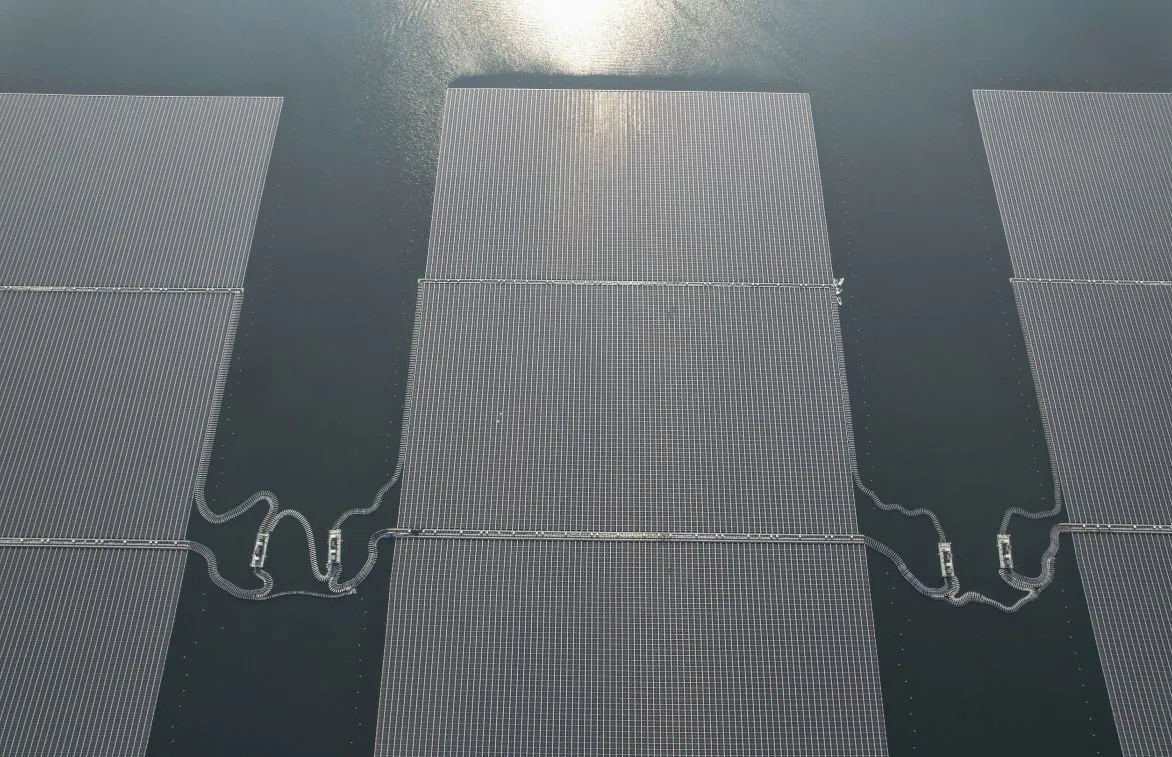
Solar panels float on Sept. 26, 2023, at the Cirata Dam in Purwakarta regency, West Java. (Antara/Raisan Al Farisi)
..
.
Indonesia has spent a decade teaching the world that it controls the supply of nickel, palm oil, and now renewable electricity. The harder question is whether Jakarta can also set the rules by which those products are sold.
.
.
L ast year, China’s LONGi, the world’s largest solar-panel manufacturer, teamed up with state oil company Pertamina to build a 1.6-gigawatt solar-module factory in Deltamas, West Java. The plant does not exist there simply because LONGi prefers the geography; it is there because of an Indonesian mandate. Under the local-content regulation known as TKDN, solar modules sold to the state utility, PT PLN, must be at least 60 percent locally manufactured from 2025 onwards. While foreign manufacturers grumbled about the rule only a few years ago, today they are building factories to comply with it. Indonesia has discovered a powerful lever for industrial growth, but it has not yet fully realized how to wield that discovery on a regional stage. Across a string of strategic industries, Jakarta has demonstrated that it can bend foreign capital to local terms. The 2020 ban on raw nickel exports forced foreign processors onshore, creating a battery-materials cluster that now feeds Hyundai’s electric-vehicle plant in Karawang, West Java.
L ast year, China’s LONGi, the world’s largest solar-panel manufacturer, teamed up with state oil company Pertamina to build a 1.6-gigawatt solar-module factory in Deltamas, West Java. The plant does not exist there simply because LONGi prefers the geography; it is there because of an Indonesian mandate. Under the local-content regulation known as TKDN, solar modules sold to the state utility, PT PLN, must be at least 60 percent locally manufactured from 2025 onwards. While foreign manufacturers grumbled about the rule only a few years ago, today they are building factories to comply with it. Indonesia has discovered a powerful lever for industrial growth, but it has not yet fully realized how to wield that discovery on a regional stage. Across a string of strategic industries, Jakarta has demonstrated that it can bend foreign capital to local terms. The 2020 ban on raw nickel exports forced foreign processors onshore, creating a battery-materials cluster that now feeds Hyundai’s electric-vehicle plant in Karawang, West Java.
Success isn’t at the top of the corporate ladder anymore My generation watched our parents give everything to a company. We decided to give it to ourselves instead. But it’s more complicated than that.
.
The TKDN regime is replicating this success in the solar sector. Even the planned 3.4-gigawatt electricity export from Indonesia to Singapore, the largest single piece of cross-border green trade in the region, is being designed with that same 60 percent local-content requirement built in. The pattern is consistent: Indonesia is no longer passively accepting global rules; it is rewriting them every time foreign capital comes calling. What Indonesia has not yet done, however, is convert this domestic rule-making power into regional rule-setting authority. This gap matters because the next decade of trade in clean-energy products will not be governed by megawatts and tonnes alone; it will be governed by certificates.
…
sector. Even the planned 3.4-gi
.
Althof Endawansa
The Jakarta Post PREMIUM
Jakarta Sat, May 9, 2026