
OPINION-COLUMN | Law, Not Escalation: Cambodia’s UNCLOS Path Vindicated

Thailand’s decision to participate in compulsory conciliation under the United Nations Convention on the Law of the Sea (UNCLOS) should be welcomed.
But it should also be understood for what it is: a clear validation of Cambodia’s decision to choose law over confrontation, procedure over pressure, and peaceful settlement over political accusation.
Cambodia’s decision to invoke UNCLOS compulsory conciliation was never an act of escalation. It was a peaceful, lawful and responsible step toward resolving a long-standing maritime dispute between two neighbours. It reflected Cambodia’s consistent position that issues affecting sovereignty, maritime rights, energy security and regional stability must be addressed through rules, reason and international law.
.

For more than two decades, Cambodia and Thailand relied on the 2001 Memorandum of Understanding as the only agreed bilateral framework for managing the overlapping maritime claims area in the Gulf of Thailand. That framework did not settle the maritime boundary, nor did it predetermine sovereignty. But it provided a channel for negotiation, restraint and cooperation. It kept open the possibility of a practical solution, including cooperation over maritime resources. Cambodia did not abandon that framework. Thailand did.
.
….
Cambodia’s UNCLOS Step: Peaceful, Lawful and Necessary
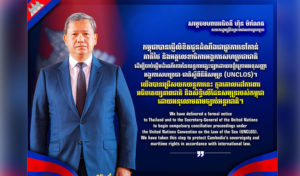
Thailand’s latest statement on Cambodia’s decision to institute compulsory conciliation proceedings under the United Nations Convention on the Law of the Sea is not only misleading; it reverses the order of events. Cambodia did not break the bridge of dialogue. Thailand did.
….
When Thailand announced its intention to terminate the 2001 MoU, Cambodia urged reconsideration. Cambodia’s message was clear: existing frameworks should not be discarded lightly, especially when they concern peace, sovereignty, maritime rights and long-term neighbourly relations. Regrettably, Thailand walked away from the only mutually accepted bilateral mechanism that had managed the issue for 25 years.
That decision changed the diplomatic landscape. Once the agreed bilateral framework was removed by one party, Cambodia could no longer rely on it as a credible path toward settlement. The opportunity for bilateral negotiations within that framework had been exhausted not because Cambodia rejected dialogue, but because Thailand dismantled the agreed mechanism for dialogue.
 |
.
The sequence cannot be blurred. First, Cambodia and Thailand managed the maritime issue for decades through the 2001 MoU. Second, Thailand unilaterally terminated that framework. Third, Cambodia, faced with the collapse of the only agreed bilateral mechanism, turned to UNCLOS. This is not escalation. It is consequence.
A rule-abiding state should have no reason to fear conciliation. Compulsory conciliation under UNCLOS is not litigation in the hostile sense. It is not coercion. It is not “war by legal means.” It is a peaceful dispute-settlement mechanism created for situations where negotiations have reached an impasse, but where both sides still need a structured, lawful and dignified way forward.
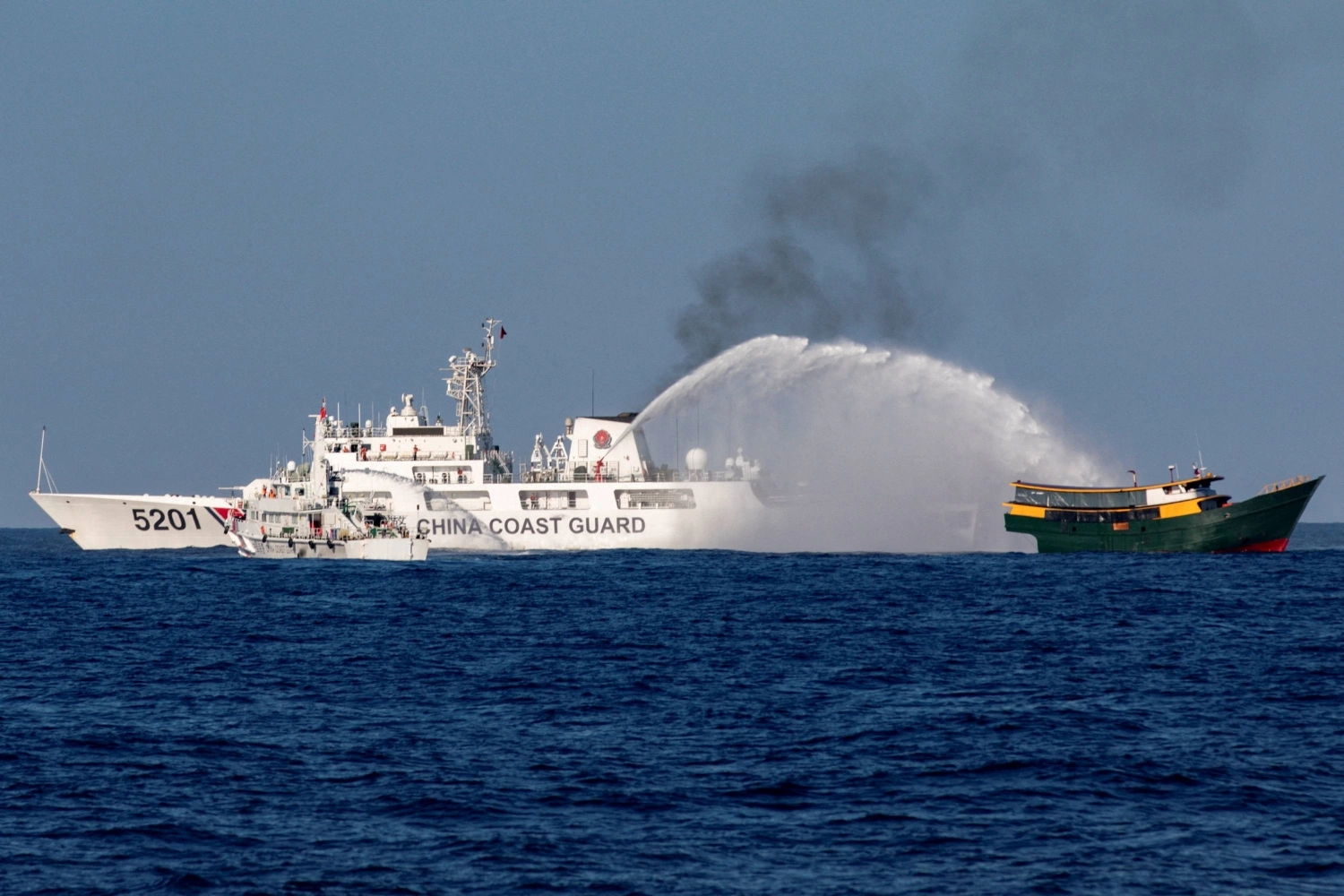
A China Coast Guard vessel fires a water cannon at a Philippine resupply vessel on its way to a resupply mission at Second Thomas Shoal in the disputed South China Sea in March 2024. | REUTERS
Thailand’s decision to participate is therefore a constructive adjustment to the reality Cambodia has consistently emphasized: UNCLOS conciliation is a legitimate, peaceful and treaty-based mechanism. Participation is better than rejection. Engagement is better than avoidance. A legal process is better than political accusation.
However, Thailand’s participation should not be used to rewrite the narrative. Cambodia did not create this situation. Cambodia responded to it. Cambodia did not choose conflict; Cambodia chose law. Cambodia did not close the door to dialogue; Cambodia opened a lawful door after Thailand closed the old one.
Cambodia’s conduct reflects strategic discipline. It did not respond to Thailand’s unilateral termination with retaliation. It did not inflame the maritime issue through military posturing. It did not attempt to impose facts at sea. It placed its confidence in international law, independent procedure and peaceful engagement.
That is not weakness. It is the conduct of a state that understands both its rights and its responsibilities.
|
|
.
The Gulf of Thailand should not become another arena of mistrust. It should become a space for lawful settlement, practical cooperation and shared stability.

A fair maritime arrangement would benefit Cambodia, Thailand, ASEAN, regional energy security and investor confidence.
Thailand’s participation in UNCLOS compulsory conciliation is therefore a welcome step. But it is also confirmation that Cambodia’s decision was correct. Cambodia did not create the deadlock. Cambodia chose the legal path out of it. The task ahead is clear: both countries must engage in good faith, respect international law, and allow peace to be shaped by rules rather than pressure.
Roth Santepheap is a geopolitical analyst based in Phnom Penh. The views expressed are his own.
.

.
.
.