OP ED OPINION | Myanmar earthquake: The latest test of Asean leadership – Annisa Natalegawa .
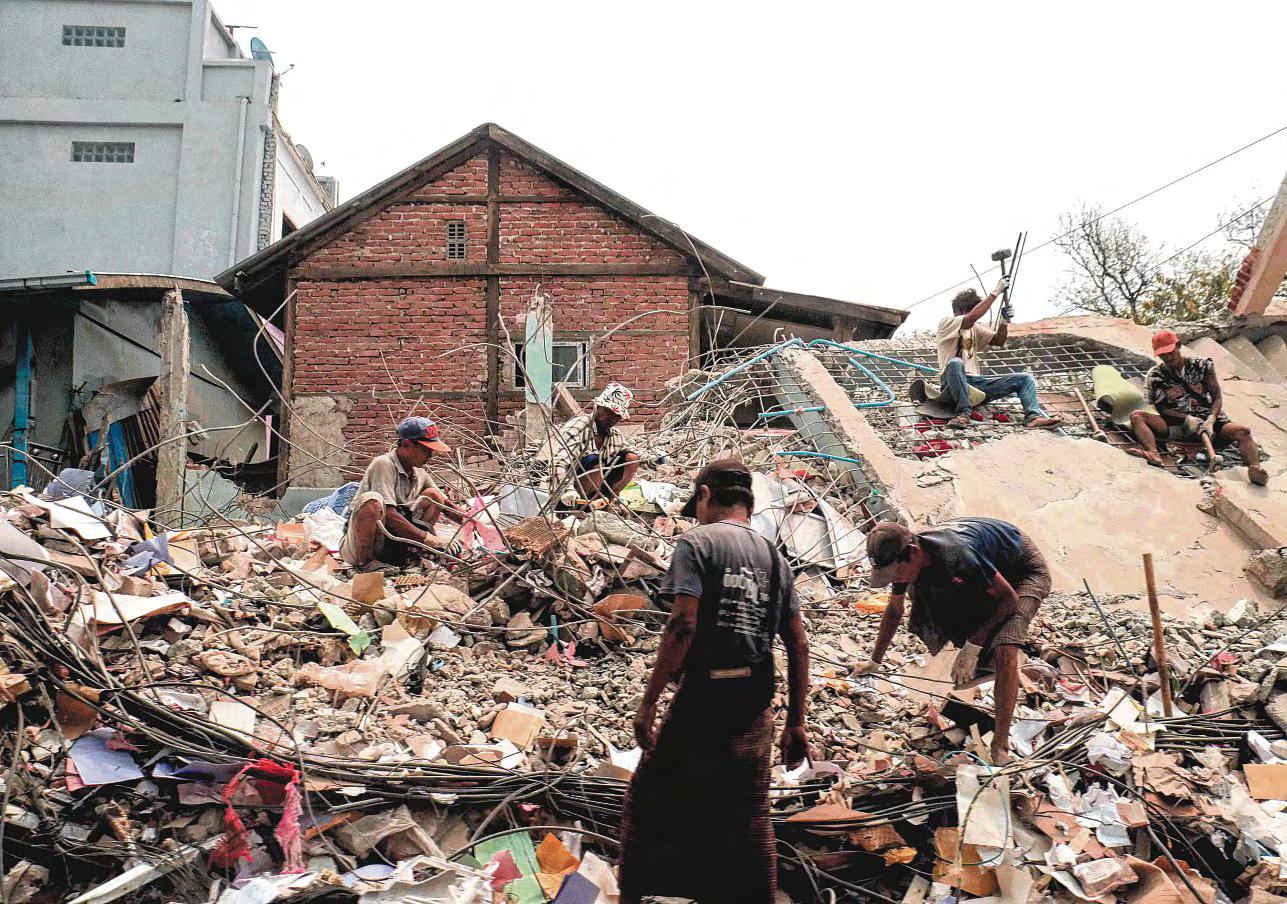
People sort through the rubble of a collapsed building in Mandalay on April 5, following the March 28 earthquake.PHOTO: AFP
Annisa Natalegawa
.
The earthquake that struck Myanmar on March 28 dealt yet another blow to a country already on its knees. With the lowest gross domestic product per capita among Asean member states, Myanmar is grappling with the compounded effects of natural disaster, domestic conflict and economic collapse.
Already reeling from years of political turmoil following the military junta’s return to power in 2021, the quake feels less like an isolated event and more like a tipping point. And once again, it has exposed how international humanitarian aid—in both its speed and configuration—is shaped by political realities. This crisis offers a window into a humanitarian system under strain: where the balance of actors is shifting, and the ability to act quickly is an exception rather than the norm

@[email protected]
When Cyclone Nargis struck in 2008, Myanmar’s military initially blocked international assistance. Asean then stepped in to negotiate a tripartite arrangement with the United Nations and the Myanmar government that allowed aid to flow. The arrangement was not without its flaws, but it was widely seen as a breakthrough, and one of the few times Asean effectively used its diplomatic leverage in a humanitarian crisis.
This time, the military government was quick to appeal for international assistance in a rare move publicly articulated by spokesperson Zaw Min Tun, reflecting the mammoth scale of the crisis and the urgent need to respond during the so-called “golden window”, the first 72 hours after a disaster, when the chances of saving lives are highest.
THE EDITOR

 ADS by:
Memento Maxima Digital Marketing
@[email protected]
SPACE RESERVE FOR ADVERTISEMENT
.
This story is from the April 09, 2025 edition of The Straits Times.