ASEANEWS HEADLINE-DU30 ICC EJK COURT CASE| MANILA: How can ICC arrest Bato? Lawyers break it down
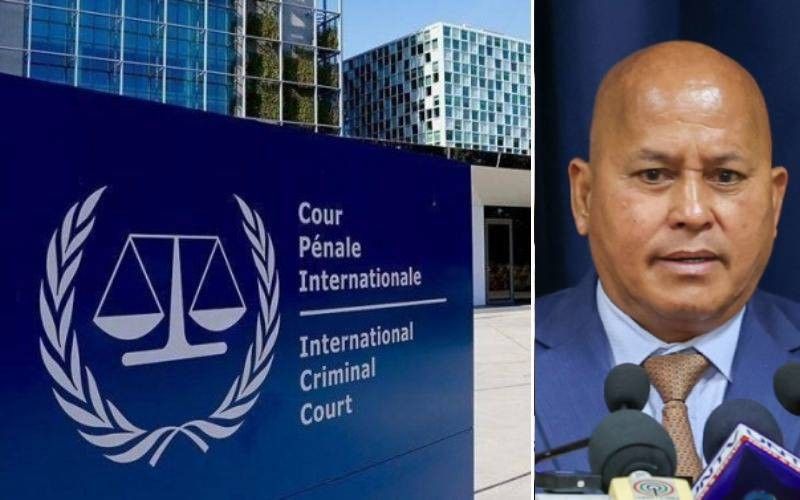
Composite photo: The seat of the International Criminal Court in The Hague, Netherlands and Sen. Ronald “Bato” dela Rosa answering questions from the media during a press conference at the Senate in Pasay City on Sept. 18, 2024.
.
WATCH VIDEO: https://www.youtube.com/watch?v=gRNXUwAy3aE
“BATO”: ICC ARREST WARRANT OUT NA!??
A conversation with Atty Dino Deleon .

.
.
MANILA, Philippines — Following the revelation that the International Criminal Court (ICC) has issued a warrant of arrest against Sen. Ronald “Bato” Dela Rosa, questions have been raised regarding how he will be arrested.
On November 9, Ombudsman Jesus Crispin “Boying” Remulla said in a DZRH interview that a warrant of arrest has already been issued against Dela Rosa by the ICC in connection with the war on drugs during the administration of detained former president Rodrigo Duterte.
However, the Department of Foreign Affairs and the Philippine Embassy in The Hague, Netherlands, said that they have yet to be notified of a warrant. The Department of Justice also said that it has yet to “verify the information.”
Handover, not extradition. Should Dela Rosa be arrested, it would be considered a surrender to the tribunal’s jurisdiction, not extradition, according to ICC Assistant to Counsel Kristina Conti.
Conti clarified the distinction, emphasizing that the ICC warrant is an international warrant, not a foreign warrant issued by another country.
“Ang extradition ay usapin sa pagitan ng mga bansa. Hindi bansa ang ICC,” Conti said in a Facebook post.
(Extradition is a matter between countries. The ICC is not a country.)
“Ang extradition process ay angkop para sa mga foreign warrant of arrest, na technically ay walang bisa sa ibayong bansa. Kaya kinakailangang magkaroon ng lokal na proseso, at mag-issue ang isang korteng Pilipino ng warrant na katapat o katuwang ng foreign warrant,” she added.
(The extradition process is appropriate for foreign warrants of arrest, which technically have no effect in another country. That is why a local process is required, and a Philippine court must issue a warrant equivalent or corresponding to the foreign warrant.)
Procedure. Conti explained that ICC member-states, as well as countries requested to cooperate, are obligated to recognize an international warrant on their territory. She outlined the major steps under the Rome Statute:
- The ICC Pre-Trial Chamber issues the warrant of arrest.
- The ICC Registry sends the warrant and a formal “request for arrest and surrender” to member-states and partners like Interpol.
- The receiving country prepares the process for locating and arresting the individual.
- The subject is arrested according to local Philippine procedure (citing Rules of Court Rule 113).
- The arrested person is presented by the state to the competent judicial authority or local court (citing Rome Statute Article 59).
If the person’s identity is confirmed and the process is duly followed, they can be surrendered to the ICC detention facility, according to Conti.
Continuing jurisdiction and immunity. Conti also addressed the argument that the Philippines, having withdrawn from the ICC in 2019, is no longer obliged to comply.
She stressed that based on the ICC’s decision on the jurisdiction challenge raised by former president Duterte, the court’s authority over the investigation continues, meaning the Philippines is still required to cooperate.

ADS by:

@[email protected]
.
RELATED: ICC rejects Duterte’s jurisdiction challenge
Furthermore, Conti pointed out that the ICC recognizes no immunity based on official capacity.
“Even a sitting president can be issued a warrant of arrest by the court. Therefore, Bato Dela Rosa cannot claim he cannot be arrested because he is a Senator,” she said.
In a separate Facebook post, National Union of People’s Lawyers President Ephraim Cortez explained that the obligation of the Philippine government to enforce the possible warrant against Dela Rosa is based on its treaty obligations under Article 127 (2) of the Rome Statute.
This provision mandates that the Philippines agreed to cooperate in any investigations that were commenced before its withdrawal from the ICC became effective in March 2019.
“Under that provision, the Philippines agreed to cooperate in any investigations that were commenced before the effectivity of the statute,” he said.

Article 127 (2) of the Rome Statute is about a country’s obligations to the ICC even after the country has formally withdrawn from the treaty:
A State shall not be discharged, by reason of its withdrawal, from the obligations arising from this Statute while it was a Party to the Statute, including any financial obligations which may have accrued. Its withdrawal shall not affect any cooperation with the Court in connection with criminal investigations and proceedings in relation to which the withdrawing State had a duty to cooperate and which were commenced prior to the date on which the withdrawal became effective, nor shall it prejudice in any way the continued consideration of any matter which was already under consideration by the Court prior to the date on which the withdrawal became effective.

Will the rules of the Supreme Court apply? Will the recently released rules on extradition proceedings apply to Dela Rosa? Cortez said no.
Cortez explained that the Rules of Procedure on Extradition require the request to be made by a “requesting party” that is a state, pursuant to an existing extradition treaty.
.

@[email protected]
.
.
RELATED: Supreme Court approves rules on extradition proceedings
“The ICC cannot qualify as a ‘requesting party,’ since it is not a state. ICC is a special mechanism created pursuant to the Rome Statute,” Cortez said.
“Since the duty to enforce the warrant of arrest against Bato is NOT imposed pursuant to an extradition treaty, the Rules of Procedure on Extradition are inapplicable,” he added.
When did the ICC implement an arrest warrant? It could be recalled that the last time the ICC arrested someone through Interpol was on March 11, when the government handed over Duterte to the international tribunal’s custody.
Multiple petitions were subsequently filed challenging the arrest, the ICC’s jurisdiction in the Philippines, and the government’s cooperation with Interpol and the tribunal.
 Ads by:
 Memento Maxima Digital Marketing