
OPINION-COLUMN ASIA GEOPOLITICS | An opportunity to re-engage with China during our ASEAN chairmanship
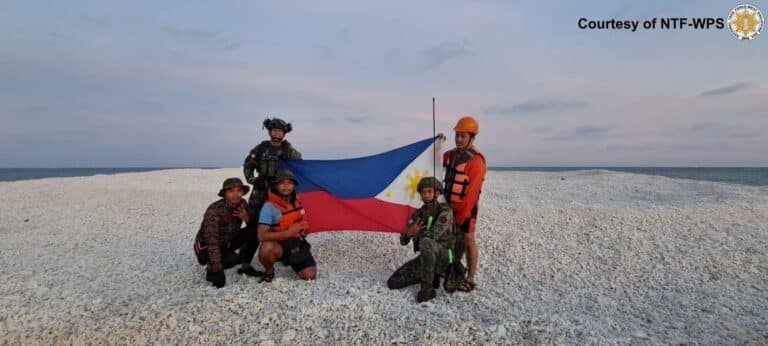
Personnel from the Philippine Navy, Philippine Coast Guard, and Philippine National Police Maritime Group raise the Philippine flag on Pag-asa Cay during a maritime operation on April 27, 2025. —Photo from the National Task Force-West Philippine Sea
.
.
.
 BABE’S EYE VIEW FROM WASHINGTON D.C.
– The Philippine Star
In quiet, off the record conversations here in Washington where I am often asked about the Philippines’ strategic posture in the Indo-Pacific, one question keeps resurfacing: is there still a path toward reducing tensions with China without compromising national interests?
The honest answer is that no one believes that territorial disputes in the South China Sea will disappear overnight. However, many seasoned diplomats and policymakers in Washington agree on one thing – conflict is not inevitable, and hostility is not destiny.
Let’s be clear – China is here to stay. It is the world’s second largest economy, a permanent member of the UN Security Council and the Philippines’ largest trading partner. And whether we like it or not, geography alone ensures that we will remain neighbors. The real question, therefore, is not whether China will continue to be influential in our region, but how we choose to manage that reality. Will it be through permanent confrontation, or calibrated engagement?
For decades, ASEAN has survived and prospered by embracing a simple but powerful principle: economic interdependence reduces the likelihood of conflict. Trade creates stakeholders. Investment creates constituencies for peace. And when business leaders, investors, workers and consumers are deeply interconnected, the cost of escalation becomes too high and the logic of war becomes irrational.
 |
.
 This is where the Philippines has a strategic opportunity. As ASEAN chair this year, we are in a rare position to shape not only the agenda but the atmosphere of regional diplomacy. Instead of allowing the South China Sea to remain the dominant and defining narrative, we can rebalance the conversation toward cooperation, growth and shared prosperity.
Let it be clear: this is not about forsaking sovereignty, weakening alliances or forgetting our legal victories. The 2016 PCA arbitral ruling remains a cornerstone of our national position. Our defense partnerships, especially with the United States and other like-minded nations, remain essential to deterrence and regional stability. But security tools alone cannot solve political disputes. History teaches us that even the strongest alliances cannot be substitutes for diplomacy, and even the best military hardware cannot manufacture trust.
|
|
.
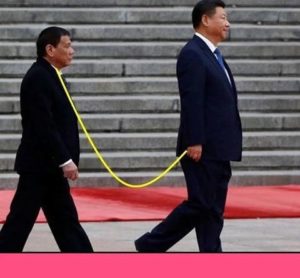
Economic engagement, on the other hand, can lower temperatures where political dialogue struggles. Reigniting stronger economic ties with China – in infrastructure, tourism, agriculture, renewable energy, technology and manufacturing – offers a practical pathway toward de-escalation. It does not resolve competing claims, but it changes the environment in which those claims are managed.
Consider the practical benefits. Tourism alone could generate billions in revenue and thousands of jobs. Expanding agricultural exports opens new markets for Filipino farmers. Joint infrastructure projects improve logistics, ports and energy security. Supply chain integration strengthens our role in regional manufacturing networks. These are not abstract theories; these are tangible outcomes that can help improve everyday lives.
More importantly, these create a web of mutual interests. When Chinese companies invest in the Philippines, when Filipino-Chinese exporters depend on Chinese markets, when airlines, hotels and logistics firms thrive on bilateral flows, a powerful constituency for stability emerges on both sides. Business leaders begin to lobby for calm, not confrontation. Diplomats gain space to talk. Nationalists find fewer ears willing to listen to escalation.
This logic is not new; it is precisely how Europe transformed itself after centuries of war. It is how ASEAN itself prevented conflict among former adversaries. Trade came first, trust followed later.
As ASEAN chair, the Philippines can champion a regional mantra such as “Competing claims, cooperative futures” or “Peace through prosperity.” These are not slogans for weakness, but frameworks for realism. We acknowledge disputes, but we refuse to allow them to dominate the entire relationship.
|
|
.
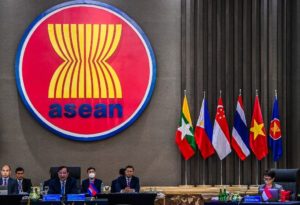
Concrete initiatives could include an ASEAN-China Economic Reset Summit in Manila, focused on post-pandemic recovery and future industries. Track-two dialogues involving business leaders, retired diplomats and strategic thinkers could quietly explore confidence-building measures. Joint development zones – carefully crafted and without prejudice to sovereignty claims – could allow resource cooperation while shelving the most contentious legal questions for later generations.
None of this requires choosing between Washington and Beijing. The Philippines does not benefit from a binary worldview – we benefit from being a bridge, not a battlefield. Strong alliances deter conflict, strong economies prevent discord.
In fact, many American officials including President Trump acknowledge that the most stable Indo-Pacific is not one that is divided into rigid camps, but one where economic networks remain dense and inclusive. The United States itself trades heavily with China despite strategic rivalry. If great powers can compartmentalize competition and cooperation, surely, smaller states must learn to do the same.
|
|
 A few months ago, during a policy forum in Washington, a senior diplomat remarked to me that “no one wins a Cold War in Asia.” The costs would be astronomical, the disruptions immense and the losers would be ordinary citizens long before generals or politicians feel the consequences. That comment stayed with me because it reflects a growing quiet consensus: escalation may be easy to talk about, but peace is far harder – and far more valuable – to build.
As ASEAN chair, the Philippines has a chance not merely to manage disputes, but to reshape the regional climate in which those disputes exist. We can choose to be remembered as the country that amplified tensions, or the one that restored balance, dialogue and economic common sense.
History rarely remembers who shouted the loudest. It remembers who kept the peace. And in a region as complex and consequential as the Indo-Pacific, peace will not come from rhetoric or weapons alone. It will come from something far more practical, far more durable and far more ASEAN in spirit: shared prosperity.
* * *
Email: [email protected]
THE EDITOR
|
|