ASEANEWS HEADLINE-WORLD OIL CRISIS| CAIRO: Iran closes Strait of Hormuz anew, fires at crossing tankers
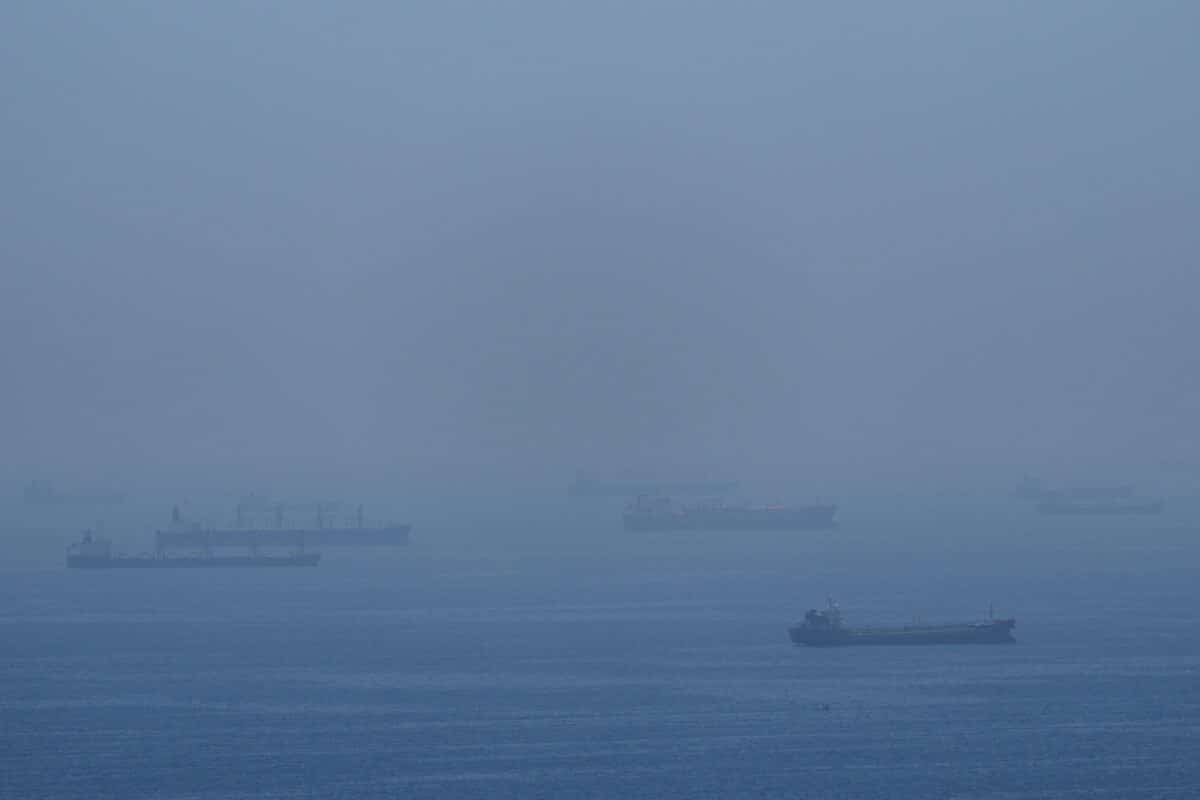
Tankers anchored in the Strait of Hormuz, Saturday, April 18, 2026. (AP Photo)
.
WATCH VIDEO:
.
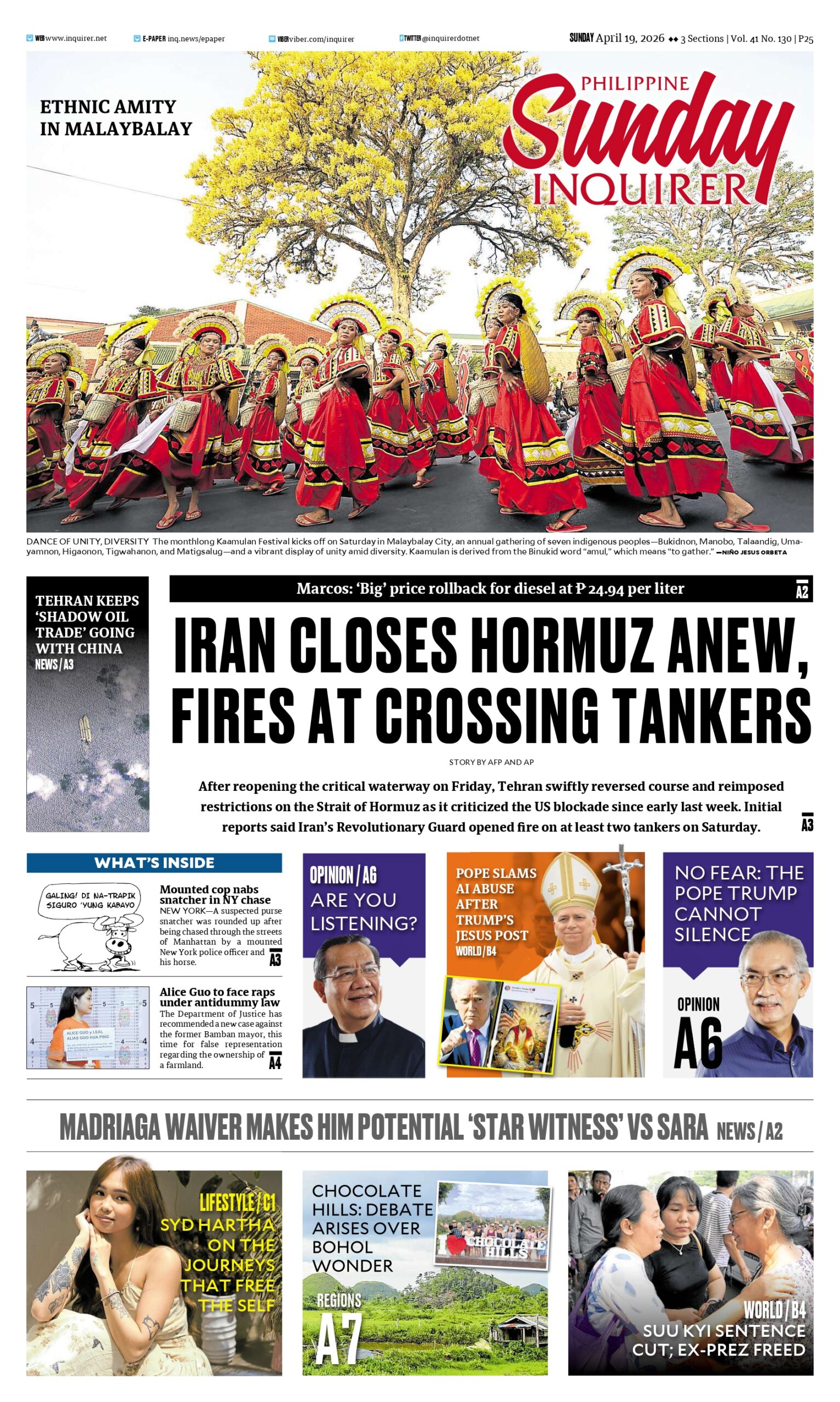
CAIRO — Iran on Saturday swiftly reversed course on reopening the Strait of Hormuz, after the United States said it would not end its blockade which US President Donald Trump had ordered earlier this week.
After reimposing the restrictions on the critical waterway, two gunboats from Iran’s Revolutionary Guard opened fire at a tanker transiting the strait, according to the British military’s United Kingdom Maritime Trade Operations Center. It reported the tanker and crew as safe, without identifying the vessel or its destination.
TankerTrackers.com reported vessels were forced to turn around in the strait, including an Indian-flagged super tanker, after they were also fired on by Iran.
READ: US expands blockade to target Iran-linked ships worldwide
Iran announced on Friday the reopening of the strait. But Trump also said that day the US blockade “will remain in full force” until Tehran reaches a deal with Washington including on its nuclear program.
Earlier on Saturday, the US joint military command said its “control of the Strait of Hormuz has returned to its previous state, … under strict management and control of the armed forces.”\
This prompted Tehran to threaten, then finally proceed to shut the waterway.
The strait’s brief reopening followed after Lebanon and Israel agreed on a 10-day ceasefire.
Fuel prices dropped further on Friday, as stocks also headed upward and traders drank in the optimism. Oil prices had already been falling last week on hopes of a negotiated end to the conflict.
The United States also issued another waiver allowing the sale of Russian oil and petroleum products already at sea—a move likely to further soften oil prices as it increases supply.
The resumption of transit had also prompted optimism even from Washington, with Trump claiming that a peace deal was “very close” and that Iran had agreed to hand over its enriched uranium—a key sticking point in negotiations.
“We’re going to get it by going in with Iran, with lots of excavators,” Trump told a gathering of the conservative movement Turning Point USA in Phoenix, Arizona.
In a series of social media posts, Trump hailed Pakistan and the Gulf states as “GREAT AND BRILLIANT.”
These allies sought to pursue peace negotiations between Iran and the United States which were stalled on April 12 after two days of marathon talks.
In a phone interview with Agence France-Presse (AFP), Trump said it “looks like it’s going to be very good for everybody. And we’re very close to having a deal.”
He said there were “no sticking points at all” left with Tehran.
‘Appropriate response’
Trump also said US efforts to recover Iran’s uranium will be at a “leisurely pace.”
Iran, however, pushed back on that claim, saying its stockpile was not going anywhere.
It then warned it would again close the Strait of Hormuz if US warships halt vessels coming from Iranian ports.
“With the continuation of the blockade, the Strait of Hormuz will not remain open,” parliamentary speaker Mohammad Bagher Ghalibaf wrote on X, adding that passage through the waterway would require Iran’s authorization.
“The opening and closing of the Strait of Hormuz does not take place on internet, it is determined in the field, and our armed forces certainly know how to behave in response to any action by the other side,” Iranian Foreign Ministry spokesperson Esmaeil Baqaei told state television on Friday.
“What they call a naval blockade will definitely be met with an appropriate response from Iran. A naval blockade is a violation of the ceasefire and Iran will definitely take the necessary measures,” Baqaei also said.
‘Enough’ fighting
Tehran had insisted on a halt to the fighting in Lebanon as part of any agreement with Washington.
The ensuing ceasefire on Friday—together with the reopening of the strait—marked a key progress, at least briefly, in Washington’s push for a broader deal to end the Middle East conflict.
The fighting in Lebanon began on March 2, when Hezbollah fired rockets at Israel just two days after the US-Israel attacks that launched the Iran war.
Folllowing the announcement of a ceasefire, Trump said Israel had been “prohibited” by Washington from carrying out further strikes.
“Enough is enough!” he said, adding that the United States would work with Lebanon “and deal with the Hezbollah situation in an appropriate manner.”
The Israeli military said it was lifting wartime restrictions. But Prime Minister Benjamin Netanyahu warned the campaign against Hezbollah was not over.
Lebanese President Joseph Aoun insisted his country would no longer serve as an arena for outside conflicts.
Meanwhile, displaced families used the 10-day truce to return to homes in bomb-damaged south Beirut and the war-ravaged south.
“Our feelings are indescribable—pride and victory,” 37-year-old Amani Atrash said, adding that she hoped the ceasefire would be extended
.
Agence France-Presse,
Associated Press
April 19, 2026
.