
OPINION-COLUMN | Remove ‘Scambodia’: A Call for the Wall Street Journal to Uphold Basic Standards of Journalism

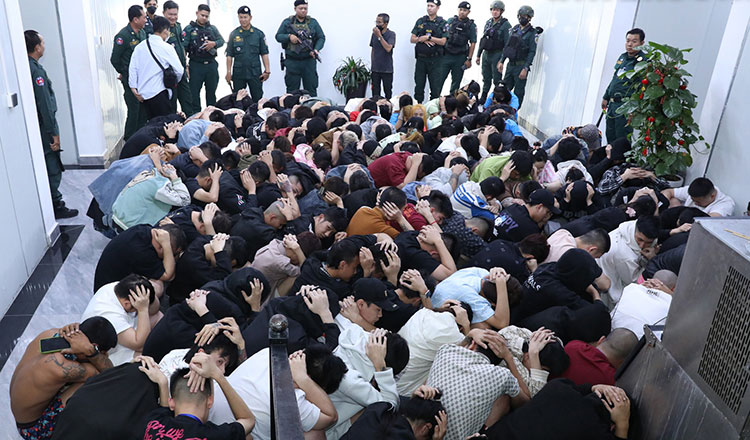
Cambodia deports 1,175 foreigners in scam crackdown
When The Wall Street Journal uses the term “Scambodia,” it crosses a clear line—from reporting into ridicule. This is not a clever turn of phrase. It is not analysis. It is mockery, and it has no place in serious journalism.
“Cambodia” is the internationally recognized and official name of a sovereign state. “Scambodia” is not. It is a derogatory distortion that reduces an entire country to a stereotype rooted in criminality. For a publication that claims global authority and credibility, the use of such language is not only unprofessional—it is irresponsible.
 |
…
.
Let’s be clear: online scams are a real and serious issue. But they are not unique to Cambodia, nor are they confined within its borders. These criminal networks are transnational, involving actors from multiple countries, often exploiting legal loopholes and technological gaps across jurisdictions. To single out Cambodia with a mocking label is to ignore this reality and mislead readers.
More troubling is what this label erases. In recent months, Cambodia has undertaken one of the region’s most extensive crackdowns on online scam operations. Hundreds of sites have been dismantled. Thousands of individuals—many of them foreign nationals—have been arrested or deported. New laws and enforcement mechanisms have been strengthened. These are facts. Yet they are absent from a narrative that prefers insult over substance.
|
|
…
.
The term “Scambodia” does not just misinform—it harms. It stigmatizes millions of ordinary Cambodians who have nothing to do with these crimes. It undermines the country’s reputation, affects businesses, and feeds into outdated and unfair perceptions of developing nations as inherently lawless.
Would The Wall Street Journal apply such a label to other countries facing similar challenges? Would it casually brand a Western nation with a comparable slur? The answer is no. That is precisely why this matters. The double standard is obvious—and unacceptable.
Journalism carries responsibility. Words shape narratives, and narratives shape international understanding. When a leading global newspaper chooses mockery over accuracy, it diminishes not only its subject, but its own credibility.
This is why The Wall Street Journal should take immediate action: remove the term “Scambodia” from its article and refrain from using it in any future reporting. Correct the record. Uphold the standards it claims to represent.
|
|
…
Criticism is legitimate. Scrutiny is necessary. But ridicule is neither.
Cambodia deserves to be discussed with accuracy and fairness—not reduced to a headline gimmick. And readers deserve journalism that informs, not insults.
…
Roth Santepheap is a geopolitical analyst based in Phnom Penh. The views expressed are his own.
|
|
…
..
|
Numero Uno
|
 Ads by:
 Memento Maxima Digital Marketing
Cambodia deports 1,175 foreigners in scam crackdown

Synopsis: Week-long operation targets online fraud and related crimes, including illegal entry and document forgery.
From April 12 to 19, Director-General of Immigration Lieutenant General Sok Veasna asked the Department of Investigation and Enforcement to deport foreigners from 28 countries.
The countries deportees were sent to include Rwanda, Cameroon, Myanmar, Nepal, Vietnam, India, Sri Lanka, China, Zimbabwe, Bangladesh, Nigeria, Indonesia, Sierra Leone, Uganda, Ethiopia, Kenya, Pakistan, Madagascar, Ghana, the Philippines, Lebanon, South Korea, Malaysia, England, Poland, Taiwan, Kyrgyzstan and Canada. Among them were 327 Chinese involved in online scams, deported via Techo International Airport, and 226 Vietnamese.
|
|
…
.
Authorities also deported numerous foreigners linked to online scam operations through border points such as Chakri International Border Gate in Kampot province. Others were expelled for document forgery, illegal stay, kidnapping for ransom, use of fake visas (QR codes), online fraud and illegal employment.
The General Department of Immigration said the deportations show strict enforcement of legal measures under Prime Minister Hun Manet and Interior Minister Sar Sokha, aimed at taking on transnational cybercrime and ensuring public safety.
According to the Commission for Combatting Online Scams, authorities have intensified nationwide crackdowns from July 2025 to mid-April this year, with more than 250 online scam cases cracked, including 91 casino raids.
|
|
…
.
A total of 112 cases involving around 1,089 suspects from various countries have been sent to court.
Cambodia enacted a new law against online scams in April. It has 24 articles aimed at eradicating cyber fraud, scam centres and related crimes such as money laundering.
Ringleaders face up to 20 years in prison—or life imprisonment if deaths occur—while other offenders face sentences of two to five years.
.
|
|
…
 Ads by:
…
…
Related Posts
-
December 19, 2025
-
 January 19, 2026
 -
 December 25, 2025
 -
 May 10, 2025