ASEANEWS HEADLINE-ASIAN GAMES 2026 | NAGOYA, Japan: Asian Games open in Nagoya with glitzy ceremony after troubled buildup
Asian Games opening LIVE : Fireworks light up sky over Nagoya | NewsX World

- Huge multi-sport event opens in Nagoya after logistics problems
- Organizers house athletes in hotels, wooden containers and cruise ship as cost-cutting measure
- Olympic Council of Asia defends local organizers, plays down issues
.
.
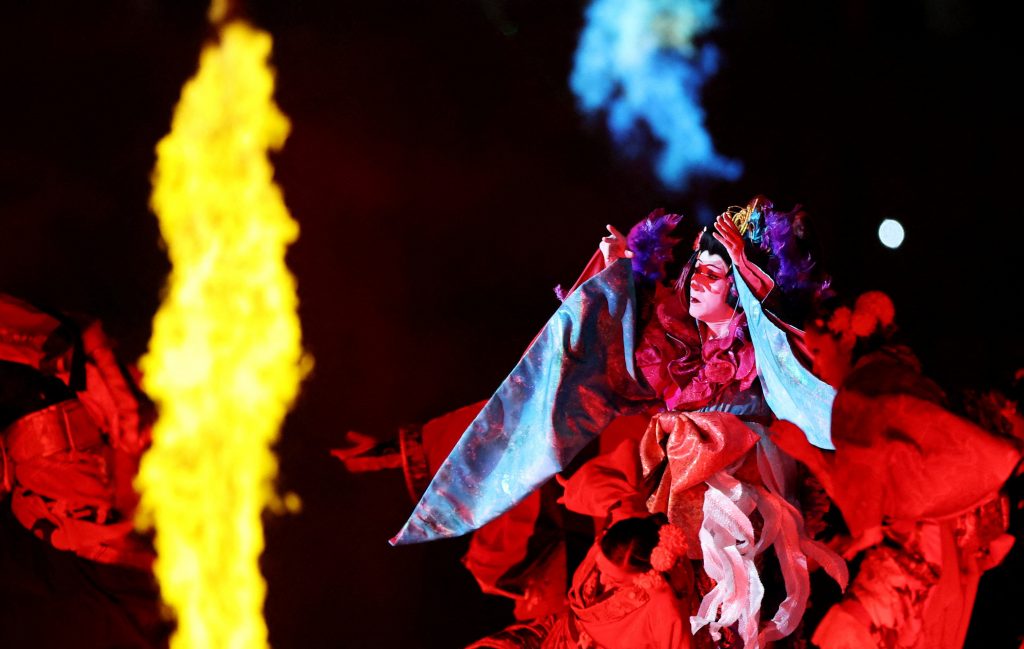
NAGOYA — The 20th Asian Games opened in Nagoya on Saturday with a glittering ceremony of dance and fireworks following a buildup marred by operational gaffes and logistical problems.
Five years after the Tokyo Olympics played out at empty venues due to COVID-19 restrictions, Japan welcomed fans to the Mizuho Park Athletic Stadium for a curtain-raiser that was initially subdued before bursting into a festival of color and sound.
Emperor Naruhito declared the Games open after watching the parade of 45 nations and regions at a dignitaries’ table along with International Olympic Committee boss Kirsty Coventry.
…
Team Philippines steps up chase
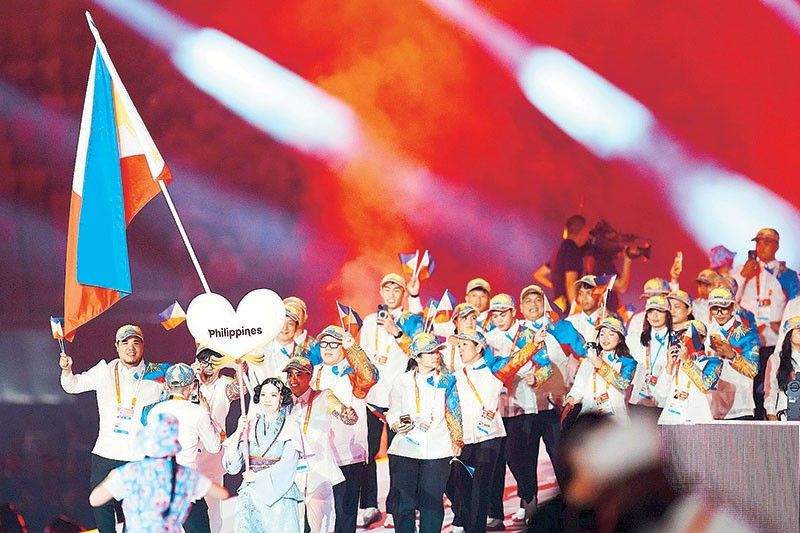
Philippine flag bearers Albert Ian Delos Santos and Aira Villegas walk with teammates into the stadium during the opening ceremony for the Asian Games in Nagoya, Japan.
….
Naruhito’s visit with royal family members was accompanied by a heavy security operation. Organizers had said up to 10,000 police would be deployed for the ceremony.
“While the world is too often divided by conflict, they (the Asiad athletes) remind us that sport remains a powerful force for peace, understanding and friendship among nations,” Olympic Council of Asia President Sheikh Joaan bin Hamad Al Thani said in a speech.
.
Complaints from athletes and officials

Japan’s father-and-son duo of Shigenobu Murofushi and Koji Murofushi, both former Asian Games champions in hammer throw, jointly lit the cauldron after climbing a set of stairs at the end of the torch relay.
Organizers will hope the ceremony can draw a line under a rocky buildup laden with complaints from athletes and officials involving accommodation and transport.
Japan’s reputation for precision and efficiency has been under scrutiny as the nation welcomes more than 11,000 athletes competing for 369 gold medals in a whopping 43-sport program.
Instead of building a dedicated Games village, organizers have housed the athletes and officials in a mix of hotel rooms, temporary wooden containers and a cruise ship docked in the bay as a cost-cutting measure.

Several national team delegations, including hosts Japan, have found the arrangements below par, complaining of mix-ups and double-bookings, while South Korea said the containers at Garden Pier were too cramped for their basketballers.
India’s powerful cricket board took matters into their own hands, arranging for the men’s star-studded cricket team to stay in a separate hotel due to a tight allocation of beds from organizers.
Delegations have also lamented long waits for the athletes registering on arrival and have found buses turning up late or sending their athletes to the wrong venues.
The Olympic Council of Asia, which runs the quadrennial Games, acknowledged the problems on Saturday but played them down as teething difficulties.
Directed by Yukihiko Tsutsumi, the opening ceremony made a low-key start, with classical music and dance on a heart-shaped stage before the parade of nations which featured a delegation from reclusive North Korea.
The spectacle ramped up later though, with dancers in boiler suits marking Nagoya’s manufacturing tradition and a fireworks display closing the night.
The ceremony’s theme was “Harmonic Heart Beat” — intended to communicate Asian solidarity at an event often riven by geopolitical tension and historic grudges.
However, hopes for a peaceful Games have already been undermined by several incidents.
Taiwan’s delegation temporarily refused to participate in their welcoming ceremony on Friday after sports minister and former Olympic champion Lee Yang was blocked from attending it.
The South Korean men’s hockey team were upset when North Korea’s national anthem was played at the stadium before a match instead of their own.
While competitions for basketball, soccer and other sports have already started, the first gold medal will be won on Sunday, likely in the triathlon.
A high-class swimming competition kicks off in Tokyo on Sunday, with the program featuring China’s 100 meters freestyle world–record holder Pan Zhanle and 13-year-old sensation Yu Zidi.
Apart from traditional Olympic sports, the Games will stage regional favorites kabaddi and sepak takraw along with quirky, modern events.
Esports will award medals again after making its debut at Hangzhou, while teqball, a mix of table tennis and soccer, and “virtual taekwondo” will make their first appearance at the Games.
—Reporting by Ian Ransom and Amlan Chakraborty in Nagoya, Japan; Editing by William Mallard and Clare Fallon


2026 Asian Games
 |
This article documents a current Asian Games. Information may change rapidly as the event progresses. Initial news reports, scores, or statistics may be unreliable. The last updates to this article may not reflect the most current information. (September 2026)
|
 |
|
| Host city | Aichi Prefecture and Nagoya, Japan |
|---|---|
| Motto | Imagine One Asia (Japanese: ここで、ひとつに, Hepburn: Koko de, hitotsu ni)[1] |
| Nations | 46 (including the ART team[2]) |
| Athletes | 10,787 [3] |
| Events | 469 in 43 sports (71 disciplines)[4] |
| Opening | 19 September 2026 |
| Closing | 4 October 2026 |
| Opened by | Naruhito Emperor of Japan |
| Athlete’s Oath | Yuki Tanaka Ryoichi Akamatsu |
| Torch lighter | Koji Murofushi Shigenobu Murofushi |
| Main venue | Paloma Mizuho Stadium |
| Website | aichi-nagoya2026.org |
|
|

The 2026 Asian Games (2026年アジア競技大会, 2026-nen Ajia Kyōgi Taikai), officially the XX Asian Games (第20回アジア競技大会) and also known as Aichi–Nagoya 2026 (愛知・名古屋2026), is an ongoing multi-sport event which are being held in Aichi Prefecture in Japan from 19 September to 4 October 2026, with several events starting from 10 September.[5] Nagoya is the third Japanese city to host the Asian Games, after Tokyo in 1958 and Hiroshima in 1994. The event is set to return to its traditional four-year cycle, after the 2022 edition was postponed to 2023 due to the COVID-19 pandemic. The Games marked the 75th anniversary of the 1951 Asian Games held in New Delhi, India.
Bidding process
The Olympic Council of Asia (OCA) welcomed the joint proposal from Aichi Prefecture and its capital Nagoya to host the Games at their annual general assembly session in Da Nang, Vietnam, on 25 September 2016.[6][7] The joint bid proposal almost did not happen due to financial differences between the two interested parties; these were resolved in 2015 and 2016, allowing the joint bid to be accepted.[8] The OCA originally planned to choose the 2026 host city in 2018, but brought the planning date forward due to the intensity of the region’s sporting calendar, including the next two Winter Olympic Games and FIFA World Cups between 2018 and 2022 (held in Pyeongchang and Beijing, as well in Russia and Qatar) and the next Summer Olympic Games (held in Tokyo in 2020).[9]
| City | NOC | Result |
|---|---|---|
| Aichi and Nagoya[10] |  Japan Japan |
Unanimous |
Development and preparations
Costs
The city of Nagoya received an estimate of roughly ¥85 billion ($560 million) in costs from the Aichi Prefecture government for the Games, 30% of which is expected to be covered by sponsorships and other revenue, while the remainder is planned to be split on a 70–30 basis between Nagoya and Aichi Prefecture.[8][11] In February 2023, the cost was reported to have ballooned to ¥140.5 billion ($927 million).[12] In September 2026, the cost had risen to ¥370 billion ($2.4 billion). Aichi Prefecture governor Hideaki Ōmura named the weakening value of the yen since 2021, geopolitical instability and rising prices for resources as contributors to the heightened budget. He highlighted that relying on a cruise ship and temporary accommodation for the athletes’ village and prioritising existing venues helped save ¥100 billion.[13]
Athletes’ Village
The Aichi–Nagoya Organising Committee originally intended to construct an athletes’ village on the former site of Nagoya Racecourse in the Minato-ku, Nagoya, but decided not to due to high construction material costs and to avoid the development becoming a white elephant post-Games.[14] Instead, they chose to have several athletes’ villages spread across the prefecture. Around 4,000 to 5,000 athletes were hosted in the Costa Serena cruise ship docked at Kinjo Pier.[15][16][17] 2,000 athletes were hosted in temporary wooden villas styled after shipping containers at the Port of Nagoya Garden Wharf, which will be reused as disaster response units and tourist lodging after the Games. The rest of the athletes were housed in several hotels across the prefecture and outlying cities.[18][19][20]
Because the Games are taking place towards the end of the Pacific typhoon season, organisers have put in place several contingency plans if athletes were to be evacuated from the cruise ship due to tsunamis, typhoons or other natural disasters.[21] Record-breaking torrential rain hit Nagoya on 8 September 2026, 2 days before the start of competitions, causing widespread flash flooding.[22][23] Several hundred athletes housed in temporary structures in the port area of the city were told to evacuate by officials. While leaking roofs were observed at some venues, no major damage was reported.[24][25] Nagoya city mayor Ichirō Hirosawa ruled out any major disruption to the Games as a result of the floods, however a promotional warmup event featuring members of the SKE48 idol group was cancelled due to the inclement weather.[26]
Venues
In addition to Nagoya, events will be spread across cities across Aichi Prefecture, and some venues in the Greater Tokyo Area that also hosted events during the 2020 Summer Olympics, as well as Gifu, Osaka, and Shizuoka prefectures.[6] Cycling events are scheduled to be held at the Izu Velodrome in Izu, Shizuoka. Some aquatic events were originally scheduled to be held at the Rainbow Pool, but with less than three years to go, OCA pointed out that the facilities did not meet World Aquatics‘ regulations.[27] After discussions, it was decided to move the swimming events to the Tokyo Aquatics Centre, and the equestrian events to the Tokyo Equestrian Park; water polo was also moved to the Nippon Gaishi Hall’s Rainbow Pool.[28][29]
Hisaya Ōdori Park will host a fan zone, celebration and cultural exchange hub during both Asian and Asian Para Games, known as One Asia World. It was inspired by the Champions Park used during the 2024 Summer Olympics in Paris, France.[30]
…
The Games
Opening ceremony
The opening ceremony was held on 19 September 2026 at 18:00 to 20:00 JST (UTC+09:00) at Paloma Mizuho Stadium.[38] Its theme is “Harmonic Heart Beat”,[39] and Japanese filmmaker Yukihiko Tsutsumi was appointed as the creative director of the ceremonies.[40] It was attended by Japanese emperor Naruhito, some Asian foreign leaders, and the president of the International Olympic Committee Kirsty Coventry.
Participating nations
All 45 National Olympic Committees who are members of the Olympic Council of Asia are expected to send delegations. A refugee team will partake for the first time in the Asian Games.[2]
| Participating National Olympic Committees[41][42] |
|---|
|


Sports
The 2026 Asian Games is expected to include 469 medal events in 43 sports,[43] a decrease of 12 events over Hangzhou 2022; Freestyle BMX, mixed martial arts, padel, surfing, teqball and virtual taekwondo will make their Asian Games debut.
In April 2025, the organising committee approved the inclusion of cricket and mixed martial arts to the programme, following a request from OCA. In addition, open water swimming was removed from the programme.[44] In December 2025, OCA approved the inclusion of padel and teqball to the programme, with all cost covered by respective international federations of the sport.[45] Later in June 2026, the OCA approved the inclusion of virtual taekwondo to the programme, making the first-ever virtual sport event.
…
Marketing
Emblem
The emblem of the Games was unveiled during a ceremony on 1 April 2020. Each colour has its own meaning, with purple representing the iris laevigata, gold for shachihoko, the golden tiger-fish roof ornaments which are the symbol of Nagoya Castle, and green representing environmental consciousness.[56]
Mascot

The mascot of the Games, Honohon (Japanese: ホノホン) was unveiled on 14 July 2024. Its design is based on the shachihoko.[57]
Motto
The official motto of the 2026 Asian Games, “Imagine One Asia” was announced on 1 April 2020 to mark six years before the opening ceremony.[1]
…
Concerns and controversies
 |
Exceeded athlete and official quota
The organising committee originally budgeted 15,000 athletes and officials to enter the Games. Due to an increased number of added events which were mandated by the Olympic Council of Asia, the number has been reportedly exceeded by upwards of 2,000, with the revised figure put at around 17,000—roughly 11,000 athletes and 6,000 officials.[90] The governor of Aichi Prefecture, Hideaki Ōmura, stated that arrangements and budgets based on the host city’s contract would not be able to accommodate more than 15,000, saying organisers had “neither the manpower nor the budget” to make arrangements for the additional participants.[90] Organisers had asked the OCA to keep athlete and officials numbers below the original limit, and late additions were told to arrange their own accommodation.[91][92]
On 19 August 2026, a month before the opening ceremony, the competition schedule was modified in line with reducing athlete numbers, which resulted in the cancellation and rescheduling of some events, leading to confusion from athletes and sports organisations, and already purchased tickets by spectators being voided.[93]
On 28 August 2026, AINAGOC and the OCA jointly released a statement to clear up the “incorrect media reports”, stating that the number of athletes and officials was changing on a daily basis, and the final number has not been determined. All athletes and officials that had registered by the July deadline will be provided with Games-appropriate accommodation. In addition, it was decided that some officials would be allowed to arrange their own accommodation through their respective NOC.[94][95]
Athlete accommodation issues
Several athletes and officials have complained about the wooden villas that some are staying at the Port of Nagoya Garden Wharf. Vice president of the Korea Basketball Association, Jung Jae-yong, said that the compact nature of the villas doesn’t allow taller athletes to “stretch their legs out on the beds”. Byeon Jun-hyeong, who is a part of South Korea men’s basketball team roster, had a leaking sink and soaked floor in his villa, shown through a video he posted on social media. Jung also said that organisers have not responded to any concerns raised.[96][97] Reports specified that the standard bed length in the container-style units was around 195 centimetres, which several delegations said was inadequate for taller athletes, alongside complaints of cramped shower spaces.[98] Aichi Prefecture governor Ōmura defended the accommodation arrangements as “functional”, saying organisers were responding to individual complaints as they arose and would continue to improve conditions, while maintaining that the priority for those housed aboard the Costa Serena was athlete safety.[99][100]
Organizers bypassed a traditional centralized Athletes’ Village. Instead, they are utilizing local hotels, temporary container-style wooden cabins, and the Costa Serena cruise ship.[101] A surge in registrations to over 17,000 participants (well over the budgeted 15,000) has left housing extremely tight, and the passengers sparked anger over the athletes participation.[102][103]
Some delegations also faced issues when registering upon arrival at their accommodation. In one such case, an athlete and two coaches from the Indian wushu team arrived at the cruise ship to discover that their names were not listed on the accommodation records, leading to a two hour delay.[104] The Malaysian and Vietnamese delegations also complained of lengthy procedures when checking in to their accommodation.[105] Accommodation manager Yuta Matsuo acknowledged the issues teams were facing and stated that the organising committee was “already taking concrete steps to improve the environment for the athletes, including their living conditions during their stay.”[106]
In a separate incident, Indian gymnast Pranati Nayak and her coach Ashok Mishra were mistakenly allotted the same cabin aboard the Costa Serena upon arrival, raising concerns over mixed-gender room allocation; the Indian Olympic Association intervened and separate accommodation was arranged at around 1:30 am, though a further clerical error—a missing letter in Mishra’s name—meant his new booking could not initially be located in the ship’s register.[107][108]
Cricket facilities and Indian accommodation issues
At the end of August 2026, representatives of several members of the Asian Cricket Council raised concerns over the cricket venue; Kōrogi Sports Park in Nisshin. Most complained about the lack of proper dressing rooms and the pitch not being readied for competition.[109]
Organizers moved to ease concerns over a potential accommodation crunch by confirming that lodging has been arranged for more than 17,000 athletes and officials registered for the event. The official statement also came days after it was reported that even the Board of Control for Cricket in India (BCCI) was upset with the facilities for the cricketers. An ANI report claimed that the Indian board was contemplating sending a ‘B’ team if the facilities aren’t improved.[110]
Diplomatic and political issues
On 14 September 2026, a ceremony was held at Nagoya’s Kintaicho Port to commemorate the docking of the Costa Serena cruise. One of the performances featured three performers dressed as historical figures symbolising Japan’s Sengoku period: Oda Nobunaga, Toyotomi Hideyoshi, and Tokugawa Ieyasu referred to as the “Three Outstanding Men of Nagoya”.[111] This prompted criticism from the South Korean delegation, because of Hideyoshi involvement in Imjin War. The organising committee insisted that there was no intent to cause offence or push political messages, however South Korea’s chef-de-mission warned that the delegation would “make clear its position regarding parts where political issues intervene in sports”.[112][113]
Prior to a men’s field hockey match on 18 September 2026 between Bangladesh and South Korea, the national anthem of North Korea was mistakenly played instead of the South Korean anthem.[114] The stadium announcer apologised a short time later upon realising the mistake.[115]
On 18 September 2026, the Taiwanese delegation refused to take part in a flag-raising ceremony in protest after Taiwan’s sports minister Lee Yang was barred from taking part.[116] The OCA stated that the flag-raising ceremonies were intended for athletes and team officials only and government ministers were not permitted to attend.[117] Yang was eventually granted permission to attend the ceremony, causing it to be delayed by an hour.[118]
Logistical problems
On 16 September 2026, there was widespread system disruption which prevented delegations from taking the chartered shuttle buses from Chubu Centrair International Airport to their accommodations. Almost all of the Chinese gymnastics team was stranded at the airport due to issues with the system, preventing the team from boarding their scheduled shuttle bus.[119] Athletes from China, South Korea, Vietnam and Thailand were left to sleep on the floor of the nearby Aichi Sky Expo as a result of their records going missing from the system and issues with the shuttle buses.[120]
Meanwhile, teams from India and South Korea complained of significant disruption to Games transportation. On 16 September 2026, South Korea’s under-23 football team arrived to a recovery training session 20 minutes later than expected as there was no bus scheduled to take them there, leaving organisers scrambling to find a replacement.[121] The previous day, the driver of the team’s bus mistakenly took the team to the baseball venue, causing the team to arrive at their competition venue 30 minutes later than scheduled.[122] India’s shooting team raised concerns over lengthy commutes to and from Games venues and accommodation, with a journey from the athletes’ village to the shooting venue in Toyota taking as long as 2 hours and up to 50 kilometres (30 miles) apart.[123]
Ticket sales and local reception
Local enthusiasm ahead of the Games was reported as muted, with data compiled by the organising committee as of 7 September showing that, of 41 ticketed sports, ten events—including football, baseball/softball, field hockey and cricket—had sold under 60 percent of available tickets. Governor Ōmura said sales were going “fairly well” overall, particularly for marquee events, but acknowledged that lesser-known sports had struggled to draw local interest.[124] Journalists covering the opening ceremony noted the large number of empty seats at the stadium, despite organisers previously claiming that tickets for the event had sold out.[125][126]