
ASEANEWS HEADLINE-ASIA GEOPOLITICS | MANILA: Chinese teachers exit PH ‘at their parents’ request’
SeaLight director Ray Powell at News DORUM
.
.
.
WATCH VIDEO: https://www.youtube.com/watch?v=eID6tLi8tlw
Wikang Mandarin, isinusulong ituro sa mga pampublikong elementarya | Frontline Pilipinas
.
MANILA, Philippines — The parents of Chinese volunteer teachers in Philippine schools have asked that they return home for their safety after suspicions were raised about their true intentions in the country, Beijing’s embassy in Manila and the Federation of Filipino-Chinese Chambers of Commerce and Industry Inc. (FFCCCII) said on Saturday.
The request for the teachers’ recall, the latest manifestation of the fraying ties between Manila and Beijing rooted in their maritime dispute, was approved by both FFCCCII and the Chinese Embassy, the federation said in a statement to the Inquirer.
Around 150 Chinese teachers will be sent back home, according to an Oct. 2 report by the Manila-based Chinese-language newspaper Chinese Commercial News.
.
.
READ: WPS: New Chinese research ship spotted near Panatag after platform removal
Immaculate Conception Academy in San Juan City and Jubilee Christian Academy in Quezon City were two of the schools that would be affected.
“The parents were concerned about the articles written by Ray Powell attacking Chinese-language schools in the Philippines,” FFCCCII said.
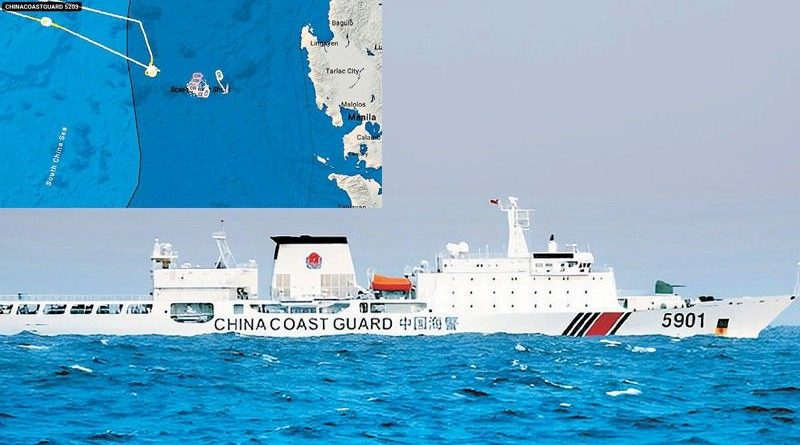
Photo shows the 165-meter China Coast Guard ship 5901, known as ‘the Monster’ for its size, which joined CCG ship 5203 during a brief intrusive patrol into the Philippines’ exclusive economic zone west of Panatag Shoal early yesterday. The location and movement of the vessels are shown in an image posted on X by SeaLight director Ray Powell.
. Ads by:
 Memento Maxima Digital Marketing
…
READ: PCG shadows Chinese research ship, escorts near outer EEZ off Luzon
Links examined
Powell is the director of SeaLight, a maritime transparency initiative at Stanford University’s Gordian Knot Center for National Security Innovation. SeaLight actively monitors and reports on Chinese moves in the South China Sea and the West Philippine Sea.

In a July 28 article, Powell examined links between Chinese institutions and Chinese-language education in the Philippines, focusing on Jinan University in Guangzhou and the Philippine Chinese Education Research Center (PCERC).
READ: Chinese research ship leaves Panatag but mothership remains
He said Jinan University was involved in training Chinese-language teachers for schools in the Philippines. The university’s Center for Philippine Studies had earlier organized a symposium where Chinese scholars questioned Philippine sovereignty over Batanes, saying it was part of Taiwan and therefore part of China.
Powell reported that 43 of 56 students in a 2024 teacher-training batch studied at Jinan University, while six went to Huaqiao University and the remainder to Minnan Normal University and Beijing Language and Culture University.
He also examined PCERC programs that bring teachers from China to Philippine Chinese-language schools and send Chinese-Filipino students to universities in China to train as Chinese-language teachers before returning to teach in the Philippines.
Essay contest
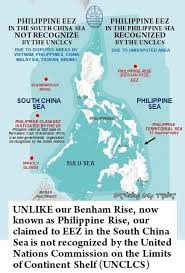
In a March 4 article this year for The Diplomat, Powell alleged that a 2025 essay contest for Philippine public school students commemorating the 80th anniversary of the end of World War II formed part of a Beijing-linked information campaign against Japan and Taiwan.
Powell reported that the contest was proposed to the Department of Education’s National Capital Region office by PCERC president James Wang, also known as Huang Duanming.
He said PCERC cosponsored the contest with the Philippine Council for the Promotion of the Peaceful Reunification of China, which he described as linked to the united front work of the Chinese Communist Party (CCP).
Powell also cited PCERC’s own description of its ties with Chinese government bodies, including the Ministry of Education, Ministry of Culture, United Front Work Department and Overseas Chinese Affairs Office.
According to its website, PCERC has long operated programs that bring teachers from China to Chinese-language schools in the Philippines and train prospective teachers at universities in China.
Powell said that the arrangements showed links between Chinese-language education programs in the Philippines and institutions associated with the united front work of the CCP.
Unlike FFCCCII’s statement to the Inquirer, which cited only Powell’s articles as the source of the safety concerns, the newspaper linked concerns for the safety of the teachers to criticisms of Chinese-language education from both Powell and Defense Secretary Gilberto Teodoro Jr.
.

It said the Chinese Embassy and relevant Chinese authorities were formally notified of the decision to bring them home before the schools were informed. The teachers were to return to China in batches beginning Oct. 1.
FFCCCII said the Chinese Embassy had approved the recall. The business group did not cite any specific threat or security incident involving the teachers.
The Inquirer has sought additional details of the recall from FFCCCII and comments from PCERC. Neither had responded as of writing.
.
Teodoro airs concerns

At a news forum last week, Teodoro raised concerns about Chinese influence activities in the Philippines, including the possible use of educational and academic exchanges for information gathering.
“Firstly, it is really part of the doctrine of China. One of the main efforts of China is the United Front Work,” Teodoro said.
He said the government had been informed about the possible use of educational exchanges to establish a foothold in the Philippines so Beijing could “scope for information” through the use of relationships among scholars and educational exchanges.
He questioned the alleged “pseudo-scholarship” of Chinese scholars who claimed that Batanes was part of China.
The defense chief also raised concerns about the use of the freedom of association in the Philippines to form Confucius societies and associations in order to “penetrate” Filipino society.
He said President Marcos had instructed intelligence and law enforcement agencies to conduct “evidence-based operations” against “nefarious activities” by certain Chinese nationals.

..
,
Teodoro, however, cautioned against allowing concerns over foreign influence to generate hostility toward Chinese or the Chinese-Filipino community.
“We don’t also want to create an atmosphere of xenophobia in this country. We don’t want to create bigotry in this country,” he said.
.
‘Malicious smear campaigns’
The Chinese Embassy on Friday rejected criticisms of China-Philippines educational exchanges, denouncing the “malicious smear campaigns” against Chinese language education.
The embassy’s statement referred specifically to criticisms of the educational exchanges made by Powell and Teodoro that create a “hostile atmosphere” and “deep concerns for personal safety” of the Chinese teachers.
“We firmly reject the baseless accusations and strongly denounce the malicious smear campaigns targeting educational and people-to-people exchanges between China and the Philippines, including Chinese-language education in the Philippines,” embassy spokesperson Ji Lingpeng said.
Ji said educational and people-to-people exchanges had long contributed to relations and mutual understanding between the Philippines and China.
“We believe those malicious rhetoric and actions against China-Philippines people-to-people exchanges by certain individuals have no place in the Philippines and time-honored friendship between the Chinese and Filipino peoples will continue to stand,” he said.
.
Not just in PH
Concerns over Chinese government-linked educational programs have also prompted scrutiny in other countries.
Confucius Institutes, which are Chinese-government-backed language and culture programs that are separate from the teacher programs involved in the current recall, have faced restrictions and closures in the United States, Australia and several other countries over concerns about foreign influence and academic independence.
The US Congress had imposed restrictions beginning in 2018 on federal funding involving schools that hosted Confucius Institutes.
A US Government Accountability Office report found that the number of institutes at American colleges and universities fell from about 100 in 2019 to fewer than five, with schools commonly citing the potential loss of federal funding and government pressure among the reasons for closing them.
Similarly, in 2019, the government of Australia’s New South Wales state moved to close the Confucius Institute program in more than a dozen public schools over political concerns.
A New South Wales report issued after a review of the program said no evidence of “actual political influence” was found but that there was a sense that “the institute is or could be facilitating inappropriate foreign influence.”
In recent years, the Australian government has ramped up scrutiny on the education centers over concerns that Beijing is using them to spread propaganda and spy on Chinese international students. —WITH REPORTS FROM INQUIRER RESEARCH, AP AND REUTERS INQ
.
October 04, 2026
.
 Ads by: