ASEANEWS HEADLINE-ASIA GEOPOLITICS: MANILA: Philippines eyes military ties with Taiwan
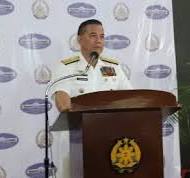
Rear Adm. Roy Vincent Trinidad
WATCH VIDEO: https://www.youtube.com/watch?v=HUiujP8qKwo
China slams PH for eyeing deeper military ties with Taiwan | ANC
.
.
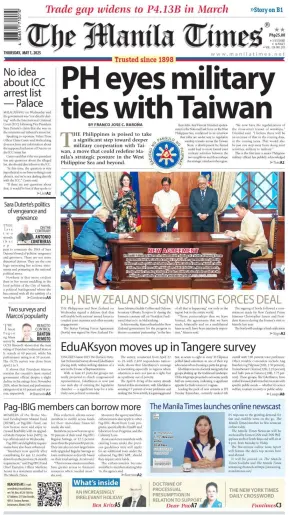
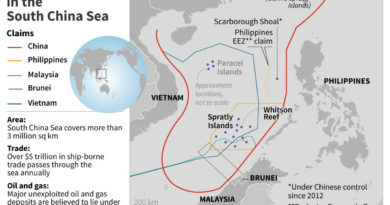
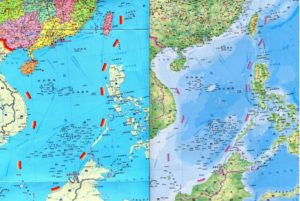
(UPDATE) THE Philippines is poised to take a significant step toward deeper military cooperation with Taiwan, a move that could redefine Manila’s strategic posture in the West Philippine Sea and beyond.
Rear Adm. Roy Vincent Trinidad, spokesman for the National Task Force on the West Philippine Sea, confirmed in an interview that talks are under way to regularize warship transits across the Taiwan Strait, a development he hinted could lead to more formal joint military activities between the two neighbors and thus reshape the strategic calculus in the region.
“We now have the regularization of the cross-strait transit of warships,” Trinidad said. “I believe there will be an increase of that in the coming days, in the coming years. That would also be just one step away from doing joint activities, military to military.”

“We are now looking long term. We’re no longer looking at next month or next year. We’re looking at what will happen in the next 10 to 20 years,” said Trinidad as he emphasized the importance of strategic foresight in regional planning.
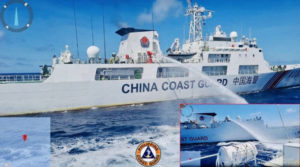
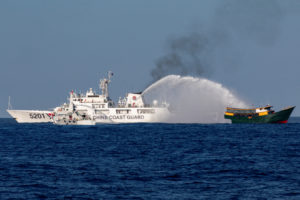
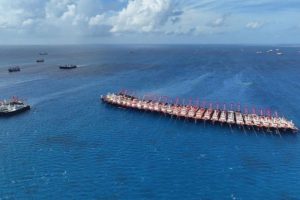
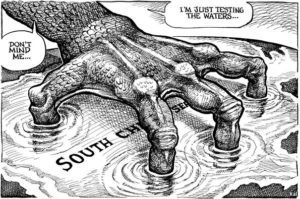
In recent months, China’s gray-zone tactics — including the use of water cannons and laser devices against Philippine vessels — have drawn sharp criticism from both local officials and the international community. For Manila, the strategic response has increasingly centered on coalition-building with like-minded partners.
|
|

“In the West Philippine Sea, we must maintain presence,” Trinidad said. “We must ensure that the Filipino people understand that the government is there for them, that the military is protecting what is ours.”
While official diplomatic ties between Manila and Taipei remain nonexistent due to the Philippines’ adherence to the One-China policy, military interlocutors have begun navigating informal channels to address shared security concerns, especially regarding the protection of sea lanes and maritime domain awareness.
“There is now more coordination, more collaboration and more communication among partners. That is a very important message to everyone who challenges the rules-based international order,” said Trinidad as he pointed out the evolving security environment.
While the Philippines has historically upheld a “One-China” policy, its growing security ties with the United States and other like-minded partners have placed it on a delicate balancing act. The prospect of Philippine-Taiwan military activities — even if limited to information sharing, patrol coordination or humanitarian assistance — would likely be viewed by Beijing as provocative.
|
|
.
But Trinidad stressed that Philippine defense efforts remain anchored in lawful, transparent actions.
“We are not looking for a fight, but we are not backing down either. What is ours, is ours.”
However, when asked about potential friction with China, Trinidad said the Philippines is “prepared to defend our rights.”
“We are taking the necessary steps not just for today, but for future generations.”
|
|
.
The Philippine military has already ramped up its presence in contested waters, with increased patrols and expanded cooperation with the United States, Australia and Japan.
Japan Access Agreement
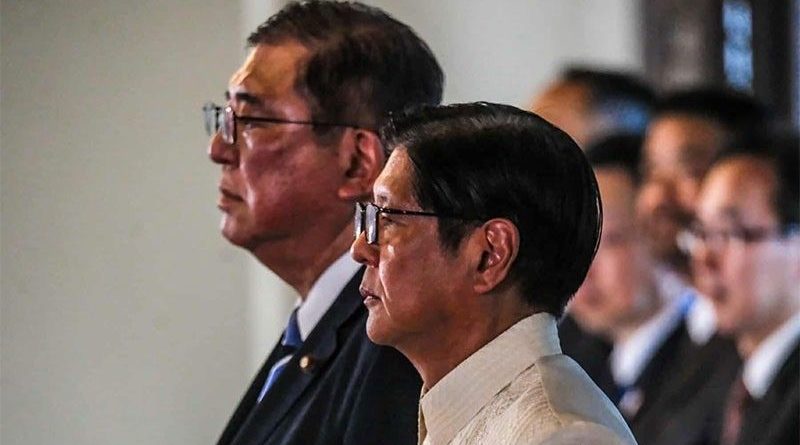
Meanwhile, the Japanese Ministry of Foreign Affairs (MOFA) expressed hopes the Reciprocal Access Agreement with the Philippines could be ratified once the Diet or the Japanese parliament ends session in June.
Speaking to reporters following the two-day official visit of Prime Minister Shigeru Ishiba on Wednesday, Japan MOFA spokesman Toshihiro Kitamura said the military access deal’s ratification would be a “good step forward” to the two states’ growing security cooperation.
|
|
“We have submitted that agreement to the Diet — we expect that the Diet will start discussions on that agreement very soon,” he said.
“We cannot prejudge any kind of conclusion from the process, but since the Diet will conclude before the end of June, we hope that that will be approved by the Diet by that time.”
Once it enters into force, the official said the deal would facilitate joint operations between the two forces, including military drills.
In a summit meeting on Tuesday, Ishiba and President Ferdinand Marcos Jr. promised to deepen security cooperation in the context of “strengthening deterrence for regional stability.”
|
|
.
The two leaders agreed to begin negotiations on an Acquisition and Cross-Servicing Agreement (ACSA) to reinforce operational collaboration as well as facilitate talks on a potential security information deal.
The ACSA, Kitamura said, would help with the Japan Maritime Self-Defense Force’s refueling needs when participating in joint drills with the Philippine Navy.
“Since there is no legal framework, it is quite complicated to have the refueling from the Philippine side. Under ACSA, it is quite easy to refuel or acquire some piece of equipment in case of an accident,” he said.
Meanwhile, Kitamura said the possible intelligence-sharing deal would help strengthen security cooperation between Tokyo and Manila.
|
|
.
Marcos and Ishiba agreed to deepen cooperation in maritime safety through base development, capacity improvement support and joint training between Japan, the Philippines and the United States.
.
CLIMATE CHANGE

 Ads by:
Memento Maxima Digital Marketing
@[email protected]
SPACE RESERVE FOR ADVERTISEMENT
WITH PNA
.