
ASEANEWS HEADLINE-HEALTH | PETALING JAYA: Mental health awareness gaining ground in workplaces
Syed Hussain said mental health is no longer a welfare side note but a strategic pillar of sustainable business. – AI GENERATED IMAGE BY AZURA ABAS / theSun
.
WATCH VIDEO: https://www.youtube.com/watch?v=G0zJGDokyWQ
One in four adults experiences at least one diagnosable mental health problem in any given year. 9 out of 10 people who experience mental health problems say that they face stigma and discrimination as a result. Poor mental health in the workplace costs the UK an estimated £26billion a year.
.
Recognising stress and mental health problems is not easy. Employees may take time off for odd reasons, be unproductive or unhappy at work, but the hard part is doing something about it and that is where Mental Health at Work can help managers by training them to start the conversation with a common language and literacy around mental health.
.
.
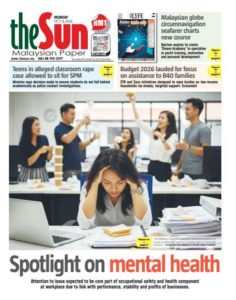
PETALING JAYA: Mental health is no longer just a corporate buzzword – it’s fast becoming boardroom business and the Malaysian Employers Federation (MEF) says it’s only a matter of time before it is treated as seriously as hard hats and fire drills.
Within five years, MEF expects mental health support to be a core part of occupational safety and health (OSH) policy, as more companies recognise its direct link to resilience, productivity and profit.
MEF president Datuk Dr Syed Hussain Syed Husman said mental health is no longer a welfare side note but a strategic pillar of sustainable business.
“Employers are realising that mental health isn’t just a moral or social concern – it’s fundamental to organisational performance and stability.
“Soon, support for mental well-being will be a standard feature of every OSH strategy.”
While Malaysia currently has no single mandatory framework for workplace counselling or employee assistance programmes (EAP), MEF encourages employers to align their practices with international benchmarks set by the International Labour Organisation (ILO) and the World Health Organisation (WHO).

@[email protected]
“These global references offer practical guidance to ensure counselling services are credible, confidential and effective,” Syed Hussain said.
He outlined five key best practices for employers setting up workplace mental health systems:
> Confidentiality and trust – counselling services must guarantee strict confidentiality, backed by clear data protection protocols that meet international standards. This is vital to overcoming stigma and encouraging employees to seek help without fear of exposure;
> Qualified professionals – counsellors should be licensed or accredited professionals to ensure services meet proper clinical and ethical standards. Employers are encouraged to verify credentials and establish supervision structures to maintain quality and accountability;
> Accessibility and inclusivity – services should be available to all employees, regardless of job category or work arrangement. Flexible delivery – from in-person sessions to online platforms or helpline-based counselling – should be provided, consistent with ILO and WHO best practices;
> Integration into workplace policy – mental health support must be embedded within broader occupational safety, health and wellbeing frameworks in line with ILO conventions on safe and healthy workplaces; and
Awareness and training – employers should conduct regular communication and awareness campaigns to reduce stigma and equip managers with the skills to identify early signs of distress and refer employees to professional help.
@[email protected]

For smaller businesses, Syed Hussain said cost need not be a barrier.
“MSMEs can adopt shared EAP, digital counselling or periodic wellbeing initiatives. Government incentives or grants could help employers meet international standards without heavy costs.”
Integrating these practices, he added, would strengthen workforce resilience, reduce absenteeism and enhance productivity.
MEF expects workplace mental health support in Malaysia to become increasingly structured and widespread, driven by technology, policy development and generational change.
“Digital counselling, mobile apps and AI-based wellness tools can make mental health care more scalable, personalised and accessible,” Syed Hussain said, adding that employers are now using data-driven tools to track absenteeism, engagement and retention, helping companies measure impact and refine strategies.
“With younger employees prioritising psychological safety, supportive work environments are becoming a key factor in employer branding and retention. Employers who invest early
will gain a competitive edge in talent retention, productivity and long-term resilience.”
 Ads by:
 Memento Maxima Digital Marketing