
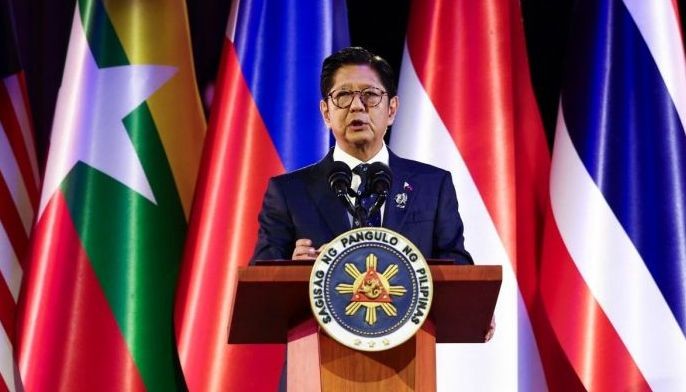
ASEAN HEADLINE-49TH ASEAN SUMMIT PHILIPPINES 2026 | MANILA, Trump claims PH agreed to US-only import deals
.President Marcos
.
.
WATCH VIDEO:
 Screengrab from RTVM
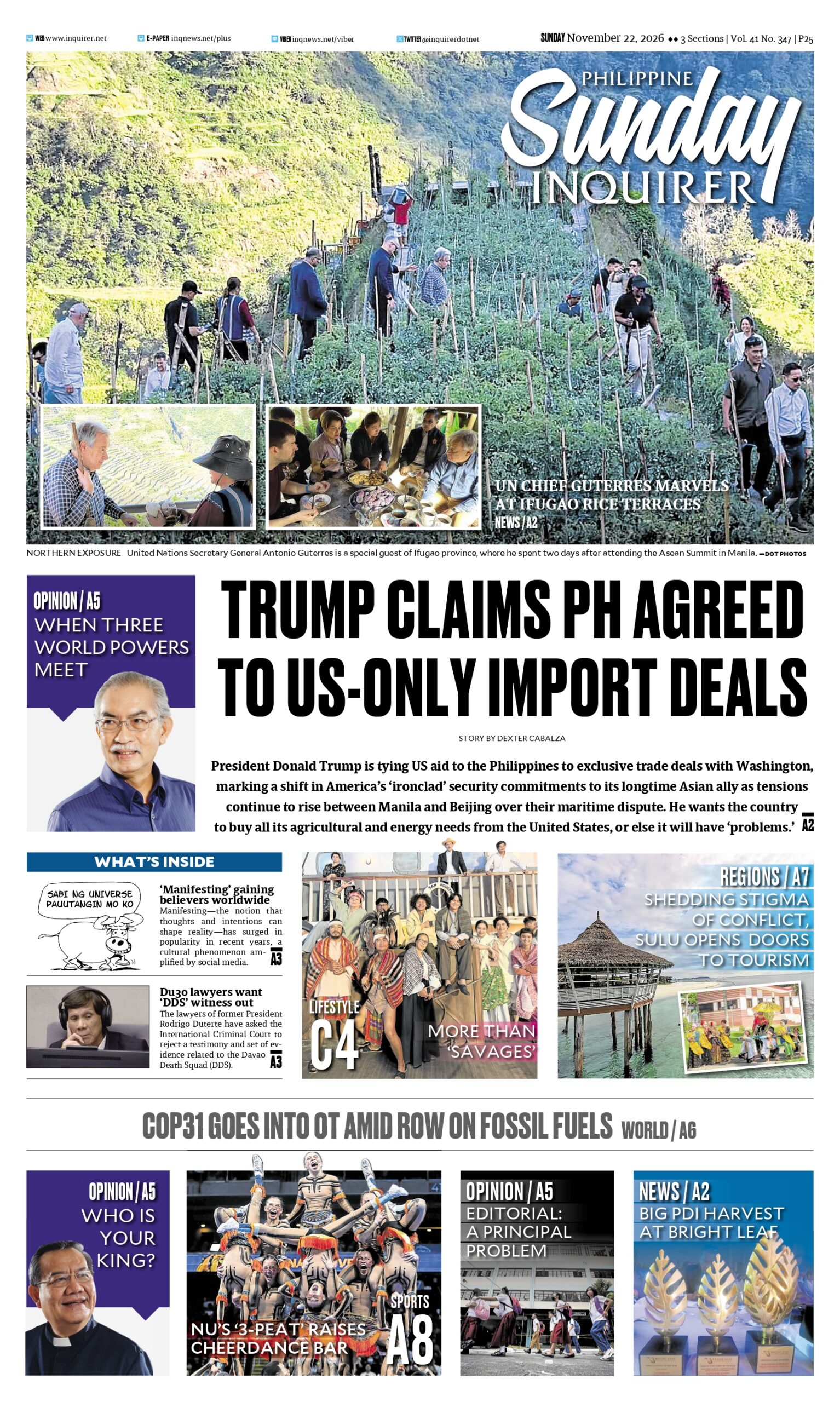
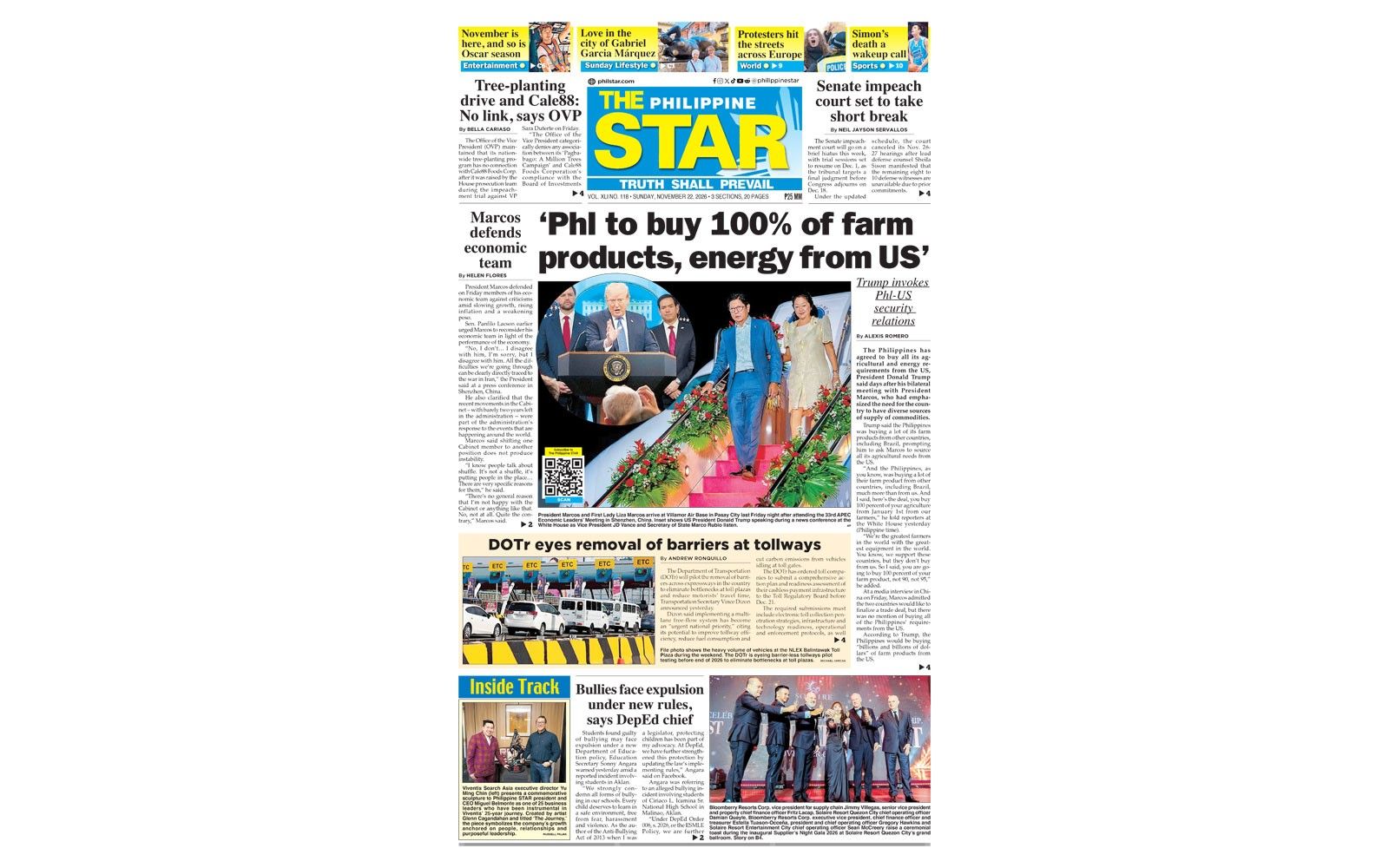
US President Donald Trump may have tied United States aid to the Philippines to exclusive trade deals with Washington, marking a shift in America’s previous “ironclad” security commitments to its longtime Asian ally as tensions continue to rise between Manila and Beijing over their maritime dispute.
President Marcos earlier clarified that the trade deals he reached with Trump during his state visit to the Philippines last week were meant to diversify the country’s food and energy sources, rather than rely on traditional partners.
.
READ: Trump claims PH to buy 100% farm, energy goods from US; Marcos clarifies
 |
Speaking at a news conference at the White House on Friday, Trump said he had pressed Mr. Marcos to stop purchasing agricultural and energy products from other countries, such as Brazil and those in the Middle East. If the Philippines doesn’t stop buying from others, “then they have problems,” Trump said.
“I said, ‘Here’s the deal: You buy 100 percent of your agriculture from January 1st from our farmers,’” Trump said, recalling his discussions with Mr. Marcos and Philippine officials in Malacañang during his Nov. 17 to Nov. 18 state visit to Manila.
“I said, ‘You are going to buy 100 percent of your farm product from the [US] … not 90, not 95,’” he added. “Is Brazil going to help them in case they get into a little skirmish with China? I don’t think so.”
The Philippines relies on the Middle East for nearly all its crude oil requirements and about one-fifth of its fertilizer needs.
“I said, ‘If China attacks you, is the Middle East going to come to your rescue? ‘No, sir.’ Well, that’s good. Don’t buy from them anymore,” Trump said.
|
|
Ironclad, ironclad…
US officials have routinely reaffirmed Washington’s “ironclad” defense commitments to Manila. The Philippines and the United States have a 75-year-old Mutual Defense Treaty, which commits both sides to come to each other’s aid in case of an armed attack.
In June 2026, US Secretary of State Marco Rubio renewed this commitment, highlighting the two countries’ longstanding alliance.
READ: US to spend $400M for PH sea defense
On Nov. 2, US Ambassador to the Philippines Lee Lipton issued a statement, “Our commitment to Philippine security is ironclad.”
“We stand firmly with the Filipino people in defending sovereignty, protecting territorial integrity, and upholding the freedom of navigation on which we all rely for vibrant global commerce,” Lipton said.
|
|
Days before Trump arrived in Manila, Mr. Marcos held talks with President Luiz Inácio Lula da Silva of Brazil. The two leaders agreed to build stronger agricultural cooperation to protect local farmers and support Philippine food security.
Brazilian pork market
The Philippines is a major market and top importer of Brazilian pork in Southeast Asia. Manila imported $1.84 billion worth of goods from Brazil last year, with meat products (pork, beef, and chicken) making up 86 percent of the total volume, according to Brazil’s agriculture ministry.
Mr. Marcos offered a more measured description of his discussions with Trump, saying the proposed arrangements were intended to diversify the Philippines’ sources of food and energy rather than commit the country to sourcing all its requirements from the United States.
Speaking to reporters in Shenzhen, China, also on Friday, Mr. Marcos said the discussions covered increased Philippine purchases of American agricultural products, including soybeans and wheat, as well as possible energy imports, to offset supply disruptions caused by the Russia-Ukraine war.
He said they also discussed rice, although he was uncertain about whether the United States could supply the Filipinos staple.
He said the details of the separate food and energy initiative still had to be worked out, with government officials already coordinating on its implementation.
|
|
“The key takeaway there is that he (Trump) opened American markets to the Philippines when it comes to energy and food,” Marcos told reporters.
“Whereas we did not buy from them before, now those markets have been opened to us, allowing us to buy from them,” he added.
No comment
Mr. Marcos said the Philippines was seeking more affordable sources of food and energy amid supply disruptions and rising prices due to global conflicts.
The proposed arrangement also comes as Manila sought to reduce its dependence on a limited number of trading partners and strengthen its food and energy security.
The Inquirer reached out to Philippine Ambassador to the US Jose Manuel “Babe” Romualdez, who was present during the bilateral meeting with Trump and US officials at Malacañang, to verify Trump’s pronouncements.
Romualdez, however, deferred to Trade Secretary Maria Cristina Roque and Finance Secretary Frederick Go to disclose the details of the trade deals. Roque and Go could not be reached for comment.
Executive Secretary Ralph Recto and Foreign Affairs Secretary Ma. Theresa Lazaro also joined Mr. Marcos in the bilateral meeting with Trump and US officials.
Malacañang officials did not immediately respond to a request for comment.
In a state luncheon hosted by Mr. Marcos, Trump announced the conclusion of what he called the “biggest trade deal we’ve ever made by far” between the US and the Philippines. He said it was a “fair deal” for both countries.
According to Trump, he and Mr. Marcos also reached a framework deal aimed at eliminating Washington’s trade deficit with Manila by reducing Philippine tariffs on American goods and increasing Philippine purchases of US products.
Neither side, however, confirmed whether part of the agreement was to reduce or completely eliminate the 12.5 percent tariff on Philippine exports, which Washington imposed in July.
|
|
In 2025, the United States ran an $8.5 billion trade deficit in goods and a $3.6 billion deficit in services with the Philippines, out of $40.9 billion in total bilateral trade, according to the United States Trade Representative.
Vocal approach

Defense and security analyst Chester Cabalza said Trump’s push for the Philippines to purchase agricultural and energy products from the United States reflected Washington’s efforts to strengthen its economy amid intensifying global competition.
“Trump’s vocal approach for the Philippines to directly buy from the US means that Washington needs a tight grip on its purse,” Cabalza told the Inquirer.
He said Trump’s position also reflected his administration’s efforts to secure an economic advantage as major powers compete for resources, particularly amid domestic economic pressures and geopolitical tensions.
|
|
Cabalza is the founder and president of the International Development and Security Cooperation, a Manila-based think tank specializing in defense, security and geopolitics.
DA seeking guidance
Agriculture Assistant Secretary Arnel de Mesa said the Department of Agriculture (DA) was seeking guidance from the administration on Trump’s pronouncements.
“Of course, we will get our cue from the President,” De Mesa, who is also the DA spokesperson, told the Inquirer.
The Philippines already imports various farm products from the United States, including soybean meal, wheat, dairy products and poultry meat, ethanol, pork and pork products.
Data from the US Department of Agriculture showed that the United States exported $3.41 billion worth of farm products to the Philippines in 2025, slightly lower than $3.47 billion in 2024.
Soybean meal is the leading agricultural product exported by the US, equivalent to almost 30 percent or $1.01 billion of the total.
The Philippines exported raw sugar to the United States for the third straight year in 2026 to shore up prices amid the current market glut.
|
|
In early October, the USA Rice Federation and the Philippine Rice Industry Stakeholders Movement (Prism) signed an accord on the supply and purchase of US rice.
Under the agreement, Prism members will procure 100,000 metric tons (MT) of bagged and/or bulk US rice in 2027 and 200,000 MT in 2028. —WITH REPORTS FROM GABRYELLE DUMALAG, JORDEENE LAGARE AND INQUIRER RESEARCH
 Ads by:

.


